

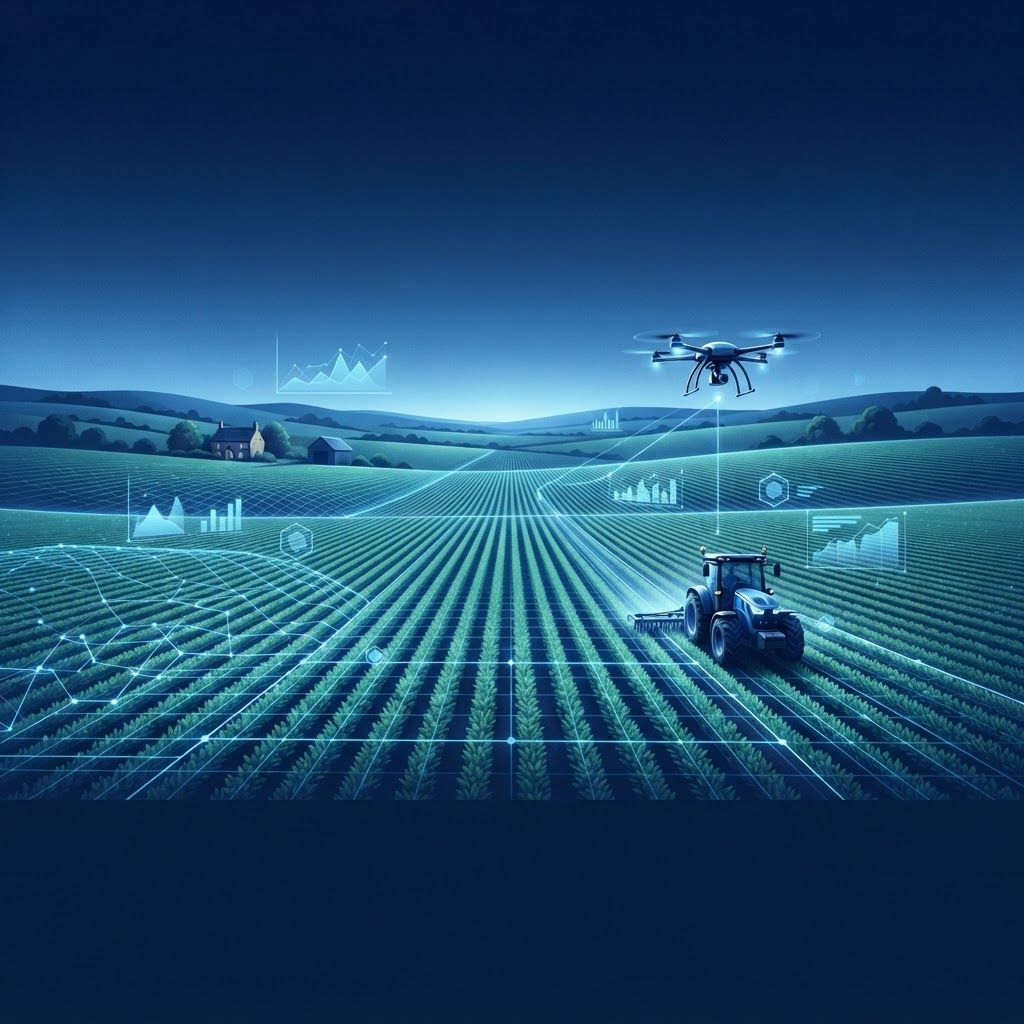
Agriculture on Solihull's Doorstep
It is easy to think of Solihull purely as a prosperous commuter borough with a strong service economy, but a substantial proportion of its land area remains green belt farmland. Between Meriden, Hampton in Arden, Berkswell, Balsall Common, Barston and Bickenhill lies a genuine agricultural landscape of arable fields, permanent pasture, dairy units, equestrian holdings and mixed family farms.
Farming here operates under a distinctive set of conditions. Land values are high because of development pressure and proximity to Birmingham. Public access is heavy, with footpaths, bridleways and cycle routes crossing many holdings. At the same time, the population on the doorstep creates exceptional opportunities for direct selling, farm shops, education visits and leisure diversification. The most successful farming companies in the borough have learned to treat that urban adjacency as an asset rather than an obstacle.
What Makes a Strong Farming Business Today
Modern agricultural success rests on several pillars. Soil health management, including reduced cultivation, cover cropping and organic matter building, underpins long-term yield stability. Precision technology, from variable-rate fertiliser application to satellite imagery and yield mapping, improves efficiency and reduces input waste.
Diversification is equally important. With direct area-based subsidy support being replaced by environmental payment schemes, income resilience increasingly depends on multiple revenue streams: livery, storage, events, holiday accommodation, renewable energy, contracting and direct food sales.
Finally, environmental stewardship has become central rather than peripheral. Hedgerow management, wildflower margins, tree planting, water quality protection and habitat creation now attract meaningful payments while also improving farm resilience.
Notable Farming Companies and Estates Around Solihull
1. Berkswell Estate is one of the most recognised agricultural enterprises in the area, best known for high-quality dairy production and traditional cheesemaking. Its reputation demonstrates how added-value processing can transform the economics of a livestock farm.
2. Ram Hall Dairy Farm has long been associated with pasture-based dairy farming in the Berkswell area, combining herd management expertise with careful grassland husbandry.
3. Meriden Hill Farm represents the mixed family farming model common across the borough, balancing arable cropping with livestock and making use of the borough's varied soil types.
4. Barston Grange Farm illustrates the diversified rural business approach, combining agricultural production with complementary enterprises that draw on local demand from nearby towns.
5. Hampton Manor Farm Estate has become notable for connecting land management with hospitality and food provenance, showing how kitchen gardens and estate produce can support a premium food offer.
6. Diddington Hall Farm in the Hampton in Arden area reflects traditional Warwickshire farming practice, with pasture management and hedgerow conservation forming a visible part of the landscape character.
7. Catherine de Barnes Farming covers holdings on the borough's eastern fringe where arable cropping predominates, supported by contracting arrangements that spread machinery costs across multiple farms.
8. Elmdon Farming Company operates in the mixed farming tradition while managing significant public access, an increasingly common challenge for holdings close to urban edges.
9. Temple Balsall Estate Farms combines agricultural tenancy with heritage land stewardship, an arrangement that supports both productive farming and conservation objectives.
10. Shadowbrook Farming exemplifies the smaller-scale enterprises that make up much of Solihull's agricultural fabric, often blending livestock, forage production and equestrian activity.
Trends and Challenges in Local Agriculture
Agricultural policy transition is the biggest single force acting on these businesses. The shift from area-based payments toward schemes that reward environmental outcomes has required farms to rethink where profit actually comes from. Those with strong record-keeping and a willingness to enter agreements early have generally adapted best.
Climate variability is another pressing issue. Wetter autumns and drier summers complicate establishment and harvest windows, pushing farms toward more flexible rotations, improved drainage and greater soil resilience.
Labour availability remains difficult, especially for livestock and horticultural enterprises. This has accelerated interest in automation, from robotic milking to precision drilling and automated feeding systems.
On the positive side, consumer interest in local, traceable food is stronger than at any point in recent decades. Farms within reach of Solihull's population can capture value directly through farm shops, box schemes, farmers' markets and supply arrangements with independent restaurants, capturing margin that would otherwise sit with processors and retailers.
The Outlook for Farming in the Borough
Solihull agriculture will never compete on scale with East Anglian arable or upland livestock systems. Its future lies in quality, provenance, environmental delivery and connection to the community it borders. Farms that build a recognisable identity, invest in soil and habitat, and communicate openly with the public are likely to remain viable even as policy and climate conditions continue to shift.
For residents, the practical implication is simple: the green belt landscape they value on weekend walks is maintained by working businesses. Supporting local produce, respecting field access rules and understanding the pressures these farms face all contribute to keeping that landscape productive and intact for future generations.
Want your brand featured in front of decision-makers? Publish a guest post or get a link insertion in our guides through AAMAX's guest post and link insertion service.
Helpful Links
 SponsoredAAMAX — Full-Service Digital Agency
Write for Us
Share your expertise with our readers. We welcome guest contributions from industry specialists.
Pitch your idea

