

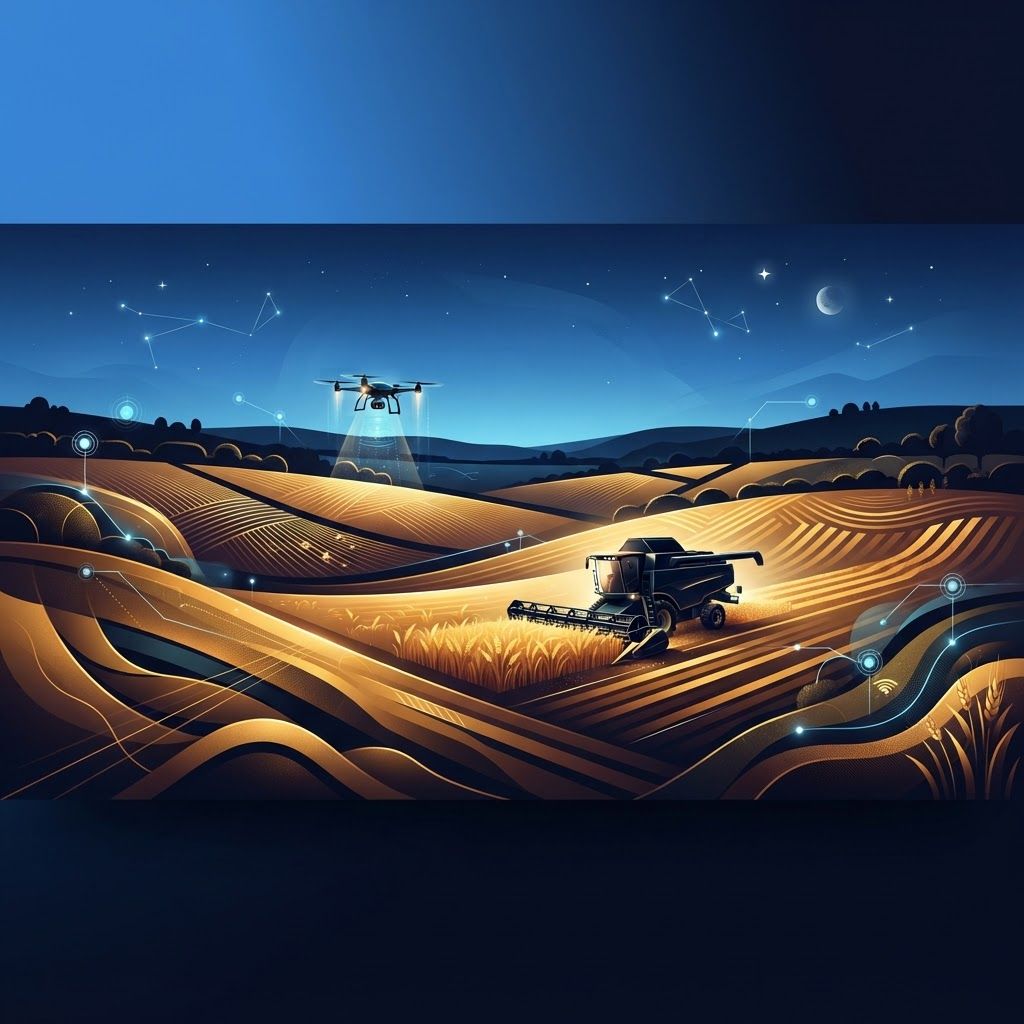
Agriculture at the Heart of the District
Newark and Sherwood is an overwhelmingly rural district, and agriculture shapes its landscape, economy and identity. The fertile alluvial soils of the Trent Valley support high-yielding arable production, while the lighter sandy soils around the Sherwood area suit root crops and irrigated vegetables. Livestock farming continues across mixed holdings, and Newark's long history as an agricultural market town reflects centuries of trade in grain, livestock and produce.
Modern farming here bears little resemblance to its twentieth century form. Precision technology, environmental schemes, diversified income streams and sophisticated business management have transformed how holdings operate. The farming companies leading the district are as much data-driven businesses as they are land managers.
Ten Farming Companies Shaping Local Agriculture
1. Trent Valley Arable Farms. A large-scale combinable crops business growing wheat, barley, oilseed rape and pulses across the river valley. Precision soil mapping, variable rate application and careful rotation planning underpin consistent yields and reduced input use.
2. Sherwood Sands Root Crops. A specialist grower of potatoes, carrots and root vegetables on the district's lighter soils, with irrigation infrastructure and cold storage that extend the marketing season well beyond harvest.
3. Newark Livestock Enterprises. A beef and sheep operation combining grassland management with arable by-products, focused on efficient finishing, herd health planning and full farm assurance compliance.
4. Collingham Dairy Farming Company. A dairy business emphasising herd welfare, forage quality and milk consistency, with investment in cow comfort and monitoring technology that supports both productivity and animal health.
5. Southwell Fruit and Horticulture. Producer of soft fruit, orchard crops and horticultural lines supplying farm shops, local retailers and pick-your-own visitors, benefiting from proximity to Nottingham's consumer market.
6. Ollerton Mixed Farming Partnership. A traditional mixed holding combining cropping and livestock, using integrated rotations that build soil fertility and spread commodity price risk across enterprises.
7. Balderton Poultry and Egg Production. Free range egg and poultry producer operating to recognised welfare standards, with biosecurity management that has become critical given recurring avian influenza pressure.
8. Edwinstowe Regenerative Agriculture Farms. A holding practising reduced tillage, cover cropping, diverse rotations and livestock integration, focused on soil organic matter, water infiltration and long-term resilience.
9. Clipstone Agricultural Contracting and Farming. Combining its own farming operation with contracting services including drilling, spraying, harvesting and baling for neighbouring holdings, spreading machinery cost across more hectares.
10. Farndon Diversified Rural Enterprises. A farming business blending food production with diversification into storage, events, holiday accommodation and renewable energy, illustrating how modern farms build income resilience.
Precision Technology Changing Field Practice
Technology adoption in the district is substantial. Satellite guidance reduces overlap on every pass. Variable rate application matches fertiliser and seed to soil variation within a single field. Yield mapping reveals where interventions worked and where they did not. Drones and satellite imagery identify crop stress before it becomes visible from the cab.
The purpose is not novelty but efficiency. With input costs volatile and environmental scrutiny increasing, applying exactly what is needed where it is needed protects both margin and water quality. Nitrogen use in particular has come under close examination, and precision application allows reduction without yield penalty.
Livestock farming has seen parallel change. Electronic identification, automated weighing, health monitoring and grassland measurement allow decisions based on data rather than impression, improving both animal welfare and business performance.
Environmental Schemes and Changing Support
Agricultural support in England has shifted decisively from area-based payments toward payment for environmental outcomes. Farms in Newark and Sherwood are adapting by integrating habitat creation, buffer strips, hedgerow management, cover cropping and water quality measures into commercial farming systems.
The transition has required genuine business planning. Income that was once predictable now depends on scheme participation, delivery of specific actions and careful record keeping. Farms that treat environmental management as an enterprise in its own right, properly costed and integrated with cropping plans, have navigated the change far better than those treating it as an afterthought.
Flood risk deserves particular mention in the Trent Valley. Land management decisions upstream affect flooding downstream, and there is growing interest in natural flood management approaches that store water in the landscape while maintaining agricultural productivity.
Diversification and Direct Selling
Few farms in the district now rely solely on commodity production. Farm shops, holiday lets, equestrian facilities, storage units, events, solar arrays and contracting all contribute income. Direct selling has grown particularly strongly, as consumers in Nottingham, Lincoln and surrounding towns seek local provenance and are willing to pay for it.
Successful diversification requires genuinely different skills, including marketing, hospitality and customer service, and the farms that have prospered are those that recognised this and invested accordingly rather than expecting farming expertise to transfer automatically.
Challenges Ahead
Weather volatility is the most immediate concern, with wet autumns delaying drilling and dry springs limiting establishment. Labour availability affects horticulture and livestock particularly. Input cost volatility complicates budgeting. Succession planning remains difficult, with land values high and returns on capital modest.
Yet the district's farming businesses show considerable adaptability. Collaboration through machinery sharing, buying groups and knowledge exchange has strengthened, and younger entrants bringing technical and business skills are gradually taking on management responsibility.
A Sector Worth Understanding
Farming in Newark and Sherwood is a sophisticated, capital-intensive industry managing land, livestock, technology and environmental obligations simultaneously. Its output feeds far beyond the district, and its land management shapes the landscape that everyone here enjoys.
Want your brand featured in front of decision-makers? Publish a guest post or get a link insertion in our guides through AAMAX's guest post and link insertion service.
Helpful Links
 SponsoredAAMAX — Full-Service Digital Agency
Write for Us
Share your expertise with our readers. We welcome guest contributions from industry specialists.
Pitch your idea

