Electronics Manufacturing in the East Midlands
Electronics manufacturing may not be the first industry associated with Ashfield, but the district and its immediate surroundings host a meaningful cluster of electronics businesses. These range from contract assembly operations producing circuit boards for other companies, through control panel and automation builders serving industrial clients, to design-led firms developing their own products.
The sector benefits from several regional advantages. Established engineering skills transfer well into electronics assembly and test. Industrial premises are available at costs well below major metropolitan areas. Central location provides efficient distribution nationally. And the surrounding manufacturing base, covering machinery, automotive components, medical devices and process industries, generates local demand for control systems, instrumentation and embedded electronics.
The Capabilities Available Locally
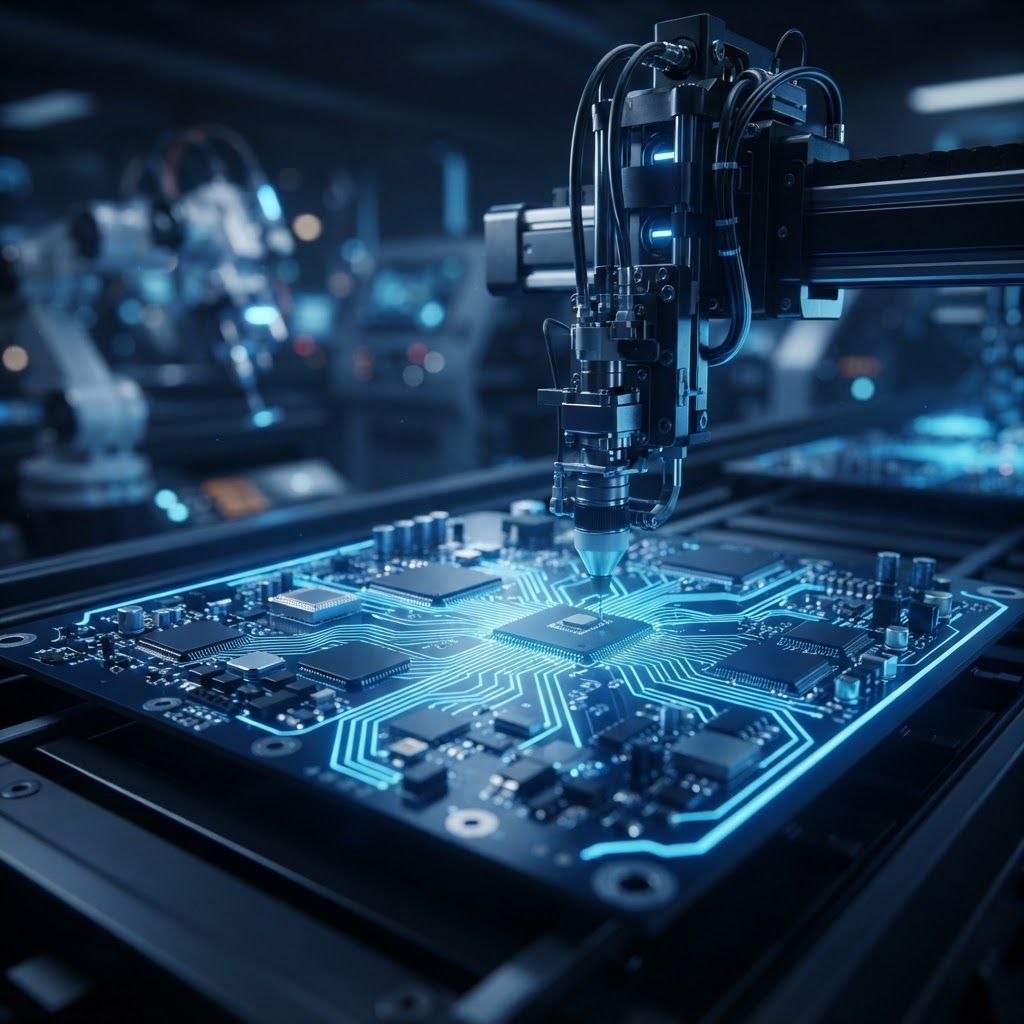
Printed circuit board assembly is the foundation service, covering surface mount technology, through-hole assembly, mixed technology boards, fine-pitch and ball grid array placement, and conformal coating. Modern assembly lines combine automated placement with automated optical inspection and, for complex boards, x-ray inspection of hidden joints.
Electromechanical assembly extends beyond bare boards into complete units, integrating enclosures, wiring, displays, connectors and mechanical components into finished products ready for despatch.
Cable harness and looms manufacturing serves automotive, industrial machinery, rail and medical equipment customers, involving crimping, over-moulding, sleeving, labelling and continuity testing.
Control panels and automation covers motor control centres, programmable logic controller panels, human machine interface integration, instrumentation and industrial networking. This work requires both electrical engineering competence and familiarity with the relevant safety and construction standards.
Design and development services include schematic capture, board layout, firmware development, electromagnetic compatibility pre-compliance testing, prototyping and design for manufacture review. Firms offering design alongside production can take a concept through to volume supply within one relationship.
Test and compliance encompasses functional testing, in-circuit testing, environmental and burn-in testing, and support with regulatory conformity assessment.
What Distinguishes the Best Electronics Manufacturers
Process control and inspection discipline is the clearest quality indicator. Solder paste inspection, controlled reflow profiling, automated optical inspection and documented first-article approval catch defects before they multiply. Manufacturers who can show their inspection data rather than simply asserting quality are demonstrably more reliable.
Component sourcing capability has become critically important. Supply disruption has made procurement skill a genuine differentiator, and the best manufacturers maintain broad supplier networks, avoid unauthorised sources that risk counterfeit parts, propose validated alternative components when originals are unobtainable, and advise on lifecycle risk during design.
Traceability systems matter especially for medical, automotive and aerospace customers. Full traceability from component batch through assembly operator and machine to finished serial number is a prerequisite in regulated sectors.
Standards compliance including recognised workmanship standards for electronic assemblies, electrostatic discharge control programmes and appropriate quality management certification separates professional operations from general assembly shops.
Engineering support adds substantial value. A manufacturer who reviews a design and identifies a component at end of life, a footprint error, a testability problem or an unnecessarily expensive process choice saves the customer far more than any price difference.
Trends in Electronics Manufacturing
Supply chain resilience remains the dominant theme. Dual sourcing, strategic component buffers, design flexibility to accommodate alternative parts and closer collaboration between designers and procurement have all become standard practice.
Reshoring of higher-value production continues, driven by intellectual property protection, quality control, shorter lead times and the total cost reality of overseas supply once freight, tariffs, quality issues and inventory carrying are properly accounted for.
Industry automation within the factories themselves is increasing, with automated material handling, digital traceability and real-time production monitoring improving both throughput and data quality.
Connected products continue to proliferate, increasing demand for wireless module integration, secure firmware and low-power design expertise.
Environmental compliance including restriction of hazardous substances, waste electrical equipment obligations and increasing attention to repairability is shaping both design and production practice.
Choosing an Electronics Manufacturing Partner
Match capability to your product complexity and volume. High-mix low-volume work requires very different operational setup from high-volume repeat production, and manufacturers generally excel at one or the other.
Assess technical engagement during quotation. A partner who asks detailed questions about test requirements, expected volumes, component lifecycle and compliance targets is thinking about your product properly.
Review quality accreditation relevant to your sector, and ask to see inspection and traceability records.
Discuss component procurement responsibility clearly, including who carries obsolescence risk and how price fluctuation is handled.
Visit the facility. Cleanliness, electrostatic discharge controls, equipment condition and organisation of work in progress tell you a great deal that a quotation cannot.
Plan for the whole lifecycle, including prototype, pilot build, volume production, engineering changes and eventual end-of-life support.
Conclusion
Electronics manufacturing in Ashfield offers a practical combination of technical capability, engineering support and competitive operating costs. For companies developing industrial, medical or commercial electronic products, a local manufacturing partner offers responsiveness and collaborative development that distant suppliers cannot easily match.
Want your brand featured in front of decision-makers? Publish a guest post or get a link insertion in our guides through AAMAX's guest post and link insertion service.
Helpful Links
 SponsoredAAMAX — Full-Service Digital Agency
Write for Us
Share your expertise with our readers. We welcome guest contributions from industry specialists.
Pitch your idea