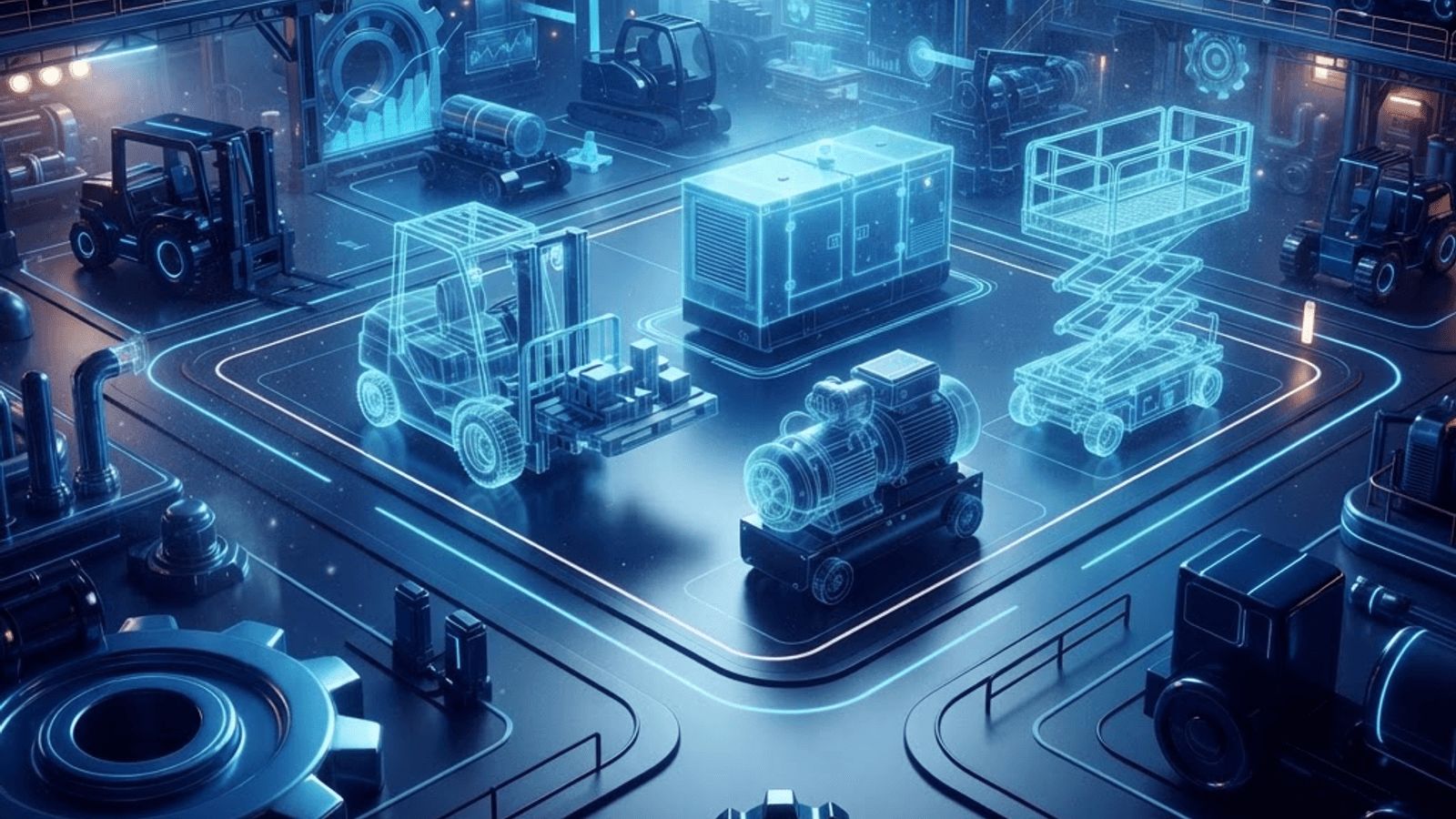
Equipment Distribution as Regional Infrastructure
Equipment wholesalers occupy a position that is easy to overlook and impossible to replace. Construction crews, manufacturers, farms, warehouses, municipalities and facility maintenance teams across Kent County all depend on machinery that must be purchased, maintained, repaired and eventually replaced. The wholesaler who supplies that equipment also, in most cases, keeps it running.
That service dimension is what separates equipment distribution from ordinary product sales. Buying a forklift is the beginning of a multi-year relationship involving parts, scheduled maintenance, emergency repair and eventually trade-in. Choosing a supplier based on purchase price alone while ignoring service capability is among the most common and expensive mistakes in the category.
Categories of Equipment Wholesale
Material handling covers forklifts, pallet jacks, conveyors, racking and dock equipment. Construction equipment includes excavators, loaders, compaction gear and aerial lifts. Power generation and air covers generators, compressors and pneumatic tools. Industrial and shop equipment spans machine tools, welders, lifts and workshop infrastructure. Facility equipment includes floor care machines, HVAC service tools and grounds maintenance machinery. Restaurant and commercial kitchen equipment is its own specialized world.
Most wholesalers concentrate in one or two of these. A material handling dealer will not service an excavator competently, and a kitchen equipment supplier will not source a welder.
Ten Equipment Wholesalers Serving Dover
1. First State Material Handling. Supplying forklifts, pallet jacks, racking and dock equipment with a substantial service department. Their fleet maintenance programs and rental options give warehouses flexibility during seasonal peaks.
2. Capital Construction Equipment. Distributing compact excavators, skid steers, loaders and attachments for contractors. Rental-to-purchase programs allow smaller contractors to scale capability without large capital commitments.
3. Delmarva Power Systems. Focused on generators, transfer switches and backup power for commercial, agricultural and institutional clients. Storm resilience is a genuine concern on the Delmarva Peninsula, and their installation and load-analysis expertise reflects that.
4. Kent Industrial Tool Supply. Carrying machine tools, welders, compressors, shop lifts and industrial consumables. Their breadth serves fabrication shops and maintenance departments that need one account rather than a dozen.
5. Blue Hen Aerial and Lift Equipment. Specializing in scissor lifts, boom lifts, telehandlers and scaffolding. Certification training and inspection services are offered alongside sales and rental, which matters for jobsite compliance.
6. Peninsula Restaurant Equipment. Supplying commercial kitchen equipment including ranges, refrigeration, dishwashers, ventilation and smallwares. Design and installation coordination support restaurant buildouts throughout the region.
7. Statehouse Facility Maintenance Equipment. Providing floor scrubbers, sweepers, pressure washers and janitorial machinery to schools, government buildings and property managers, with service contracts that keep equipment in rotation.
8. Central Delaware Landscape Equipment. Serving commercial grounds crews with mowers, trimmers, blowers, utility vehicles and parts. Fast turnaround on repairs during the growing season is their key differentiator.
9. Dover Compressed Air and Pneumatics. Distributing compressors, dryers, piping and pneumatic tools with system design support. Properly engineered compressed air systems reduce energy costs meaningfully, which is a compelling sales argument.
10. Heritage Used Equipment Exchange. Brokering quality used and reconditioned equipment. For businesses with tight capital budgets, well-inspected used machinery with a limited warranty is often the most rational purchase.
Trends in Equipment Distribution
Telematics has moved from premium feature to expectation. Connected equipment reports hours, fault codes, location and utilization, which enables predictive maintenance and prevents both unexpected failure and unnecessary service. Dealers who can interpret that data provide real advisory value.
Electrification is advancing quickly in material handling and compact construction equipment. Battery-electric forklifts and lifts eliminate emissions concerns for indoor use and reduce operating cost, though they require charging infrastructure planning.
Rental and equipment-as-a-service models continue to grow. Many operations prefer predictable monthly cost and guaranteed uptime over ownership and depreciation. Wholesalers offering flexible structures capture customers who would otherwise defer purchases.
Parts availability remains the perennial concern. Dealers who stock deep parts inventory locally rather than relying on overnight shipment from a regional hub reduce downtime substantially.
How to Choose an Equipment Supplier
Evaluate the service department before the sales department. Ask how many technicians they employ, what their average response time is, whether they offer field service and how parts availability is managed. A dealer with excellent equipment and a thin service team will disappoint you eventually.
Calculate total cost of ownership rather than purchase price. Fuel or energy consumption, maintenance intervals, parts cost, expected life and residual value frequently outweigh the initial difference between two machines.
Understand warranty scope and what voids it. Maintenance performed outside the dealer network, aftermarket parts and operating conditions can all affect coverage. Clarify before purchase.
Consider standardization. Operating a fleet from one manufacturer simplifies parts inventory, operator training and service relationships. The efficiency gains often justify choosing a slightly less ideal machine for consistency.
Ask about operator training. Improperly operated equipment fails early and creates safety exposure. Suppliers who train your team protect both your investment and your people.
Final Thoughts
Equipment wholesalers serving Dover span material handling, construction, power generation, industrial tooling, aerial lifts, foodservice, facility maintenance, landscaping, compressed air and used equipment. Selecting well means weighing service capability and total ownership cost far more heavily than sticker price. Buyers who tour service facilities, ask hard questions about parts inventory and plan for maintenance from the outset get far more productive years from every machine they buy.
Want your brand featured in front of decision-makers? Publish a guest post or get a link insertion in our guides through AAMAX's guest post and link insertion service.
Helpful Links
 SponsoredAAMAX — Full-Service Digital Agency
Write for Us
Share your expertise with our readers. We welcome guest contributions from industry specialists.
Pitch your idea