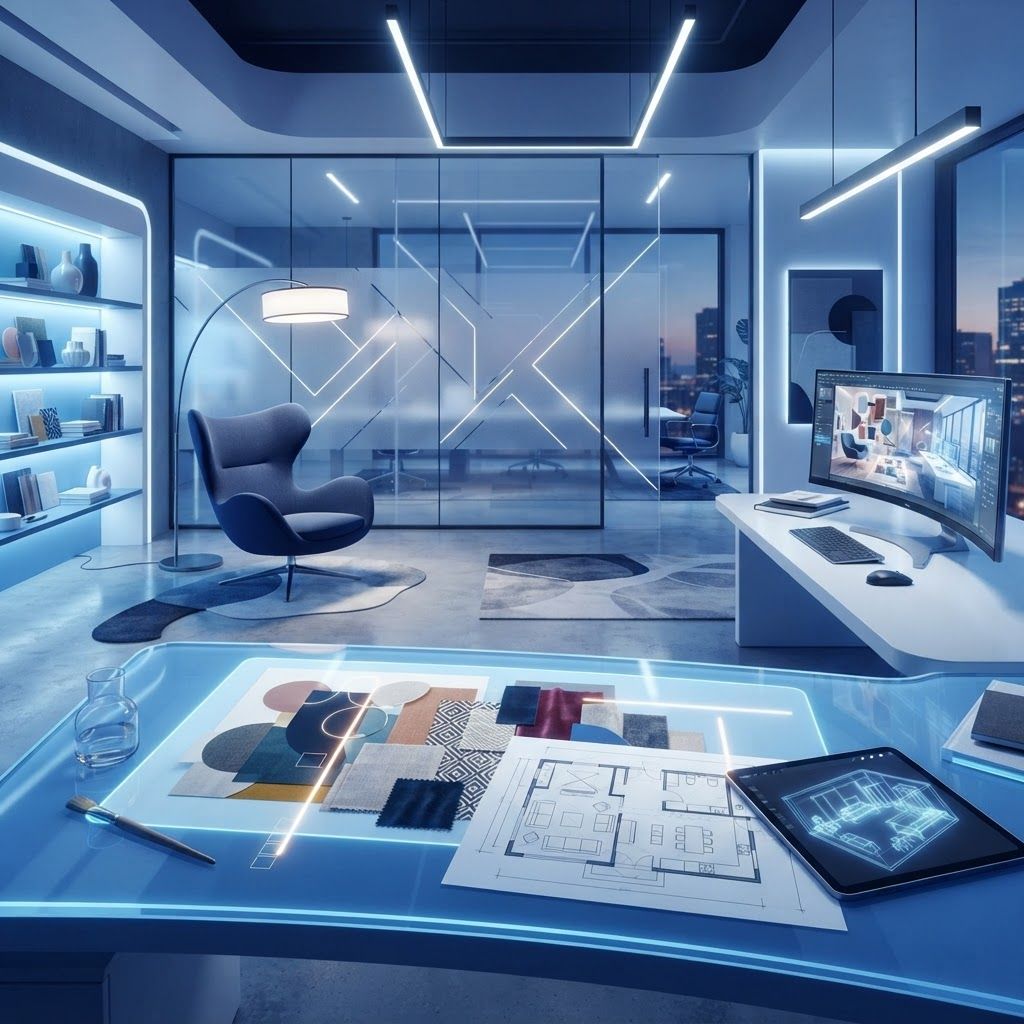
Interior Design in a Coastal Hampshire Setting
Havant's building stock is unusually varied for a borough of its size. Georgian and Victorian houses in Emsworth sit alongside inter-war suburban homes in Bedhampton, large post-war estates in Leigh Park, mid-century coastal properties on Hayling Island and contemporary new build developments across the area. Each presents different design challenges, from working within listed building constraints to making a modern open-plan space feel warm rather than clinical.
The coastal setting exerts a strong influence on local design. Light quality near the harbour is exceptional, and designs that fail to exploit it waste the property's best asset. Salt air affects material longevity, meaning specification decisions about metalwork, timber and textiles carry practical consequences. And the visual language of the area, water, boats, shingle, sky, naturally informs palettes without descending into nautical cliché.
1. Full-Service Residential Design Studios
Comprehensive studios manage projects from initial brief through to final styling. The service typically includes space planning, structural reconfiguration advice, technical drawings, lighting design, joinery specification, material and finish selection, furniture procurement and contractor coordination. For clients undertaking whole-house renovation, this end-to-end management is the primary value, because a designer coordinating trades prevents the sequencing errors that cause cost overruns and compromise.
2. Coastal and Waterfront Design Specialists
Designers focused on seaside properties bring specific technical knowledge alongside aesthetic sensibility. They specify marine-grade fixings, moisture-resistant finishes, fabrics that tolerate strong sunlight without fading, and window treatments that manage glare while preserving views. Palettes tend toward soft whites, pale timbers, muted blues and natural textures, an approach that feels appropriate to Hayling Island and Langstone without becoming a themed pastiche.
3. Period Property Restoration Designers
Emsworth, Warblington and parts of Havant retain significant period housing, some within conservation areas and some listed. Designers working in this field understand sash window restoration, lime plaster and breathable finishes, original fireplace reinstatement, cornice and skirting profiles, and the consent processes that govern alterations. The skill lies in integrating contemporary comfort, insulation, heating, bathrooms, kitchens, without stripping the building of the character that gives it value.
4. Kitchen and Bathroom Design Specialists
Kitchens and bathrooms absorb the largest share of most renovation budgets and deliver the most measurable impact on both daily life and resale value. Specialist designers handle detailed technical planning: appliance positioning, plumbing and electrical routes, ventilation, worktop selection, lighting layers and storage optimisation. Good kitchen design is fundamentally about workflow and storage capacity before it is about door finishes.
5. New Build and Developer Interior Services
Havant's ongoing residential development creates steady demand for show home design and new build interior specification. Show homes must communicate aspiration while remaining plausible, demonstrating how standard room dimensions accommodate real furniture. Designers also work with private buyers customising new build purchases, upgrading flooring, joinery, lighting and finishes before completion, which is far cheaper than retrofitting afterwards.
6. Commercial Interior Designers
Commercial work across Havant covers offices, retail units, cafés, salons, clinics and co-working spaces. Requirements differ sharply from residential: durability, accessibility compliance, fire regulations, brand expression and, critically, how the space supports the business operation. A café layout that slows service costs money every day it operates. Commercial designers balance visual identity against these operational realities.
7. Colour and Material Consultants
Not every project needs full design management. Colour and material consultants offer focused sessions helping homeowners select paint schemes, flooring, tiles, worktops and textiles that work together and suit the property's light conditions. This is a cost-effective option for people confident in managing their own project who simply want to avoid expensive selection mistakes. A single session frequently saves more than it costs.
8. Lighting Design Services
Lighting is the most transformative and most neglected element of interior design. Specialist designers plan in layers: ambient lighting for general illumination, task lighting for kitchens, desks and reading, and accent lighting to highlight architecture, artwork or texture. They address colour temperature consistency, dimming control, circuit zoning and the positioning of switches. In coastal properties, lighting design also manages the dramatic difference between bright daytime conditions and long dark winter evenings.
9. Bespoke Joinery and Furniture Designers
Older Havant properties rarely accommodate standard furniture neatly. Chimney breasts, sloping ceilings, awkward alcoves and irregular room shapes all argue for bespoke solutions. Joinery designers create fitted wardrobes, alcove shelving, window seats, boot rooms and media units that use every available dimension. The cost premium over flat-pack is real, but so is the gain in usable storage and the impression of intentional design.
10. Sustainable and Eco-Conscious Designers
An increasing number of clients prioritise environmental performance alongside aesthetics. Designers working in this area specify natural and recycled materials, low-VOC paints, responsibly sourced timber, energy-efficient lighting and appliances, and insulation improvements integrated into renovation work. They also advocate reuse, reupholstering existing furniture, restoring rather than replacing joinery, which frequently produces more characterful results than buying new.
Understanding the Design Process
A typical residential project follows recognisable stages. The initial consultation establishes brief, budget and timescale. Concept design explores direction through mood boards, sketch layouts and material samples. Detailed design produces technical drawings, specifications and schedules. Procurement covers ordering and delivery coordination. Implementation involves site visits, contractor liaison and problem resolution. Final styling completes the project.
Fee structures vary. Some designers charge hourly, some a fixed project fee, some a percentage of project value, and some combine a design fee with trade discount arrangements on procurement. Clarify the model in writing at the outset, including what happens if the scope changes.
Budgeting Realistically
Most cost overruns stem from optimistic initial budgets rather than designer inefficiency. Allow a contingency of at least ten to fifteen percent for renovation work, more in older properties where opening up walls or floors reveals unwelcome surprises. Prioritise honestly: structural improvements, insulation, wiring and plumbing deliver lasting value, while decorative elements can be phased over time.
Working Effectively With a Designer
Come to the first meeting with images of interiors you like and, equally usefully, interiors you dislike. Be candid about budget from the start, since designers can work creatively within constraints but cannot work around undisclosed limits. Explain how you actually use your home: where you eat, where children play, how much you entertain, what irritates you about the current layout. The best design outcomes come from accurate briefs rather than vague aspirations.
Final Thoughts
Havant's interior design market spans full-service studios, coastal specialists, period restoration experts and focused consultants offering targeted advice. Match the level of service to your project scale and your own appetite for management. Invest first in the elements that are difficult to change later, layout, lighting, insulation and joinery, and allow the decorative layers to evolve. Well-designed interiors improve daily life measurably, and in a competitive market they improve resale value too.
Want your brand featured in front of decision-makers? Publish a guest post or get a link insertion in our guides through AAMAX's guest post and link insertion service.
Helpful Links
 SponsoredAAMAX — Full-Service Digital Agency
Write for Us
Share your expertise with our readers. We welcome guest contributions from industry specialists.
Pitch your idea