Electronics Manufacturing in an Industrial Region
Electronics manufacturing in North Lincolnshire is defined by the industries it serves. This is not a consumer electronics district; it is a place where electronic systems must survive heat, vibration, dust, chemical exposure and continuous duty cycles in steelworks, refineries, chemical plants, food factories and port operations. The result is a sector concentrated on industrial control systems, process instrumentation, motor control, hazardous area equipment, automation panels, sensor systems and electronic assembly for demanding applications.
This specialisation carries commercial advantages. Industrial electronics competes on reliability, certification, technical support and lifecycle availability rather than on unit cost alone. Customers running continuous process plants cannot tolerate failure, and they value suppliers who understand their operating environment, hold appropriate certifications and can support equipment for decades. These are barriers to entry that protect established regional specialists from commodity competition.
1. Industrial Control Panel Builders Serving the Humber
Control panel manufacturers across North Lincolnshire and the Humber design and build motor control centres, programmable logic controller panels, distribution boards and bespoke control enclosures for process industry customers. This work combines electrical design, component selection, wiring, testing and certification, and it must comply with demanding standards covering electrical safety, ingress protection and, where relevant, explosive atmosphere requirements. Panel builders serving refineries and chemical plants on the Humber bank operate to particularly rigorous documentation and inspection regimes.
2. Instrumentation and Process Measurement Specialists
Process instrumentation firms in the region supply and calibrate the sensors and transmitters that keep continuous plants running: pressure, temperature, flow, level and analytical measurement devices. This sector serves Scunthorpe's steel operations, the Humber refineries, water treatment facilities and food processing plants. Beyond supply, the critical service is calibration and verification, since measurement drift affects product quality, safety systems and regulatory reporting. Accredited calibration capability is the defining competence in this segment.
3. Hazardous Area Electrical and Electronics Providers
Companies specialising in equipment for explosive atmospheres occupy a technically demanding niche of real importance along the Humber bank. Refineries, chemical plants, grain handling facilities and fuel terminals contain zones where standard electrical equipment cannot be used. Providers in this space supply certified enclosures, junction boxes, lighting, instrumentation and control systems designed to prevent ignition, and they undertake inspection and remediation of installed equipment. Competency certification for personnel working in these environments is mandatory and closely audited.
4. Automation and Robotics Integrators
Automation integrators serving North Lincolnshire design and commission systems combining programmable controllers, human machine interfaces, drives, vision systems and robotics. Demand comes from food processing plants seeking throughput and hygiene improvements, warehousing operations automating handling, and manufacturers modernising legacy production lines. Integration work requires both electronics and software competence, plus deep understanding of the production process, because a technically excellent system that disrupts operational flow delivers no value.
5. Electronic Contract Assembly and PCB Services
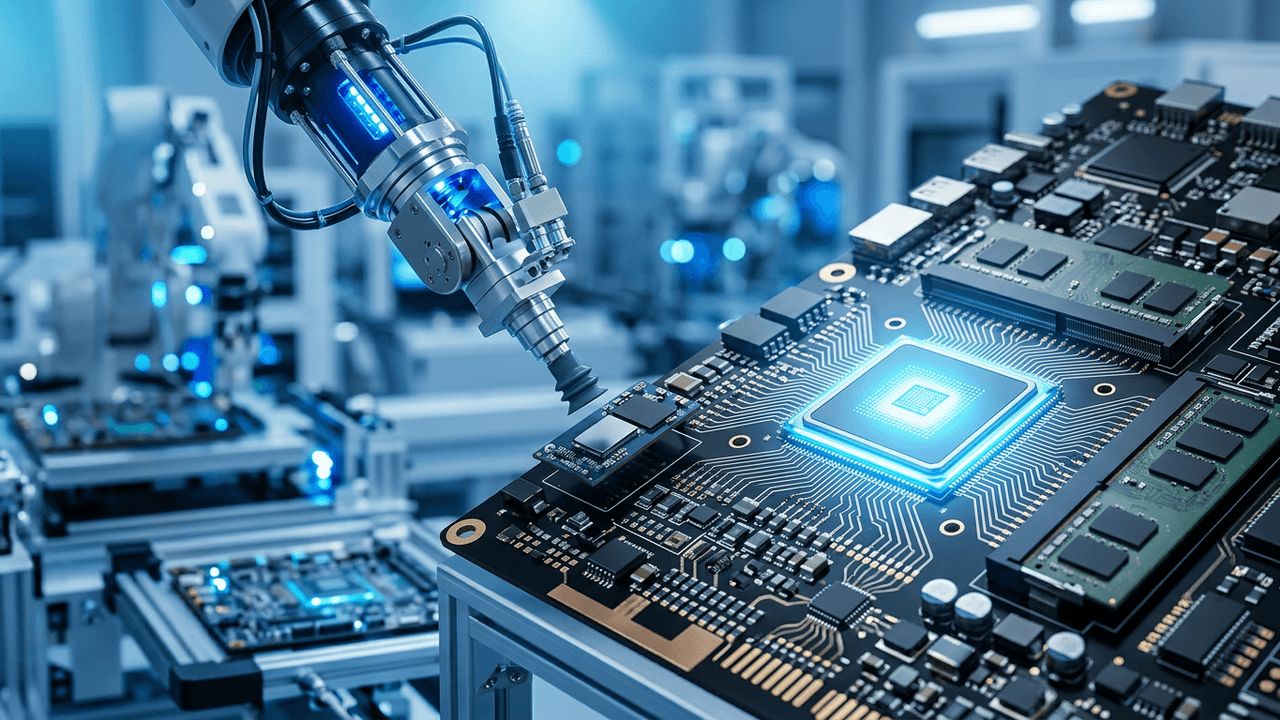
Contract electronics manufacturers serving the region provide printed circuit board assembly, cable harness manufacture, box build and testing services. Customers include equipment manufacturers, instrumentation companies and industrial product developers across Lincolnshire and the Humber. Capability differentiators include surface mount and through-hole assembly, conformal coating for harsh environments, functional testing and traceability systems. For local product companies, having assembly capability within reach shortens development cycles and simplifies quality resolution compared with distant or overseas suppliers.
6. Power Electronics and Drives Specialists
Power electronics providers supply and service variable speed drives, soft starters, uninterruptible power supplies and power quality equipment to industrial customers. This is significant work in North Lincolnshire because large motor loads dominate energy consumption in steel, processing and pumping applications, and drive optimisation delivers substantial energy savings. Specialists in this field advise on harmonic mitigation, power factor correction and motor efficiency, combining electronics expertise with energy management outcomes that matter increasingly as industrial electricity costs rise.
7. Electrical and Electronic Test, Inspection and Calibration Firms
Test and inspection businesses serving the district provide electrical installation testing, thermographic surveys, insulation resistance testing, portable appliance testing and instrument calibration. Their role is preventive: identifying degradation before it causes unplanned outage or safety incident. In continuous process environments where downtime costs are severe, condition monitoring of electrical assets has become standard practice rather than optional, and accredited testing capability is essential for insurance and regulatory compliance.
8. Security, Detection and Monitoring Electronics Providers
Companies supplying electronic security and detection systems serve North Lincolnshire's industrial sites, ports, logistics facilities and commercial premises. Products include access control, network video systems, perimeter detection, gas detection and fire alarm systems. Industrial applications demand more than domestic-grade equipment: systems must operate reliably outdoors, integrate with plant control systems, and in some cases meet hazardous area or safety-related certification. Providers combining electronics supply with design, installation and maintenance offer the most practical value.
9. Communications and Industrial Networking Specialists
Industrial networking firms design and install the communication infrastructure connecting plant equipment, including fieldbus systems, industrial Ethernet, fibre optic backbones and wireless networks for large sites. Demand has grown substantially as plants adopt connected sensors and remote monitoring. The technical challenge is delivering reliability and cyber security in environments where a network fault can stop production, and where operational technology networks must be protected from external threat while still permitting data extraction for analysis.
10. Bespoke Electronics Design and Prototyping Consultancies
Design consultancies serving Lincolnshire and the Humber provide electronic hardware design, embedded software development, prototyping and certification support to businesses developing products. Their clients include equipment manufacturers, agricultural technology developers and industrial product companies. These firms bridge the gap between an operational problem and a manufacturable solution, handling schematic design, board layout, firmware, compliance testing and transition to production. For small and medium-sized manufacturers without internal electronics teams, they provide capability that would otherwise be unaffordable.
Standards, Certification and Compliance
Industrial electronics operates within a dense standards environment. Electrical safety, electromagnetic compatibility, ingress protection ratings, functional safety integrity levels and explosive atmosphere certification all apply depending on application. For safety-related systems, functional safety assessment determines the reliability level required, and equipment must be certified accordingly with documented verification.
For buyers, the practical implication is that documentation is part of the product. Declarations of conformity, test certificates, functional safety certificates and installation records are what demonstrate compliance during audit or investigation. Any supplier treating documentation as an afterthought is unsuitable for regulated industrial work.
Digitalisation and Industry 4.0
North Lincolnshire's industrial base is progressively adopting connected technologies. Condition monitoring sensors on rotating equipment predict bearing failure before breakdown. Energy submetering identifies consumption anomalies. Production data collection enables analysis of throughput losses. Remote access allows specialist support without site attendance.
These developments increase demand for electronics providers who understand both hardware and data. They also raise cyber security requirements sharply, because connecting operational technology to wider networks creates attack surface. Suppliers who address security architecture as part of system design, rather than bolting it on afterwards, provide materially better outcomes.
Skills and Workforce
The sector depends on a mix of electrical engineers, electronics technicians, control and instrumentation specialists, software engineers and panel wirers. North Lincolnshire's industrial heritage provides a strong foundation of electrical and instrumentation competence, though the shift toward software-intensive systems has created demand for combined hardware and software skills that is harder to satisfy.
Apprenticeship routes remain important in this field, since much of the competence is developed through practical exposure to real plant environments. Regional colleges and employer training programmes support progression into control and instrumentation careers, which offer strong prospects given the district's continuing industrial base and the automation investment underway.
Selecting an Electronics Partner
Match capability to application. A firm competent in commercial building controls is not automatically suitable for hazardous area instrumentation. Ask for evidence of comparable projects in similar environments.
Check certification and personnel competency, particularly for hazardous area, functional safety or high-voltage work. Verify lifecycle support, since industrial equipment often operates for decades and component obsolescence management matters. Assess response capability for breakdown situations, because in continuous process plants the value of fast support usually exceeds any purchase price difference. And confirm documentation standards up front, as retrofitting records after installation is difficult and expensive.
Final Thoughts
Electronics manufacturing and engineering in North Lincolnshire is a technically serious, industrially focused sector serving some of the most demanding operating environments in the country. From control panel builders and instrumentation calibrators to automation integrators and hazardous area specialists, these businesses underpin the reliability of the district's steel, refining, chemical, food and logistics operations. As automation and connected monitoring expand, their strategic importance to the regional economy will only increase.
Want your brand featured in front of decision-makers? Publish a guest post or get a link insertion in our guides through AAMAX's guest post and link insertion service.
Helpful Links
 SponsoredAAMAX — Full-Service Digital Agency
Write for Us
Share your expertise with our readers. We welcome guest contributions from industry specialists.
Pitch your idea