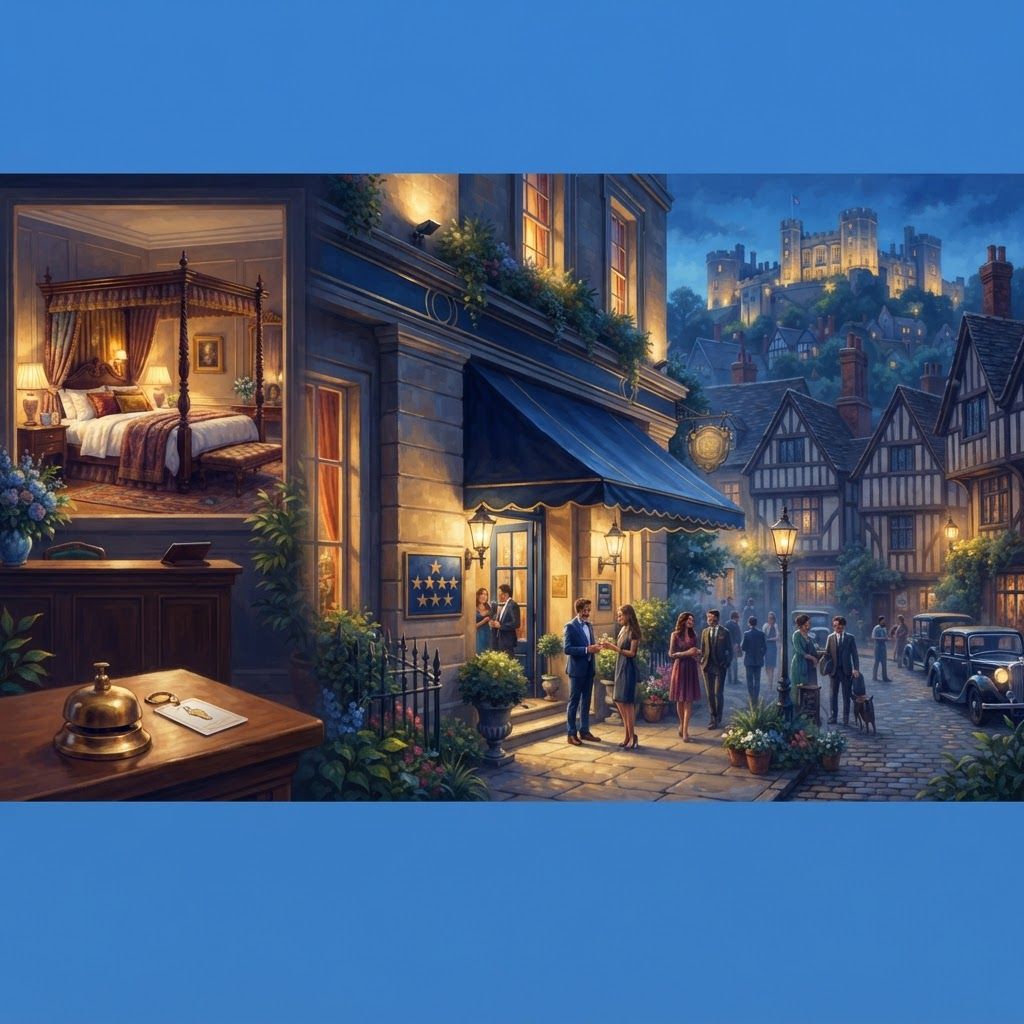
Choosing a Base in Britain's Oldest Recorded Town
Colchester attracts a broad mix of visitors, and hotel choice depends heavily on which kind of visitor you are. Heritage tourists want to be inside the Roman walls, within walking distance of the castle, the museum and the restaurants of the Dutch Quarter. Business travellers want fast access to the A12, business parks and the University of Essex. Wedding and event guests often prefer a country house setting. Families visiting the zoo or the coast want parking, space and value. Military and university visitors have their own geography again, driven by the garrison and the Wivenhoe campus.
Because the town is compact, the practical difference between a central hotel and an edge-of-town hotel is significant. Central accommodation trades parking convenience for the ability to walk everywhere in the evening. Out-of-town hotels reverse that trade. Neither is better in the abstract; the right answer depends on your itinerary.
Historic Town Centre Hotels and Coaching Inns
Colchester's oldest hotels occupy buildings with genuine history, including former coaching inns and Georgian townhouses close to the High Street. Expect period features, uneven floors, characterful bars, atmospheric restaurants and rooms that vary considerably in size and layout because the buildings were never designed as hotels.
The appeal is location and character. You can leave your bag, walk to Castle Park, tour the Roman wall circuit, visit independent shops and eat well without ever using a car. The trade-offs to check are parking arrangements, which are often off-site or chargeable, potential street noise at weekends, and whether lifts serve all floors in a listed structure. Ask for a room away from the bar and street if you are a light sleeper.
Country House and Estate Hotels
The countryside around Colchester supports several substantial country house hotels and estate properties, typically set in landscaped grounds with restaurants, function suites, spa facilities and extensive parking. These properties dominate the local wedding and conference market and appeal to visitors wanting a relaxed rural break within reach of the town.
Strengths include space, quiet, grounds to walk in, strong food offerings and comprehensive event facilities. Points to verify before booking are how many weddings or events are scheduled during your stay, since a busy function can change the atmosphere considerably, whether spa access is included or charged, and the real driving time into Colchester.
Boutique Hotels, Inns and Restaurants With Rooms
A growing category locally is the small, design-led property or the acclaimed pub or restaurant offering a handful of bedrooms. These tend to deliver the best food, the most individual interiors and highly personal service, with rooms often finished to a standard well above their star rating.
They suit couples, food-focused travellers and anyone who dislikes corporate uniformity. Limited room counts mean early booking is essential, particularly at weekends and around the summer season and Christmas. Facilities are usually deliberately minimal, so if you need a gym, 24-hour reception or extensive meeting space, look elsewhere.
Mid-Market Branded Hotels
National and international mid-market brands operate in and around Colchester, offering the reliability that regular travellers value: consistent room standards, air conditioning, work desks, on-site parking, buffet breakfast, meeting rooms and loyalty schemes. Locations tend to favour road access, business parks and retail areas rather than the historic centre.
These hotels are the sensible default for business trips, contractor stays and any visit where predictability outweighs character. Corporate rates, flexible cancellation and loyalty points can make them better value than the headline price suggests.
Budget Hotels and Roadside Lodges
Budget brands cluster near main routes and retail parks, providing clean, functional en-suite rooms, free parking and family room configurations at modest cost. For visitors whose priority is spending money on experiences rather than accommodation, they are extremely effective, and family rooms sleeping four represent particularly strong value.
Expect limited service, simple breakfast and no frills. Where these hotels sit adjacent to a pub or restaurant, evening food is usually available on site.
Guest Houses, B&Bs and Serviced Apartments
Traditional bed and breakfast accommodation remains strong in the residential streets around the centre, offering local knowledge, generous cooked breakfasts and lower prices than full hotels. Serviced apartments and aparthotels have expanded to meet demand from relocating professionals, contractors, medical staff and families visiting for extended periods, providing kitchens, laundry and separate living areas for stays of a week or more.
What to Check Before Booking
Parking. The single most common source of complaint in a historic town. Confirm whether parking is on site, off site, free, chargeable or subject to availability.
Room variability. In period buildings, categories differ enormously. Pay for the larger room grade if space matters to you.
Noise. Ask about function rooms, bars, kitchens, lifts and street frontage.
Accessibility. Listed buildings often lack lifts or level access. Request specific detail rather than a general assurance.
Food arrangements. Check breakfast inclusion and timing, restaurant opening days and whether food service continues late.
Event calendar. Local wedding season, university graduation, garrison events and summer festivals affect both price and availability.
Trends in the Local Hotel Market
Food-led hospitality. Hotels increasingly compete on their restaurant, sourcing from Essex growers, Mersea oyster beds and local breweries, and welcoming non-residents.
Spa and wellbeing. Treatment rooms, pools and outdoor saunas have been added at several country properties, targeting the short-break market.
Flexible work-friendly rooms. Reliable connectivity, proper desks and lobby workspaces are now expected rather than optional.
Sustainability measures. Refillable amenities, reduced linen changes, electric vehicle charging and local sourcing are increasingly standard.
Longer stays. Serviced apartment growth reflects sustained demand from relocation, healthcare and construction sectors.
Dynamic pricing. Rates move sharply with demand, so booking direct with flexible terms often beats a non-refundable third-party rate.
Practical Advice for a Good Stay
Book direct where possible, since hotels frequently reserve their best rooms, breakfast inclusions and cancellation flexibility for direct guests. State the purpose of your visit when booking, because staff can allocate rooms accordingly. If you are attending an event, ask whether a block rate exists. Arrive with a clear plan for parking. And read recent reviews rather than older ones, since local hotels change hands and refurbish regularly.
Conclusion
Colchester offers an unusually complete hotel spectrum for a town of its size: historic inns within the Roman walls, country estates in the surrounding villages, boutique rooms above excellent kitchens, dependable branded hotels near the A12 and genuinely cheap family accommodation on the outskirts. Decide first whether walkability or parking matters more, then match the property type to the purpose of your trip, and the rest of the stay tends to look after itself.
Want your brand featured in front of decision-makers? Publish a guest post or get a link insertion in our guides through AAMAX's guest post and link insertion service.
Helpful Links
 SponsoredAAMAX — Full-Service Digital Agency
Write for Us
Share your expertise with our readers. We welcome guest contributions from industry specialists.
Pitch your idea