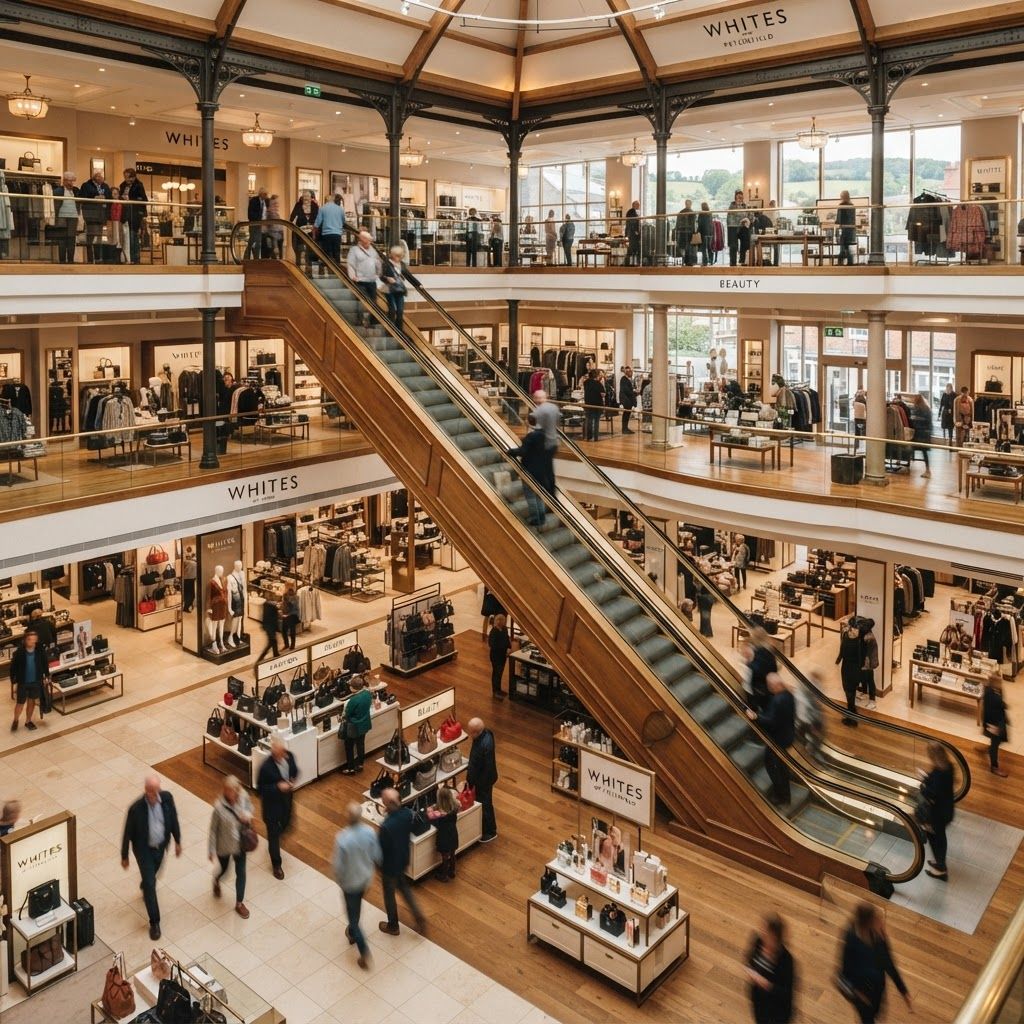
Department Store Retail in Northern Ireland's North Coast
Department stores occupy a particular place in the retail landscape of the Causeway Coast and Glens. In a largely rural region where the nearest city shopping requires a substantial journey, a good department store provides breadth under one roof, removing the need for multiple trips. Coleraine functions as the principal retail hub, supported by Ballymoney, Limavady, Ballycastle and the coastal resort towns.
These stores serve a social as well as commercial function. They anchor town centres, drawing footfall that supports surrounding independent businesses, and they often employ significant numbers of local people. For many residents, the department store visit is part of a broader town centre routine combining shopping, meeting people and using local services.
What Department Stores Offer That Specialist Retail Does Not
The central proposition is breadth combined with convenience. Clothing for the whole family, homeware, gifts, cosmetics, luggage and often furniture can be bought in a single visit, with one payment, one delivery arrangement and one returns policy. For rural customers travelling some distance, this efficiency has genuine value.
Service is another differentiator. Well-run department stores maintain trained staff in specialist areas such as beauty, bedding and fitting services, providing advice that self-service and online retail cannot replicate. Personal shopping, alterations, gift wrapping and delivery services add further practical convenience.
There is also the experiential dimension. Seeing, touching and trying products before purchase remains important for clothing, bedding, cookware and furniture, categories where online returns rates are notably high precisely because physical assessment matters.
Ten Department Stores and Retailers Serving the Region
1. Marks and Spencer is a mainstay across Northern Ireland, combining clothing, homeware and a food hall known for quality. Its food offering in particular draws regular custom independently of the wider store, creating consistent footfall.
2. Next operates substantial stores covering clothing, homeware and furniture, with a well-integrated order and collect service. The combination of physical browsing with catalogue depth suits customers wanting more choice than floor space allows.
3. Debenhams historically anchored many Northern Irish town centres with beauty halls, clothing and homeware, and its model shaped expectations for department retail across the region for decades.
4. Dunnes Stores has a strong presence across the island of Ireland, combining clothing, homeware and grocery. This hybrid format is particularly practical for households that prefer to combine weekly shopping with general purchases.
5. TK Maxx offers a discovery-led shopping experience with branded goods at reduced prices across clothing, homeware and accessories. The changing stock encourages repeat visits and provides access to brands otherwise unavailable locally.
6. Local independent department stores in towns across the region maintain a valued tradition of family-run retail. These businesses often carry generations of local relationships, offer genuinely personal service and stock ranges tailored to known local preferences.
7. Argos functions as a catalogue-based general retailer covering an extremely broad product range. Its collection points across the region give rural customers reliable access without depending on home delivery to remote addresses.
8. Home Bargains and comparable value retailers have expanded rapidly across Northern Ireland, covering household goods, cleaning products, toiletries and seasonal items. They meet everyday needs efficiently and have become a significant part of town centre and retail park provision.
9. Sports Direct and similar category-dominant retailers function almost as department stores within their specialism, offering extensive ranges across sportswear, footwear and equipment relevant to a region with strong outdoor and sporting participation.
10. Boots serves as the principal destination for health, beauty and pharmacy needs across the region's towns. Its combination of prescription services, healthcare advice and extensive beauty ranges makes it a genuine multi-purpose destination.
The Changing Role of Department Stores
The department store model has faced substantial disruption. Online retail removed the convenience advantage for many purchases, specialist retailers competed more effectively within individual categories, and high fixed costs on large properties became difficult to sustain as footfall declined.
The stores that have adapted successfully did so by playing to genuine strengths. Experience, service and curation cannot be replicated online. Click and collect services combine online range with physical convenience and drive footfall that generates additional purchases. Hospitality, through cafés and restaurants, extends dwell time and gives customers a reason to make a trip rather than order from home.
Local knowledge has also proved valuable. Independent department stores that buy for their specific customer base rather than following national ranging decisions often outperform expectations because their stock genuinely matches local demand.
Supporting Town Centres
The health of department stores directly affects town centre vitality. Large stores draw footfall that supports cafés, independent shops and services nearby, and their loss can trigger wider decline. Conversely, a thriving anchor store creates conditions in which smaller businesses can succeed.
Across the Causeway Coast and Glens there is strong awareness of this relationship. Local shopping campaigns, market events and town centre initiatives reflect a recognition that retail spending decisions have community consequences. Money spent locally circulates within the area, supporting employment and services, whereas spending with distant online retailers largely leaves the local economy.
Seasonal Patterns and Tourism
The region's retail rhythm is strongly seasonal. Summer brings substantial visitor numbers to Portrush, Portstewart and the Causeway coast, boosting sales across clothing, gifts and outdoor goods. Major golf and sporting events can transform trading in particular weeks.
Winter shifts focus toward Christmas trading, which remains critical for department retail. Stores invest heavily in seasonal displays, gift ranges and extended opening. The quieter periods between require careful stock and staffing management, and experienced local retailers plan around these patterns closely.
Practical Shopping Advice
Take advantage of loyalty schemes, which frequently offer meaningful value through points, exclusive offers and early sale access. Sign up for notifications about sale events, as end-of-season clearances offer genuine savings on clothing and homeware.
Use click and collect to combine online range with local collection, which also avoids delivery charges and failed deliveries to rural addresses. Make use of in-store services such as bra fitting, bedding advice and personal shopping, which are typically free and genuinely improve purchase outcomes.
Check returns policies before buying gifts, particularly around Christmas when extended return windows often apply.
Final Thoughts
Department stores across the Causeway Coast and Glens continue to play an important role despite significant changes in retail. They provide breadth, service and experience that online shopping cannot fully replace, and they anchor town centres in ways that benefit entire communities. Supporting these stores, whether national names or long-standing local independents, contributes directly to the vitality of the region's towns.
Want your brand featured in front of decision-makers? Publish a guest post or get a link insertion in our guides through AAMAX's guest post and link insertion service.
Helpful Links
 SponsoredAAMAX — Full-Service Digital Agency
Write for Us
Share your expertise with our readers. We welcome guest contributions from industry specialists.
Pitch your idea