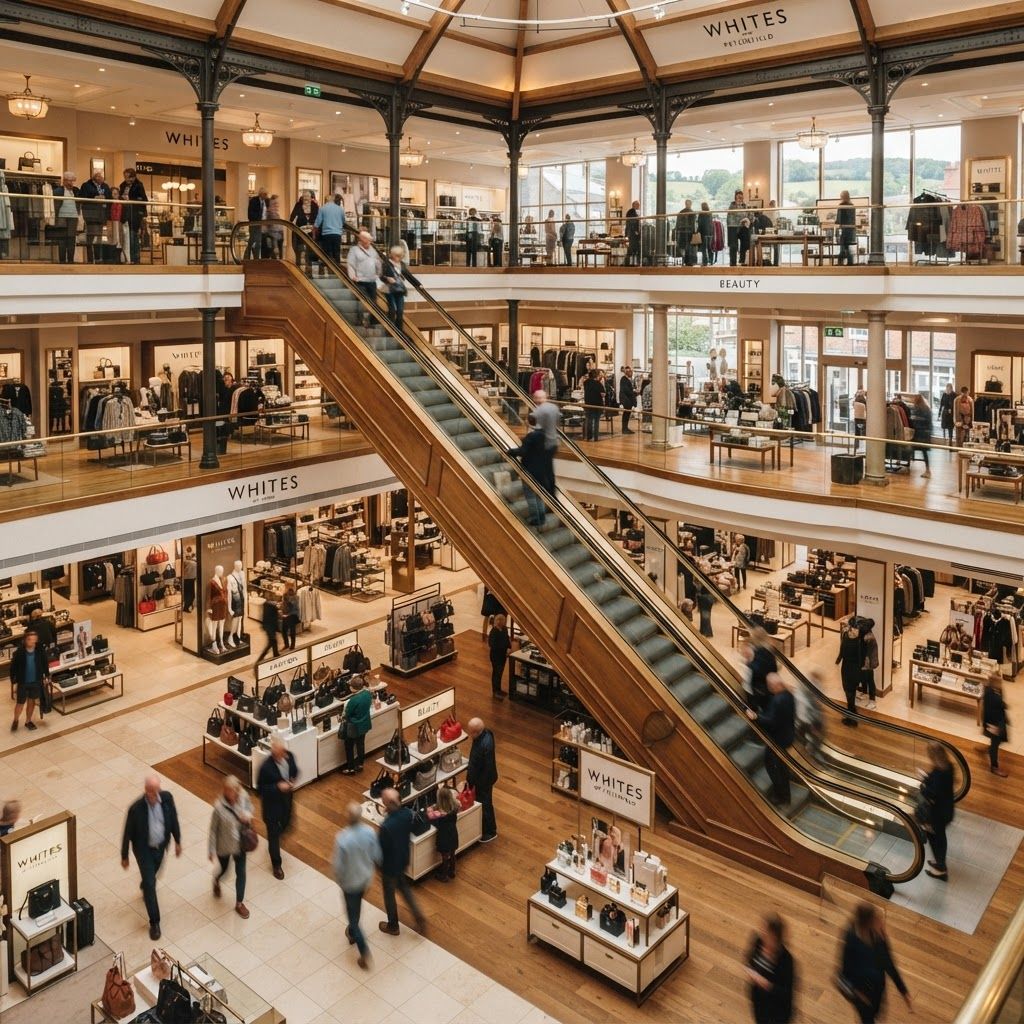
Supplying the Independent Retail Scene
The Causeway Coast and Glens has a lively independent retail sector. Boutiques in Coleraine and Portstewart, gift and craft shops serving visitors to the Giant Causeway and Bushmills, outdoor retailers catering to walkers and surfers, and general clothing stores in Ballymoney and Limavady all need reliable wholesale supply.
Behind them sits a distribution network covering fashion and apparel wholesale, workwear and uniform supply, sportswear and teamwear, outdoor and technical clothing, promotional and branded garments, and the heritage knitwear and woollens that sell particularly well to tourists. Each segment operates differently in terms of minimum orders, seasonality and margin structure.
How Clothing Wholesale Works
Most fashion wholesale follows a seasonal cycle. Buyers view collections well ahead of the selling season, place forward orders, and receive stock in phased deliveries. This requires retailers to commit capital months in advance and to forecast demand accurately, which is a genuine skill.
Alongside this sits stock-service wholesale, where the distributor holds continuous inventory of core lines and retailers reorder as needed. This model dominates in workwear, basics, teamwear and promotional clothing, and it suits smaller retailers who cannot tie up cash in forward commitments.
Understanding which model a supplier operates is essential. A boutique that can reorder a fast-selling line within days has a very different business rhythm from one that must wait until next season.
Ten Clothing Wholesalers Serving the Region
1. Causeway Apparel Wholesale supplies independent boutiques with women and men fashion ranges, working on both seasonal forward orders and a stock-service core collection for quick replenishment.
2. Roe Valley Workwear Supplies distributes durable work clothing, high visibility garments, safety footwear and personal protective equipment to employers across agriculture, construction and manufacturing.
3. North Coast Sportswear Distribution serves clubs, schools and sports retailers with teamwear, training kit and performance apparel, including decoration and personalisation services.
4. Glens Heritage Knitwear wholesales traditional Irish knitwear, woollens, scarves and accessories to gift shops and visitor attractions where authentic local product sells strongly.
5. Coleraine Uniform Company supplies school uniforms, hospitality uniforms and corporate clothing, offering embroidery and garment branding alongside distribution.
6. Bann Valley Outdoor Clothing distributes waterproofs, insulated layers, walking and technical outdoor apparel suited to the region weather and its substantial walking and coastal tourism market.
7. Ballymoney Textile Trade provides basics and blanks including plain tees, hoodies, polos and sweatshirts for printers, embroiderers and promotional businesses.
8. Antrim Coast Surf and Beachwear supplies wetsuits, boardshorts, rash vests and beach apparel to the surf shops and watersports businesses concentrated around Portrush and Castlerock.
9. Dalriada Accessories Wholesale focuses on hats, gloves, bags, belts and jewellery, the add-on categories that lift average transaction value in independent retail.
10. Basalt Sustainable Apparel completes the list by distributing organic cotton, recycled fibre and ethically certified clothing for retailers whose customers ask searching questions about production.
Buying Well: Practical Guidance for Retailers
Successful buying is disciplined rather than instinctive. Start with an open-to-buy budget that limits total commitment, then allocate it across categories based on past performance rather than personal taste. Track sell-through rates by line so you learn which suppliers and styles genuinely turn.
Size curves matter enormously. Ordering a flat spread across sizes almost always leaves a tail of unsold stock at the extremes. Historical data from your own till system is far more reliable than a supplier suggested ratio.
Balance core and fashion. Core lines that sell steadily year-round provide reliable cash flow and lower markdown risk. Fashion lines drive interest and footfall but carry higher risk. A common structure weights core more heavily than instinct suggests.
Seasonality and the Tourism Effect
Retail in the Causeway Coast and Glens is strongly seasonal. Visitor numbers surge from late spring through summer, with a further lift around major events and holidays. Coastal towns such as Portrush and Portstewart experience dramatic swings between peak and off-season trading.
This has clear buying implications. Stock must be in place before the season begins, not arriving as it peaks. Weather-responsive lines, particularly waterproofs and warm layers, sell well even in summer given the Atlantic climate. Souvenir-adjacent clothing with a local character performs strongly with visitors and carries healthy margin.
Off-season requires a different approach, with tighter stock levels, strong core ranges for local customers, and careful cash management through quieter months.
Workwear and Uniform: A Steadier Market
Workwear wholesale behaves quite differently from fashion. Demand is driven by employment levels and safety requirements rather than trends, making it considerably more predictable. Repeat business is strong because garments wear out and staff turn over.
Suppliers in this segment must understand safety standards for high visibility clothing, protective footwear and flame resistant garments, and be able to advise employers on compliance. Branding capability, whether embroidery or heat transfer, is usually expected as part of the service.
Sustainability and Provenance
Consumers increasingly ask where clothing comes from and under what conditions it was made. Retailers who can answer confidently gain trust. Wholesalers are responding with certified organic cotton, recycled polyester, traceable supply chains and documented labour standards.
There is also growing interest in durability and repair. Clothing designed to last, sold alongside repair advice or services, appeals to a segment of customers actively rejecting disposable fashion. For retailers in the borough, this positioning can differentiate an independent shop from online competition.
Choosing a Clothing Wholesaler
Check minimum order values and whether they are realistic for your scale. Clarify delivery schedules, particularly for seasonal deliveries where late arrival destroys value. Ask about exclusivity, since stocking the same range as a competitor two streets away undermines both businesses.
Assess return and exchange policies for faulty goods, payment terms, and whether the supplier offers merchandising support or point of sale material. Request samples before committing to a range, because photographs conceal a great deal about fabric weight and construction quality.
Outlook
Independent clothing retail faces real pressure from online competition, but the picture in the Causeway Coast and Glens is not gloomy. Tourism supports strong seasonal demand, local loyalty remains meaningful, and customers increasingly value curated selection and personal service over infinite online choice. Wholesalers that support retailers with flexible ordering, quick replenishment and genuine product knowledge will remain central to that ecosystem.
Want your brand featured in front of decision-makers? Publish a guest post or get a link insertion in our guides through AAMAX's guest post and link insertion service.
Helpful Links
 SponsoredAAMAX — Full-Service Digital Agency
Write for Us
Share your expertise with our readers. We welcome guest contributions from industry specialists.
Pitch your idea