

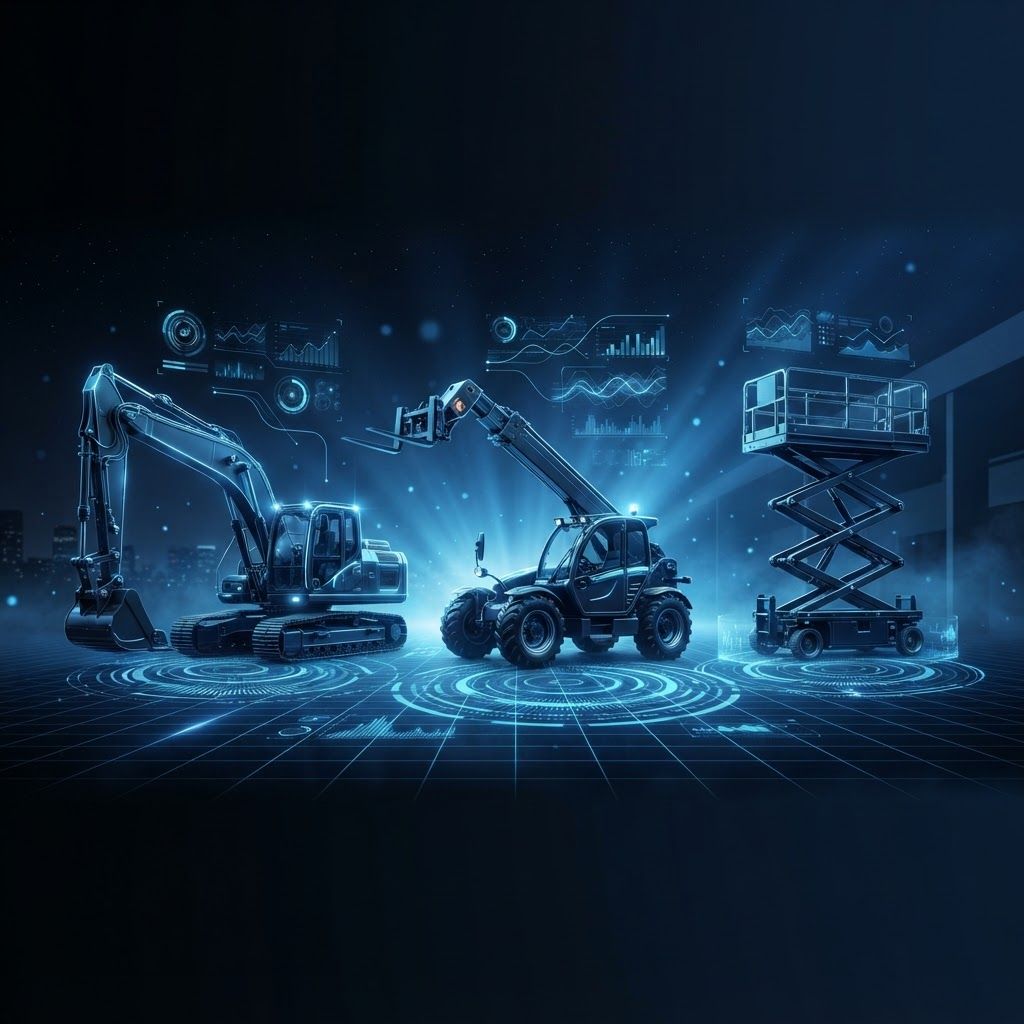
Why Equipment Hire Dominates Modern Construction
Very few contractors own the full range of plant their projects require. Machinery is expensive to buy, depreciates steadily, needs insuring, servicing, testing and storing, and spends most of its life idle unless a business has continuous work for it. Hiring converts that capital burden into a predictable project cost and gives access to well-maintained, current equipment.
In Winchester, the hire market serves an unusually varied customer base. Construction firms working on city centre sites need compact machines that fit through restricted access. Rural contractors and landowners need agricultural and groundworks plant. Homeowners tackling renovation projects need tools and small equipment for a weekend. Event organisers need temporary power, welfare and access equipment. Hire companies have structured their fleets accordingly.
Excavators and Earthmoving Plant
Excavators form the core of most groundworks operations. Hire fleets typically range from micro excavators weighing under a tonne, which fit through a standard doorway and suit garden and basement work, through mini and midi machines in the one to eight tonne range that handle most domestic and small commercial groundworks, up to larger tracked machines for substantial civil engineering.
Attachment availability extends the usefulness of each machine considerably. Breakers, augers, grabs, compaction plates, rippers and tilt rotators turn a single excavator into a multi-purpose tool. Hire desks that advise on the right combination for a specific job save customers both time and money.
Zero and reduced tail swing machines are particularly valuable in Winchester's constrained city sites, where a conventional counterweight would strike boundaries during slewing.
Dumpers, Loaders and Site Transport
Moving material around a site requires appropriate transport. Site dumpers range from small walk-behind and one-tonne units suitable for domestic projects to nine-tonne articulated machines for larger works. Swivel skip variants allow discharge to the side, which is essential when working alongside a trench.
Skid steer and compact track loaders offer versatility with bucket, forks, sweeper and grading attachments. Telehandlers combine lifting and reach, making them indispensable on building sites for moving palletised materials to upper levels.
Access Equipment and Powered Platforms
Working at height safely requires appropriate access equipment. Scissor lifts provide a stable platform for vertical access indoors and on level ground, while boom lifts and cherry pickers offer outreach over obstacles and are essential for facade work, tree surgery and building maintenance.
Tower scaffolds remain widely hired for smaller jobs, and podium steps have largely replaced stepladders for low-level internal work because they provide a guarded platform.
Operators of powered access equipment require recognised training and certification, and hire companies will normally ask for evidence before releasing a machine. Familiarisation on the specific unit is also expected.
Scaffolding and Temporary Works
Scaffolding hire divides between systems erected by the hire company's own trained operatives and components hired for erection by the customer's competent people. Independent, putlog, birdcage and mobile configurations suit different applications.
Temporary works also cover trench support systems such as shoring boxes and hydraulic props, which are mandatory for excavations deep enough to present a collapse risk. This is an area where cutting corners is genuinely life-threatening, and reputable hire companies will advise on requirements rather than simply supplying what is asked for.
Propping systems, formwork and falsework support structures during construction and require design input for anything beyond the routine.
Concrete and Compaction Equipment
Concreting equipment includes mixers from small electric drum units to larger diesel machines, power floats for finishing slabs, poker and beam vibrators for consolidation, and concrete saws for cutting cured material.
Compaction equipment covers vibrating plates for granular fill, trench rammers for confined backfill and pedestrian or ride-on rollers for larger areas. Correct compaction is fundamental to the performance of any surface or foundation, and using appropriately sized equipment in properly controlled layers is what prevents later settlement.
Power Generation and Site Electrics
Generators supply power where mains is unavailable or insufficient, ranging from small portable units for hand tools to large silenced sets for site accommodation and plant. Sizing correctly matters, as an undersized generator struggles with motor starting loads and an oversized one runs inefficiently.
Site electrical distribution operates at reduced voltage for hand tools, requiring transformers and appropriate distribution boards. Task and area lighting, including tower lights for winter working, extends productive hours during the shorter days.
Battery-powered tools and hybrid generators with battery storage are increasingly available, reducing noise and emissions on sites near residential properties, which is relevant across much of Winchester.
Pumps, Dewatering and Drainage Equipment
Water management is a routine requirement on construction sites, particularly in the Itchen valley where groundwater can be encountered at shallow depth. Submersible, surface and diaphragm pumps handle clean water, dirty water and solids-laden discharge respectively.
Wellpoint dewatering systems lower the water table around an excavation, allowing work in otherwise saturated ground. Drainage contractors also hire jetting equipment, camera survey systems and pipe testing equipment.
Discharge of pumped water requires care, as silt-laden runoff entering a watercourse is an environmental offence. Settlement tanks and filtration are often necessary.
Welfare Units and Site Accommodation
Providing welfare facilities is a legal duty on construction sites. Hire companies supply mobile welfare units combining toilet, washing, drying and rest facilities, often with their own power generation and water storage for locations without services.
Larger sites hire modular cabins for offices, canteens, drying rooms and secure stores. Portable toilets serve smaller projects and events.
Site security equipment including heras fencing, hoarding, gates, alarms and monitored camera towers protects both the works and the public.
Tool Hire for Trades and Homeowners
Tool hire counters serve professionals and the public with everything needed for short-duration tasks: breakers, disc cutters, floor sanders, wallpaper strippers, tile cutters, carpet cleaners, pressure washers, garden equipment, ladders and specialist hand tools.
For homeowners, hiring makes obvious economic sense. A floor sander or tile saw used once every few years costs far less to hire than to buy, and the hired unit is professional grade and properly maintained.
Good tool hire counters provide instruction on safe operation, supply the correct consumables and explain the limitations of each machine, which prevents both damage and injury.
Specialist and Attachment Hire
Beyond mainstream plant, specialist hire covers lifting equipment such as chain blocks, slings, shackles and spreader beams, all of which require current inspection certification. Also available are floor preparation machines, diamond drilling rigs, environmental monitoring equipment, heaters and dehumidifiers for drying out buildings, and traffic management equipment.
Seasonal demand shifts the fleet. Heaters and dryers peak in winter, while landscaping and surfacing equipment peaks through summer.
Legal, Safety and Insurance Considerations
Hirers carry real responsibilities. Operators of plant and powered access must hold appropriate certification, and hire companies will normally verify this. Anyone directing lifting operations needs suitable training.
Insurance is essential. Most hire agreements make the hirer liable for loss, damage and theft, and standard business or household policies may not cover hired-in plant. Hire companies offer damage waiver, but reading what it excludes is worthwhile.
Pre-use inspection is the hirer's responsibility. Check for damage, confirm inspection certificates are current, verify that guards and safety devices are in place, and report defects immediately rather than continuing to use compromised equipment.
Hiring Efficiently
Book in advance, particularly for popular equipment during busy periods. Plan delivery and collection around the programme, since hire charges usually accrue whether the machine is working or standing.
Choose the right size. Hiring a machine too small for the task wastes time and risks damaging the equipment, while an oversized machine may not access the site and costs more than necessary.
Consider transport. Larger plant requires delivery by low loader, and access to the site must be assessed for width, height, ground conditions and turning space before the vehicle arrives.
Return equipment clean and refuelled where the agreement requires it, as cleaning and refuelling charges are typically higher than doing it yourself.
Final Thoughts
Winchester's equipment hire sector supports everything from major civil engineering to weekend garden projects, offering well-maintained, current machinery without the burden of ownership. Customers who plan ahead, specify the correct equipment for their access and ground conditions, verify operator competence and understand their insurance position get the most value and, more importantly, complete their projects safely.
Want your brand featured in front of decision-makers? Publish a guest post or get a link insertion in our guides through AAMAX's guest post and link insertion service.
Helpful Links
 SponsoredAAMAX — Full-Service Digital Agency
Write for Us
Share your expertise with our readers. We welcome guest contributions from industry specialists.
Pitch your idea

