Why Renting Beats Owning for Most Users
Heavy equipment is expensive to buy, expensive to maintain, expensive to insure, and expensive to store. For any machine used intermittently, the arithmetic favors rental decisively. A contractor who needs an excavator for three weeks a year, or a homeowner who needs a skid steer for a weekend, gains access to a well-maintained, current-model machine without capital outlay, depreciation, maintenance obligation, or transport logistics.
Rental also provides flexibility that ownership cannot. A job that requires a mini excavator in a tight backyard and a larger machine on an open lot can use the right tool for each phase rather than forcing one owned machine into both roles. When a piece of equipment breaks down, the rental company delivers a replacement rather than the user absorbing repair cost and schedule loss. For growing contractors in particular, rental converts a fixed cost into a variable one tied directly to billable work.
Equipment Categories and Their Uses
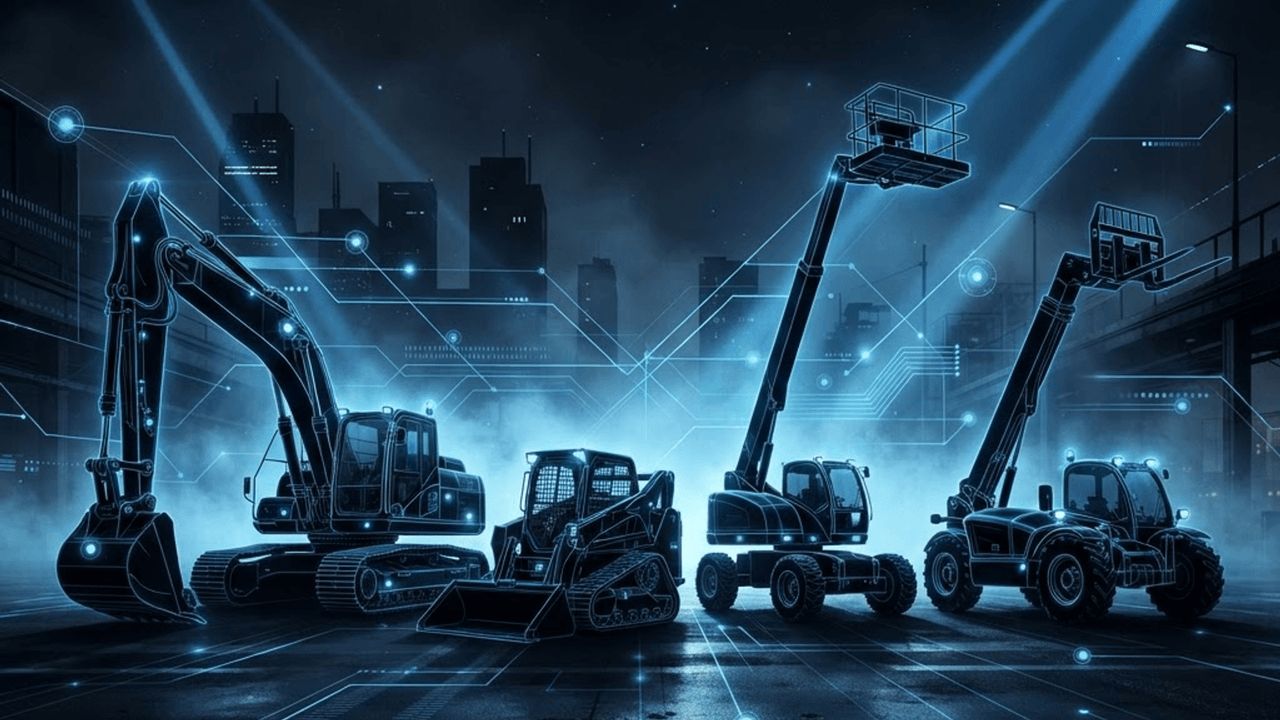
Earthmoving equipment includes mini and standard excavators, skid steers, compact track loaders, backhoes, and dozers. Selection depends on access width, required reach and depth, ground conditions, and whether tracks or wheels suit the surface. Track machines distribute weight better on soft ground; wheeled machines move faster and damage finished surfaces less.
Aerial and lifting equipment covers scissor lifts, boom lifts, telehandlers, and forklifts. Working height, required horizontal outreach, indoor versus outdoor use, and floor loading limits all drive the choice. Electric lifts are necessary for interior work where emissions are unacceptable.
Compaction and site preparation includes plate compactors, jumping jack rammers, ride-on rollers, and trenchers. Proper compaction is essential under slabs, pavement, and structural fill, and undersized equipment produces inadequate density regardless of how many passes are made.
Concrete and material handling covers mixers, power buggies, screeds, saws, and core drills. Support equipment includes generators, light towers, pumps, heaters, air compressors, and temporary fencing — often the items that determine whether a crew can actually work a given day.
Ten Equipment Rental Providers Serving Westminster
Front Range Equipment Rental maintains a broad general fleet covering earthmoving, compaction, and support equipment. Their strength is availability across categories, allowing a contractor to source an entire job from one supplier with a single delivery.
Westminster Tool & Machine Rental serves homeowners and small contractors with compact equipment and hand tools. Their staff invests time in explaining operation to first-time users, which reduces both damage and injury.
Summit Earthmoving Rentals specializes in excavators, dozers, and compact track loaders, with a range of sizes and attachment options. Attachment availability — augers, breakers, grapples, thumbs — is a genuine differentiator.
Cornerstone Aerial Lift Rental focuses on scissor lifts, boom lifts, and telehandlers, including electric units for interior work. They also provide operator familiarization, useful for crews new to a particular lift type.
Blue Line Compaction & Paving Equipment concentrates on rollers, plate compactors, rammers, and asphalt equipment, serving site work and paving contractors who need proper density on structural fill.
Heritage Contractor Supply & Rental pairs rental with materials and consumables, allowing a crew to pick up equipment, blades, fasteners, and safety supplies in one stop.
Northwest Metro Rentals emphasizes delivery reliability and same-day availability, which matters when a machine fails mid-job or a schedule compresses unexpectedly.
Aspen Ridge Concrete Equipment serves concrete contractors with mixers, buggies, screeds, saws, and finishing equipment, plus support gear for cold weather placement.
Clearwater Site Services provides temporary infrastructure — generators, light towers, pumps, heaters, and fencing — the equipment that keeps a site functional rather than building it directly.
Ridgeline Fleet Solutions works with larger contractors on longer-term rentals and rental-purchase arrangements, including telematics reporting on utilization for clients managing multiple machines across sites.
Renting Without Costly Mistakes
Size the machine to the access, not only to the work. An excavator that can dig the trench efficiently is useless if it cannot pass through a gate or between structures. Measure the narrowest access point and the available working area before selecting a machine, and confirm dimensions with the rental provider rather than estimating.
Understand the rate structure. Rental is typically quoted daily, weekly, and monthly, with weekly and monthly rates offering substantially better value per day. Many agreements also include hour meter limits, with additional charges beyond a threshold. Confirm delivery and pickup fees, fuel policy, and whether environmental or damage protection charges apply.
Inspect the machine at delivery and document its condition. Photograph existing damage, verify fluid levels, confirm attachments and safety equipment are present, and test controls before the delivery driver leaves. This protects against disputed damage charges at return and identifies problems before they cost you a work day.
Safety and Operator Competence
Equipment injuries are frequently the result of operating a machine without adequate familiarity. Aerial lifts in particular require operator training under workplace safety requirements, and rental providers can often supply or arrange familiarization. Homeowners renting compact equipment should take the orientation seriously rather than treating it as a formality.
Call for utility locates before any excavation. Striking a gas, electrical, or communication line is dangerous, expensive, and entirely avoidable. Locate services are provided at no cost and required by law, and the marking period must be observed before digging begins.
Match compaction and lifting equipment to actual requirements rather than availability. Under-compacted fill leads to settlement and cracked slabs years later. Overloaded lifts and improperly set outriggers cause tip-overs. Neither risk is worth the savings from a smaller machine.
Trends in the Rental Market
Electrification is reaching compact equipment. Battery-powered mini excavators, compact loaders, and lifts are entering rental fleets, offering quiet, emission-free operation valuable for indoor work, noise-restricted areas, and enclosed spaces. Runtime continues to improve with each equipment generation.
Telematics is now standard on much of the fleet, providing location, hours, fuel consumption, and fault codes. For contractors managing several machines across multiple Westminster sites, this visibility reduces both loss and unproductive rental time.
Attachment-based versatility continues to expand. A single compact track loader with the right set of attachments can perform grading, augering, breaking, brush clearing, and material handling, reducing the number of machines a job requires. Rental providers who stock a deep attachment inventory offer real value beyond the base machine — and for most contractors and homeowners, that combination of the right machine, the right attachment, and reliable delivery is what keeps a project moving on schedule.
Want your brand featured in front of decision-makers? Publish a guest post or get a link insertion in our guides through AAMAX's guest post and link insertion service.
Helpful Links
 SponsoredAAMAX — Full-Service Digital Agency
Write for Us
Share your expertise with our readers. We welcome guest contributions from industry specialists.
Pitch your idea