

Why Hire Has Replaced Ownership in Construction
Very few contractors working in Solihull today own the majority of the equipment they use. The economics have shifted decisively toward hire, and the reasons are straightforward. Plant depreciates quickly, requires storage and insurance, needs statutory inspection and maintenance, and sits idle between projects. Hiring converts a large capital outlay into a predictable project cost, transfers the maintenance and compliance burden to the supplier, and gives access to newer, cleaner and safer machines than most firms could justify buying.
Solihull is particularly well served because of its geography. The borough sits at the junction of the M42 and A45 corridors with the National Exhibition Centre, Birmingham Business Park and Blythe Valley Park all within a short radius, which has created sustained demand for plant across construction, events, logistics and facilities maintenance. That density supports a deep local supply chain, meaning most equipment can be on site within a day rather than a week.
The Ten Categories of Equipment Rental Provider
1. General tool hire depots. The everyday backbone of the sector, supplying breakers, disc cutters, mixers, floor saws, sanders, dehumidifiers, heaters, pumps and hand tools. Their strength is availability and short hire periods, and they serve tradespeople and homeowners equally.
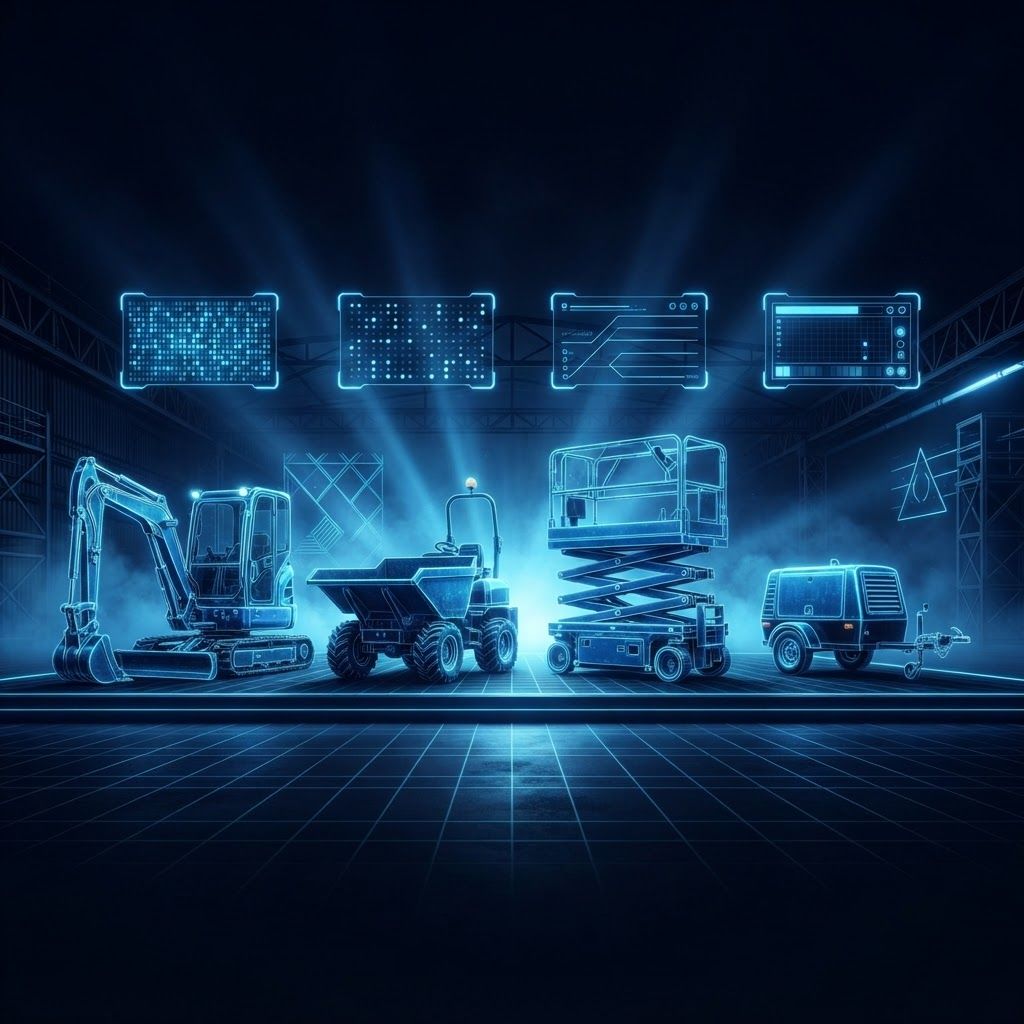
2. Earthmoving and excavator specialists. Supplying micro excavators that fit through a standard garden gate, one to three tonne machines for domestic groundworks, and larger tracked excavators, dumpers and rollers for commercial sites. They typically offer a range of buckets, breakers and augers as attachments.
3. Access equipment providers. Scissor lifts, boom lifts, vertical mast lifts, scaffold towers and podium steps. Working at height is one of the most tightly regulated activities in construction, so these suppliers place heavy emphasis on inspection records, familiarisation training and correct equipment selection for ground conditions.
4. Powered access and lifting firms. Telehandlers, forklifts, material hoists, gantries, chain blocks and lifting accessories such as slings and shackles. Statutory thorough examination under lifting equipment regulations is central to their operation, and reputable providers supply current certification with every item.
5. Power generation and temporary supply specialists. Generators, distribution boards, transformers, festoon and task lighting, lighting towers, and increasingly battery storage units used to reduce fuel consumption and noise. In demand for both construction sites and the borough's substantial events sector.
6. Site accommodation and welfare providers. Portable offices, canteens, drying rooms, toilet blocks, storage containers and fencing. Welfare provision is a legal requirement on most sites, and these suppliers handle delivery, siting, servicing and removal as a package.
7. Concrete and groundworks equipment suppliers. Mixers, power floats, screed rails, poker vibrators, trench props, trench sheets and compaction plant. Some also supply small-batch concrete delivery, which suits domestic and infill projects where a full load would be wasted.
8. Specialist survey and testing hire. Laser levels, rotating lasers, total stations, cable and pipe locators, thermal imaging cameras, moisture meters and air quality monitors. Precision instruments are frequently hired rather than bought because calibration is expensive and usage is intermittent.
9. Operated plant and contract lift services. Rather than supplying a machine alone, these firms provide equipment with a trained and certified operator, common for larger excavators, cranes and telehandlers. It shifts operational risk to the supplier and removes the need for in-house accreditation.
10. Event, marquee and temporary structure hire. Given Solihull's proximity to major exhibition and conference venues, several local providers specialise in temporary flooring, staging, barriers, grandstands and structures, working to compressed build and derig schedules.
Understanding Hire Pricing
The headline day rate is rarely the whole cost, and understanding the structure prevents unwelcome invoices. Most suppliers operate a minimum hire period, often one day or one week, with weekly rates typically representing far better value than consecutive daily hire. Delivery and collection are usually charged separately and priced by distance and vehicle type, so consolidating a single delivery of several items is markedly cheaper than staged drops.
Fuel policy varies. Some suppliers deliver machines full and recharge for refuelling on return; others expect the hirer to return the machine full. Damage waivers or hire protection schemes are commonly offered, covering accidental damage but generally excluding theft without forced entry, misuse and loss of attachments. Read what is excluded rather than what is covered.
Hire charges normally continue until the equipment is physically collected or returned, not from the moment the hirer stops using it, so notifying the supplier promptly and obtaining an off-hire reference number is one of the simplest ways to control cost. Idle plant sitting on site over a weekend is one of the most common avoidable expenses in the sector.
Safety, Compliance and Operator Competence
Hired plant carries real legal responsibility for the hirer. Under health and safety legislation, the person using the equipment must be competent, and for many machines that means a recognised card or certificate such as CPCS, NPORS or IPAF for powered access. Reputable Solihull suppliers will ask for evidence of competence, and a supplier that never asks should prompt caution rather than relief.
Before accepting delivery, inspect the machine, note any existing damage in writing or with photographs, and check that inspection and examination certificates are current. Confirm ground conditions and access dimensions in advance; a large proportion of failed deliveries occur because a gateway, driveway or floor loading capacity was never measured.
Sustainability and Fleet Modernisation
The most significant trend in local plant hire is decarbonisation. Battery-electric mini excavators, dumpers and access platforms are becoming widely available, and hybrid or battery-buffered generators are steadily replacing diesel units on smaller sites. These machines are quieter, produce no exhaust at the point of use, and are increasingly required on projects with strict noise or emissions conditions, particularly in residential Solihull streets and near occupied commercial premises. Telematics is also now standard on larger fleets, providing usage data, geofencing and service scheduling that improves reliability for hirers.
Choosing the Right Supplier
Judge suppliers on fleet age, breakdown response time, breadth of range and the quality of their paperwork. Ask what happens if a machine fails mid-hire and whether a replacement is guaranteed within a stated window, because downtime usually costs far more than the hire itself. For repeat users, a credit account and negotiated rates are worth arranging early, and consolidating spend with fewer suppliers generally improves both pricing and priority.
Conclusion
Solihull's equipment rental market is broad and well developed, covering everything from a single breaker for an afternoon to fully operated plant and complete site welfare compounds. The best outcomes come from planning ahead: measure access, confirm operator competence, consolidate deliveries, understand the fuel and damage terms, and off-hire promptly. Handled properly, plant hire gives even small local contractors access to modern, compliant, low-emission equipment without carrying any of the ownership burden.
Want your brand featured in front of decision-makers? Publish a guest post or get a link insertion in our guides through AAMAX's guest post and link insertion service.
Helpful Links
 SponsoredAAMAX — Full-Service Digital Agency
Write for Us
Share your expertise with our readers. We welcome guest contributions from industry specialists.
Pitch your idea

