

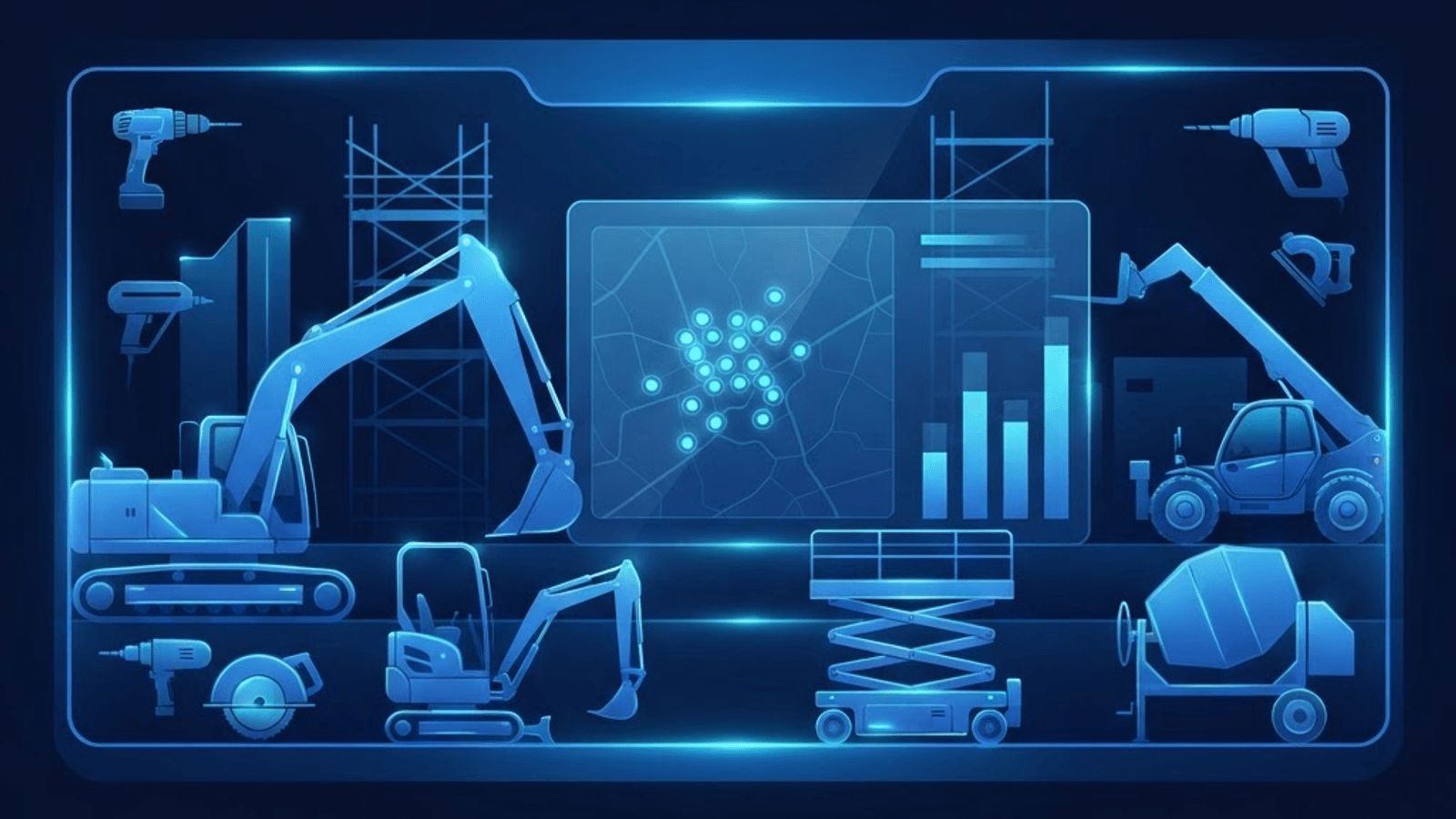
Why Equipment Hire Dominates Modern Construction
The economics of construction equipment strongly favour hire over purchase for all but the most frequently used items. A mini excavator, scissor lift or concrete saw might be needed for a few days on a given project, and ownership brings capital cost, maintenance, servicing, statutory inspection, storage, insurance and depreciation. Hire converts all of that into a predictable daily or weekly cost with the supplier carrying the maintenance burden.
For Gedling contractors and homeowners, the local hire market is well developed, supported by the concentration of construction and industrial activity around the Colwick estate and the steady volume of domestic improvement work across the borough. Access ranges from small tool hire suitable for a weekend project to full plant hire with operators for substantial groundworks.
Ten Equipment Rental Providers Serving Gedling
Gedling Plant Hire offers a broad fleet covering excavators, dumpers, rollers, compaction equipment and site accommodation. They provide both operated and self-drive hire and handle delivery and collection across the borough.
Colwick Tool and Equipment Rental is centrally placed for the industrial estate and stocks a deep range of hand and power tools, breakers, cutting equipment, generators and lighting, with counter service suited to contractors collecting early.
Arnold Access Hire specialises in working at height equipment including scissor lifts, boom lifts, podium steps, scaffold towers and edge protection, along with the familiarisation training operators require.
Carlton Mini Digger Hire focuses on compact excavation plant suited to domestic and restricted-access sites, including micro excavators that pass through standard gateways, along with attachments such as breakers and augers.
Netherfield Site Services supplies welfare units, site cabins, secure storage containers, portable toilets, fencing and hoarding, the infrastructure that makes a compliant site possible.
Mapperley Power Tool Hire serves the domestic and small trade market with floor sanders, wallpaper strippers, carpet cleaners, tile cutters, garden machinery and decorating equipment on flexible short-term terms.
Daybrook Groundworks Equipment concentrates on excavation and earthmoving, offering larger excavators, tracked dumpers, trenchers and compaction plant for civils and infrastructure work.
Gedling Concrete Equipment supplies mixers, concrete pumps, power floats, poker vibrators, screeds and concrete saws, serving both ready-mix and site-mixed operations.
Burton Joyce Agricultural and Plant Hire serves the rural eastern villages with telehandlers, tractors with attachments, wood chippers, stump grinders and land management equipment.
Nottingham North Specialist Hire completes the list with less common equipment including drying and dehumidification plant, pumps, temporary heating, surveying instruments and confined space equipment.
Matching Equipment to the Task
The most common hire mistake is selecting the wrong size of machine. An oversized excavator on a domestic site cannot manoeuvre and may damage surfaces; an undersized one turns a two-day job into a week. Consider access dimensions, ground conditions, the weight the ground and any structures can bear, and the actual volume of work.
Attachments frequently matter more than the base machine. A mini excavator with a hydraulic breaker, auger or grading bucket is a substantially more capable tool, and hiring the right attachment often saves more time than hiring a larger machine.
For access equipment, the critical dimensions are working height, outreach, platform capacity and whether the ground is suitable for a wheeled or tracked unit. Indoor work usually requires electric machines with non-marking tyres.
Safety, Training and Legal Obligations
Hiring equipment does not transfer safety responsibility. The hirer must ensure that anyone operating the machine is competent and, for many categories of plant, formally trained and certificated. Recognised training schemes cover excavators, telehandlers, dumpers, rollers and access platforms, and hire companies will normally ask to see evidence for operated categories.
Statutory inspection requirements apply to lifting equipment and pressure systems. Reputable hire companies supply current inspection certificates with the equipment, and these should be retained on site. Equipment arriving without documentation should be questioned.
Pre-use checks are the hirer's responsibility. Before operating, check fluid levels, tyres or tracks, guards, hoses, controls and warning devices, and report any defect immediately rather than working around it. Document these checks, particularly on commercial sites.
Noise and vibration exposure are genuine occupational risks with breakers, saws and compaction plant. Equipment data sheets provide vibration values that allow daily exposure to be managed, and modern low-vibration tools materially reduce the risk.
Understanding Hire Terms and Costs
Hire pricing is usually quoted per day or per week, with weekly rates offering substantially better value than five separate days. Understand whether the quoted rate includes delivery and collection, fuel, and damage waiver.
Damage waiver is an optional charge that limits the hirer's liability for accidental damage, but it usually excludes negligence, theft without forced entry, and damage to tyres or glass. Read what is actually covered. Some contractors carry their own hired-in plant insurance, which is often more economical for regular hirers.
Fuel policies vary. Machines are typically supplied full and expected back full, with refuelling charged at a premium rate. Off-road diesel rules apply to construction plant and should be observed.
Return condition matters. Equipment returned excessively dirty attracts cleaning charges, and late returns are usually charged at full rate. Booking collection promptly when work finishes avoids unnecessary cost.
Industry Trends in Plant Hire
Electrification is reshaping the fleet. Battery-powered mini excavators, dumpers and access platforms are now genuinely practical and are increasingly required on projects with emissions or noise constraints, including urban sites and indoor work. They eliminate exhaust emissions and dramatically reduce noise.
Telematics has become standard on larger plant, providing location tracking, usage hours, fault reporting and theft protection. For hirers this means more reliable equipment and more accurate billing based on actual use.
Digital booking platforms have simplified hire, with availability checking, online ordering and digital documentation replacing phone calls and paper tickets. Off-hire, historically a common source of billing disputes, is now typically confirmed digitally with a timestamp.
Getting the Best From Your Hire Supplier
Build a relationship with one or two suppliers rather than always chasing the lowest rate. Regular customers get better availability during busy periods, more flexible terms and practical advice on equipment selection. Describe the job rather than naming a machine, and a good hire desk will often suggest a better or cheaper solution than the one you had in mind.
Want your brand featured in front of decision-makers? Publish a guest post or get a link insertion in our guides through AAMAX's guest post and link insertion service.
Helpful Links
 SponsoredAAMAX — Full-Service Digital Agency
Write for Us
Share your expertise with our readers. We welcome guest contributions from industry specialists.
Pitch your idea

