

Agriculture at the Core of North Kesteven
Few districts in England are as thoroughly agricultural as North Kesteven. Its landscape divides broadly into two productive systems. To the west, the Lincoln Edge limestone provides free-draining soils well suited to cereals and oilseeds. To the east, the fen margins offer deep, fertile silts capable of producing exceptional yields of potatoes, vegetables and sugar beet. Between them lies a mix of heavier clays supporting mixed farming and grassland.
This natural advantage has built an agricultural sector of genuine national significance. Farming businesses in the district range from long-established family holdings of a few hundred acres to large contract farming operations managing land across several parishes. Together they supply supermarkets, processors, maltsters and export markets, while increasingly delivering environmental outcomes alongside food production.
What Characterises a Well-Run Farming Business
Soil management is the foundation. The most successful operations treat soil as their primary asset, monitoring organic matter, structure and nutrient status carefully. Practices such as reduced cultivation, cover cropping and targeted organic matter additions protect long-term productivity, which matters especially on fen soils vulnerable to degradation.
Technical precision follows. Modern arable farming involves variable rate application, GPS guidance, yield mapping and careful timing of every operation. The gap between average and excellent management can represent a substantial difference in margin, particularly when input costs are high.
Diversification and risk management increasingly distinguish resilient businesses. Multiple income streams, whether from contracting, storage, renewable energy, environmental schemes or on-farm enterprises, buffer against volatile commodity prices and difficult seasons.
Finally, environmental stewardship has moved from optional to central. Buffer strips, hedgerow management, habitat creation, water protection and integrated pest management all now form part of well-run farm operations, supported by scheme funding and supply chain requirements alike.
The Top 10 Farming Companies in North Kesteven
1. Witham Valley Farms
Operating a substantial arable enterprise across fen and edge land, Witham Valley Farms combines cereals, oilseeds and root crops with extensive grain storage. Its investment in soil health monitoring and controlled traffic farming has become a reference point for neighbouring businesses.
2. Kesteven Arable Holdings
A contract farming operation managing land for multiple landowners, Kesteven Arable Holdings brings scale efficiency to holdings that would otherwise struggle to justify modern machinery investment. Transparent reporting to landowners underpins its reputation.
3. Sleaford Root Crop Producers
Specialising in potatoes, sugar beet and vegetables, Sleaford Root Crop Producers operates sophisticated grading, washing and cold storage facilities, allowing it to supply processors and retailers across an extended season rather than only at harvest.
4. Lincoln Edge Cereals
Focused on milling wheat and malting barley grown on the limestone edge, Lincoln Edge Cereals emphasises quality specification, variety selection and careful nitrogen management to meet demanding end-user requirements consistently.
5. Branston Mixed Farming Enterprise
Integrating arable cropping with beef and sheep, Branston Mixed Farming Enterprise uses livestock to build soil fertility and utilise grassland unsuitable for cultivation, a rotation approach delivering both agronomic and environmental benefit.
6. Ruskington Poultry Company
Ruskington Poultry Company operates modern housing with controlled ventilation, welfare monitoring and high biosecurity standards, supplying eggs and poultry meat into regional and national supply chains.
7. Navenby Horticultural Growers
Producing salads, brassicas and protected crops, Navenby Horticultural Growers combines field production with glasshouse capacity, extending the supply season and reducing dependence on imports during shoulder months.
8. Metheringham Regenerative Agriculture
This business has adopted regenerative practices including minimum tillage, diverse cover crop mixes and integrated livestock grazing, sharing results openly through farm walks that have influenced practice across the district.
9. Heckington Fen Produce
Farming the deep silts of the fen margins, Heckington Fen Produce grows high-value vegetable crops with careful attention to water management, irrigation efficiency and soil protection in a landscape where drainage is fundamental.
10. Bassingham Seed and Grain
Completing the list, Bassingham Seed and Grain combines farming with seed production and grain marketing, providing neighbouring growers with certified seed, storage capacity and access to better marketing opportunities.
Technology Transforming Lincolnshire Farming
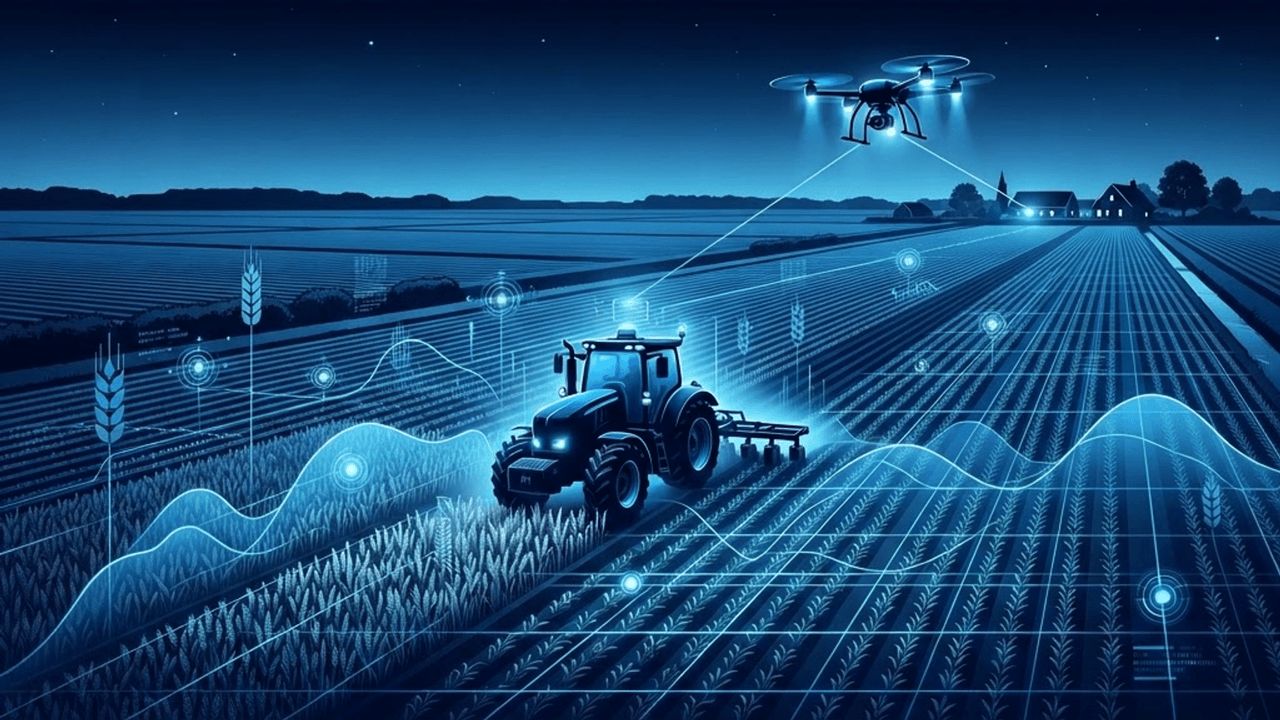
Precision agriculture has matured from novelty to standard practice. Satellite guidance, variable rate fertiliser and seed application, and detailed yield mapping now allow inputs to be matched to each part of a field rather than averaged across it. The result is reduced input use with maintained or improved output.
Data integration is the current frontier. Soil scans, weather records, satellite imagery and machinery data combine to support genuinely informed decisions about timing and rate. The challenge is less about collecting data than about turning it into confident action, which is where skilled agronomy remains essential.
Robotics and automation are advancing steadily, particularly in horticulture where labour availability has become a serious constraint. Autonomous weeding, targeted spot spraying and assisted harvesting all show real promise for reducing both chemical use and labour dependency.
Policy, Environment and the Road Ahead
Agricultural support has shifted decisively toward public goods, rewarding environmental outcomes rather than simple land occupation. Farms across North Kesteven have responded by entering stewardship agreements covering habitat creation, water quality protection, hedgerow restoration and reduced-input cropping.
Water is a defining issue in this district. Drainage maintenance in fen areas and irrigation reliability for high-value crops both demand careful management and investment, and increasingly variable rainfall makes storage reservoirs and efficient application systems more valuable.
Carbon accounting is arriving through supply chains rather than regulation. Processors and retailers increasingly request footprint data, and farms measuring their emissions and sequestration are better placed to secure contracts and demonstrate progress credibly.
Final Thoughts
North Kesteven's farming companies combine some of England's best soils with genuinely advanced management. Facing volatile markets, changing policy and a rapidly evolving technology landscape, the strongest businesses are those investing in soil health, data-driven precision and diversified income. Their continued success underpins not only local employment but a significant share of the nation's food supply.
Want your brand featured in front of decision-makers? Publish a guest post or get a link insertion in our guides through AAMAX's guest post and link insertion service.
Helpful Links
 SponsoredAAMAX — Full-Service Digital Agency
Write for Us
Share your expertise with our readers. We welcome guest contributions from industry specialists.
Pitch your idea

