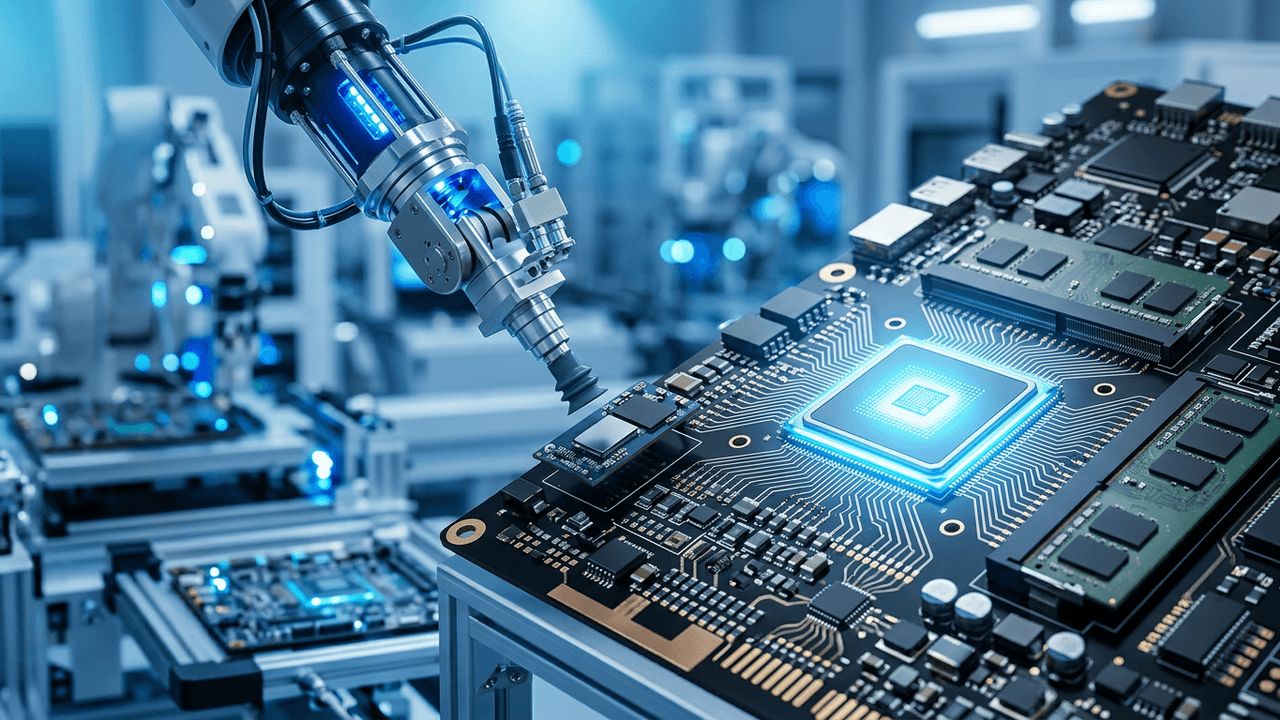
Computing at the Heart of a Technology City
Cambridge has a genuine claim to be one of the most computing-intensive cities in Europe. Processor architecture developed here powers billions of devices worldwide. Research groups run demanding simulations across physics, genomics, climate science, and materials. Technology companies develop software and artificial intelligence systems. Start-ups build products on tight budgets. Students need reliable portable machines. Businesses across the city depend on dependable everyday computing.
This produces exceptionally varied hardware demand. A research group may need a multi-GPU server for model training. A design studio requires colour-accurate displays and strong single-thread performance. A start-up needs reliable laptops with good battery life and straightforward support. Selecting well requires matching hardware genuinely to workload rather than choosing by reputation alone.
Trends in Computing Hardware
Artificial intelligence workloads have transformed requirements. Training and inference demand substantial GPU capability, large memory, and fast storage. Many Cambridge organisations now operate local compute alongside cloud resources, balancing cost, data sensitivity, and latency considerations.
Architecture diversity has increased notably. Alongside traditional processors, energy-efficient designs have gained ground in laptops and servers, offering strong performance per watt. Given rising energy costs and sustainability commitments, efficiency has become a purchasing criterion rather than a technical footnote.
Repairability and lifecycle are receiving proper attention. Organisations increasingly value machines with replaceable batteries, upgradeable memory and storage, and available spare parts. Extending a laptop from three to five years of service substantially reduces both cost and embodied carbon.
Security has also risen in priority, with hardware-level protections, secure boot, and firmware integrity now examined seriously, particularly by organisations handling sensitive research data.
The Top 10 Computer Brands and Providers in Cambridge
1. Cambridge Workstation Systems
Specialising in high-performance workstations for engineering, simulation, and visualisation, this provider configures machines around specific application requirements rather than generic specifications. Its understanding of which workloads benefit from cores, clock speed, or GPU capability prevents costly misconfiguration.
2. Granta Research Computing Solutions
Serving research groups, Granta Research Computing Solutions builds compute servers, GPU nodes, and small clusters. Its familiarity with scheduling software, storage architecture, and cooling requirements supports institutions running sustained heavy workloads.
3. Fen Business Laptops & Desktops
Focused on everyday business computing, this provider supplies reliable laptops and desktops with warranty support and asset management. Standardised fleets, imaging, and predictable refresh cycles simplify life considerably for small internal technology teams.
4. Riverside Custom PC Builders
Building bespoke machines for developers, designers, and enthusiasts, Riverside Custom PC Builders assembles systems tailored to specific requirements and budgets. Component selection advice and thorough testing produce machines that outperform equivalently priced pre-built alternatives.
5. Science Park AI & GPU Compute Systems
Concentrating on machine learning infrastructure, this provider supplies multi-GPU servers and configures software environments for training and inference. Given the concentration of artificial intelligence work in Cambridge, its specialism addresses a rapidly growing local need.
6. Cherry Hinton Apple & Creative Systems
Serving design studios, media producers, and creative professionals, this provider supplies and supports systems optimised for creative workflows, including colour-accurate displays and fast storage for video and image work.
7. Milton Student & Education Computing
Supplying laptops and accessories suited to academic use, Milton Student & Education Computing emphasises battery life, portability, durability, and value. Repair services and loan machines minimise disruption during critical academic periods.
8. Eastern Server & Infrastructure Supply
Providing rack servers, storage arrays, networking, and backup infrastructure, Eastern Server & Infrastructure Supply supports organisations maintaining on-premises systems. Its design assistance covers redundancy, capacity planning, and disaster recovery.
9. Trumpington Embedded & Single-Board Computing
Supplying single-board computers, development kits, and industrial embedded systems, this provider serves hardware developers and researchers building instrumentation. Small quantities and technical guidance suit prototyping work well.
10. Coldhams Refurbished IT & Circular Computing
Offering professionally refurbished laptops, desktops, and servers with warranty, Coldhams Refurbished IT & Circular Computing provides substantial cost and carbon savings. It also manages secure data destruction and responsible disposal of retired equipment.
Choosing the Right Computing Hardware
Profile your actual workload before specifying hardware. Many purchases are misallocated, with money spent on graphics capability for workloads that are memory-bound, or on processor cores for single-threaded applications. Understanding where your bottleneck genuinely lies produces far better value.
Consider total cost across the machine's life. Purchase price, energy consumption, support costs, and residual value together determine real expenditure. An efficient machine running continuously can save meaningful sums in electricity over several years.
Evaluate support arrangements realistically. For business-critical systems, next-business-day on-site support may be justified, while for general office machines a standard warranty with spare units may prove more economical.
Think about longevity at the point of purchase. Machines with upgradeable memory and storage, replaceable batteries, and available parts remain useful considerably longer, which reduces both cost and environmental impact.
For heavy compute, compare local hardware honestly against cloud provision. Sustained continuous workloads often favour owned hardware, while variable or occasional demand usually suits cloud resources better.
The Future of Computing in Cambridge
The city's role in processor design, artificial intelligence, and scientific computing suggests continued strong demand for capable hardware. Energy efficiency will grow more prominent as both costs and carbon commitments bite, favouring architectures delivering strong performance per watt.
Circular models should expand, with refurbishment, component upgrade, and responsible recovery becoming standard practice rather than exceptions. For organisations and individuals in Cambridge, the local market offers unusual technical depth, and taking time to match hardware precisely to workload remains the single most effective way to obtain genuine value.
Want your brand featured in front of decision-makers? Publish a guest post or get a link insertion in our guides through AAMAX's guest post and link insertion service.
Helpful Links
 SponsoredAAMAX — Full-Service Digital Agency
Write for Us
Share your expertise with our readers. We welcome guest contributions from industry specialists.
Pitch your idea