

Metal and the Making of Blackpool
Blackpool is, in a very literal sense, a town built on metalwork. The Tower is one of the most recognisable steel structures in Britain. The piers rest on iron and steel substructures. The tramway, the rides, the illuminations infrastructure and the sea defences all depend on fabricated metal engineered to survive one of the harshest environments in the country.
That legacy created a durable local skills base. Welders, fabricators, platers and structural engineers have always found work on the Fylde Coast, and the sector continues today across structural steelwork, precision sheet metal, architectural metalwork and specialist marine fabrication.
The Range of Metalworking Capability
Metalworks is a broad category. Structural steel fabricators produce beams, columns, portal frames and staircases for construction. Sheet metal fabricators cut, fold and weld thinner gauge material into enclosures, panels, ductwork and guarding. Precision machinists remove material to tight tolerances using CNC turning and milling. Welding specialists join materials ranging from mild steel to stainless, aluminium and exotic alloys. Architectural metalworkers produce balustrades, gates, railings and decorative features.
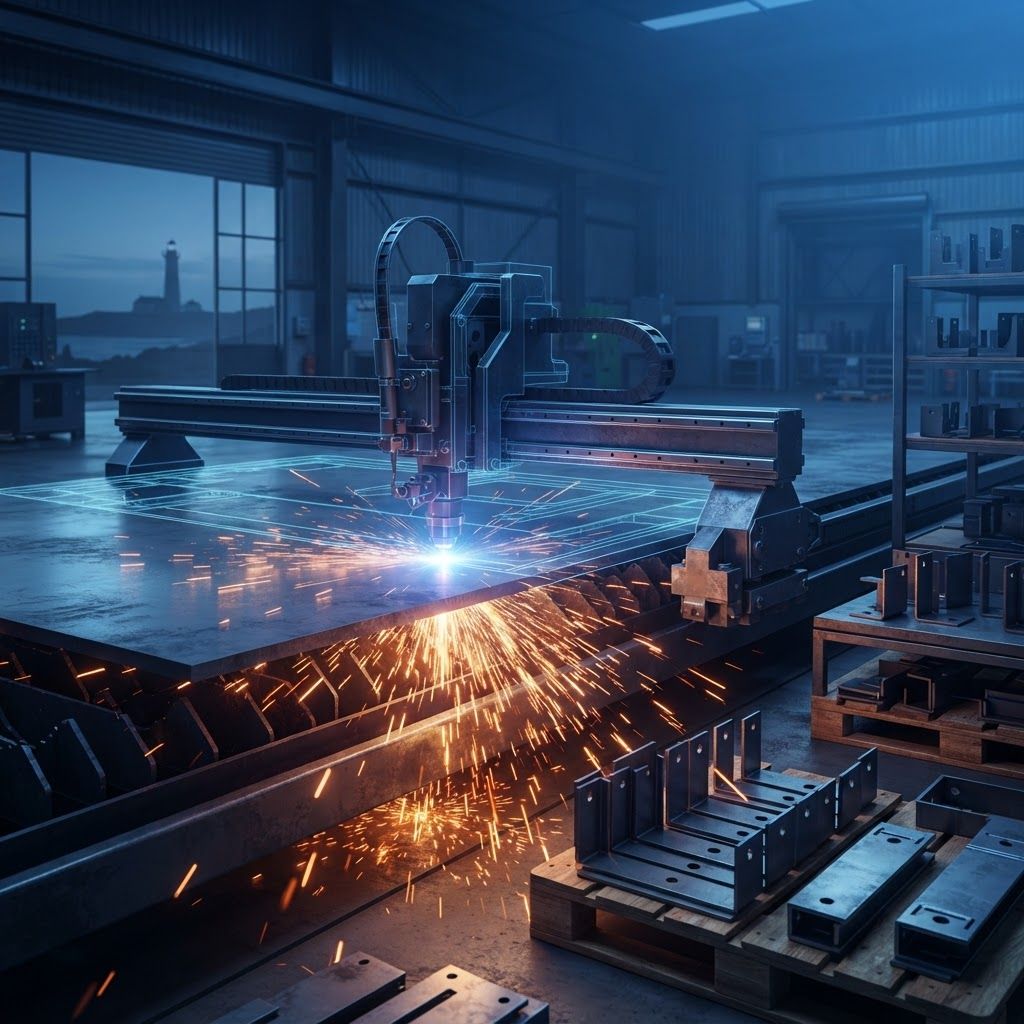
Modern fabrication is increasingly digital. Laser and plasma cutting driven directly from CAD files, CNC press braking with automated angle correction, and robotic welding cells have all raised achievable accuracy while reducing lead times.
The Ten Best Metalworks Companies Serving Blackpool
1. Fylde Coast Fabrications. Representing the general fabrication workshops serving the town, these businesses handle structural steelwork, platform and access systems, machine frames and bespoke welded assemblies for local industry and construction.
2. Lancashire Laser Cutting. Laser profiling specialists cut sheet and plate from digital files with high accuracy and minimal waste. Their speed and flexibility make them the first call for prototypes and short-run production alike.
3. Blackpool Architectural Metalwork. Covering the makers producing balustrades, staircases, gates, canopies and decorative features, these firms serve both heritage restoration and contemporary commercial projects across the Fylde.
4. Severfield. One of the UK's leading structural steelwork contractors, Severfield delivers large-scale steel frames for commercial and infrastructure projects. Its involvement in major North West developments sets the benchmark for structural fabrication quality.
5. Wyre Precision Machining. CNC turning and milling specialists supply machined components to machinery builders, aerospace suppliers and process equipment manufacturers throughout Lancashire.
6. Marine and Coastal Steelworks. Fabricators specialising in marine-grade stainless and aluminium produce pontoons, handrails, ladders and coastal defence components engineered specifically for saltwater exposure.
7. Northern Stainless Fabrications. Stainless steel specialists serve food production, pharmaceutical and hospitality clients with hygienic tanks, worktops, tables and process equipment where surface finish and cleanability are critical.
8. Redman Fisher Engineering. A UK manufacturer of industrial flooring, walkways, handrail and access systems. Products of this type are essential across chemical plants, energy facilities and industrial sites in the region.
9. Fylde Sheet Metal Works. Sheet metal fabricators produce enclosures, cabinets, ductwork, guarding and panels, often finished with powder coating. Their work supports electronics, machinery and building services customers.
10. Blackpool Ride and Structure Engineering. The amusement and attraction engineering specialists maintain, refurbish and fabricate ride structures and seafront installations, a genuinely distinctive local capability built over generations.
Corrosion, Coatings and Coastal Durability
Corrosion protection is the defining technical challenge for metalwork in Blackpool. Salt-laden air dramatically accelerates the deterioration of unprotected steel, and specifications that work inland are frequently inadequate here.
Hot dip galvanising remains the most reliable protection for structural steel in exposed locations, providing a metallurgically bonded zinc layer that offers sacrificial protection even where the surface is scratched. For architectural applications, duplex systems combining galvanising with powder coating or paint deliver both longevity and appearance.
Material selection matters just as much. Austenitic stainless grades with molybdenum content perform far better in marine atmospheres than standard grades, which can develop surface staining within months near the seafront. Marine-grade aluminium alloys offer excellent corrosion resistance with significant weight savings.
Detailing is the third factor and the most commonly neglected. Designs that trap water, create crevices or allow dissimilar metals to contact each other will corrode regardless of coating quality. Experienced coastal fabricators design these problems out from the start.
Technology and Skills
Digital fabrication continues to advance. Three-dimensional modelling allows complex assemblies to be verified before any metal is cut, dramatically reducing site fitting issues. Automated nesting software minimises material waste on laser cutting beds. Robotic welding delivers consistency on repetitive assemblies.
Despite automation, skilled welders remain in high demand and short supply. Coded welding qualifications, particularly for pressure and structural applications, take years to develop, and the sector's ability to attract apprentices is a genuine constraint on growth across the North West.
Choosing a Metalworks Company
Confirm the certifications relevant to your project. Structural steelwork for construction requires execution class certification, and welders working to it must hold appropriate qualifications. Ask to see documentation rather than assuming it exists.
Assess in-house capability against your needs. A fabricator with its own laser cutting, folding, welding and finishing avoids the delays and quality variability that come with subcontracting each stage.
For coastal work, ask specifically about their corrosion protection experience and request examples of installations that have been in place for several years. The seafront is an unforgiving test bed, and local track record is the best available evidence.
Final Thoughts
Metalworking in Blackpool carries a proud engineering heritage into a highly digital present. From laser-cut precision components to hot dip galvanised coastal structures, the Fylde Coast supports fabricators who understand both the technology and the environment. The companies above represent the strongest combination of capability and local experience available.
Want your brand featured in front of decision-makers? Publish a guest post or get a link insertion in our guides through AAMAX's guest post and link insertion service.
Helpful Links
 SponsoredAAMAX — Full-Service Digital Agency
Write for Us
Share your expertise with our readers. We welcome guest contributions from industry specialists.
Pitch your idea

