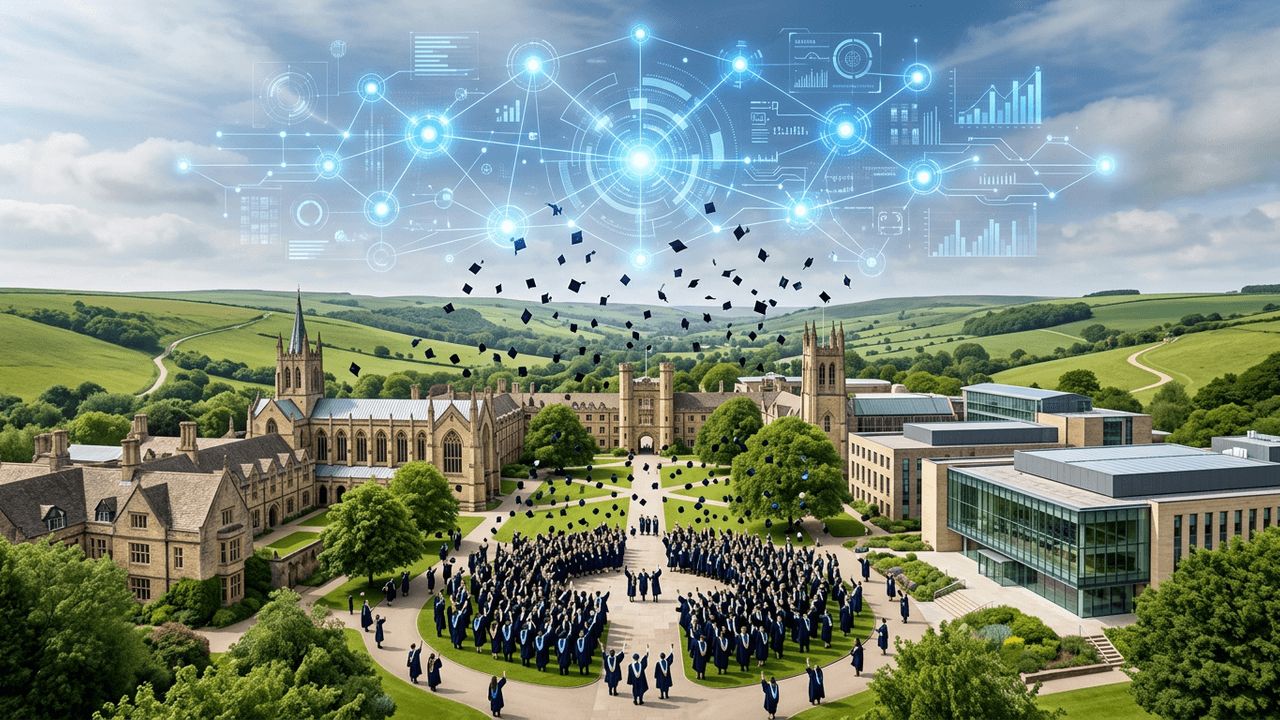
Camden's Post-16 Landscape
Camden occupies an unusual position in London's education map. It is home to some of the country's most celebrated specialist colleges, a strong further education presence, and sixth forms attached to schools with genuinely national reputations. For a sixteen-year-old deciding what to do next, the borough offers something rarely available elsewhere: the ability to choose between rigorous academic A levels, high-quality vocational qualifications, conservatoire-level performing arts training and apprenticeship pathways, all within a couple of Underground stops.
That richness reflects Camden's character. The borough has long been a centre of publishing, medicine, research, music and design, and its colleges have grown up alongside those industries. Employers and cultural institutions sit close enough that work placements, masterclasses and guest teaching are practical realities rather than aspirations in a prospectus.
Ten of the Best Colleges Serving Camden
1. Westminster Kingsway College, King's Cross Centre. A major further education provider whose culinary arts and hospitality training is among the most respected in the country, with alumni across leading restaurant kitchens. Beyond catering, it offers strong business, computing, health and access-to-higher-education routes, and its industry-standard training facilities give learners real working conditions rather than simulated ones.
2. Central Saint Martins. Part of a wider arts university and based in a landmark King's Cross campus, Central Saint Martins is a global reference point for fashion, graphic design, fine art and performance. Its foundation and diploma programmes are fiercely competitive, and the studio culture is demanding, collaborative and unmistakably professional.
3. RADA. The Royal Academy of Dramatic Art has trained generations of actors, stage managers and technical theatre specialists from its Bloomsbury base. Provision extends well beyond acting into production arts, and short courses open some of that expertise to a wider community of learners.
4. LaSalle College London. A design-focused college offering fashion, interior and graphic design programmes with strong industry links and small cohort teaching. Its emphasis on portfolio development and commercial practice appeals to students who want a creative education with a clear professional destination.
5. City and Islington Sixth Form College, serving Camden students. Just beyond the borough boundary but a mainstay for Camden families, this college delivers a wide A level menu with strong progression to research-intensive universities, alongside well-regarded support for applications and interviews.
6. LaSWAP Sixth Form Consortium. A collaboration between several Camden schools that pools teaching to offer a subject range no single school could sustain. Students benefit from specialist teachers, larger class cohorts in minority subjects and a sixth form culture that feels distinct from lower school.
7. Working Men's College, Camden Town. One of the oldest adult education institutions in Europe, this college specialises in second-chance learning: English and mathematics, English for speakers of other languages, digital skills and access programmes. Its supportive, non-judgemental teaching culture is its defining strength.
8. Camden Adult and Community Learning Service. A borough-wide provider delivering accredited and leisure courses across community venues, from employability and family learning to arts and languages. Flexible timetabling makes it viable for people balancing work and caring responsibilities.
9. Bloomsbury Institute of Business Studies. A smaller independent college focused on business, accountancy and professional qualifications, with evening and weekend delivery aimed at working learners. Practical assessment and tutor accessibility are frequently praised.
10. Camden College of Health and Social Care. Vocational training in nursing support, health and social care, early years and allied health, closely aligned with the borough's exceptional concentration of hospitals and research institutes. Placement quality is the core differentiator.
Choosing Between Academic and Vocational Routes
The old hierarchy that placed A levels above vocational study has eroded, and rightly so. The better question is how a student learns and where they want to end up. A levels reward abstract reasoning, sustained reading and written argument, and remain the most direct route into traditional academic degrees. Applied and technical qualifications reward practical competence, project work and continuous assessment, and increasingly carry equal weight for relevant degrees and employment. Apprenticeships suit learners who want to earn while training and who thrive with structure and workplace accountability.
Mixing routes is often the smartest move. A student combining a technical qualification in computing with a mathematics A level, for example, keeps both university and employment doors wide open.
What to Investigate Before You Apply
Look first at destinations data rather than headline pass rates. Where do students actually go afterwards, and does that match your ambition? Second, examine contact hours and independent study expectations, which vary enormously between providers. Third, ask about support: study skills teaching, learning support for additional needs, counselling, and financial help with travel, equipment or materials. Fourth, consider facilities honestly, particularly for practical subjects where kitchen, studio, workshop or laboratory quality directly shapes what you can learn.
Trends in Camden Further Education
Three themes stand out. Employer co-design is spreading, with curricula shaped alongside restaurants, studios, hospitals and technology firms so that graduates arrive workplace-ready. Digital and artificial intelligence literacy is being embedded across unrelated subjects, from fashion to health care, as institutions accept that these tools now sit in every profession. And modular, stackable learning is growing, allowing adults to build qualifications in short units around work rather than committing to multi-year enrolment upfront.
Conclusion
Camden's colleges collectively offer something close to a complete post-16 ecosystem. Whether a learner is aiming for a conservatoire stage, a professional kitchen, a design studio, a university lecture hall or a return to education after years away, the borough has an institution built for that journey. Attend open days, speak to current students rather than only staff, weigh travel and finances realistically, and choose the environment where you can imagine working hard for two or three years. That, far more than reputation alone, determines what a college will do for you.
Want your brand featured in front of decision-makers? Publish a guest post or get a link insertion in our guides through AAMAX's guest post and link insertion service.
Helpful Links
 SponsoredAAMAX — Full-Service Digital Agency
Write for Us
Share your expertise with our readers. We welcome guest contributions from industry specialists.
Pitch your idea