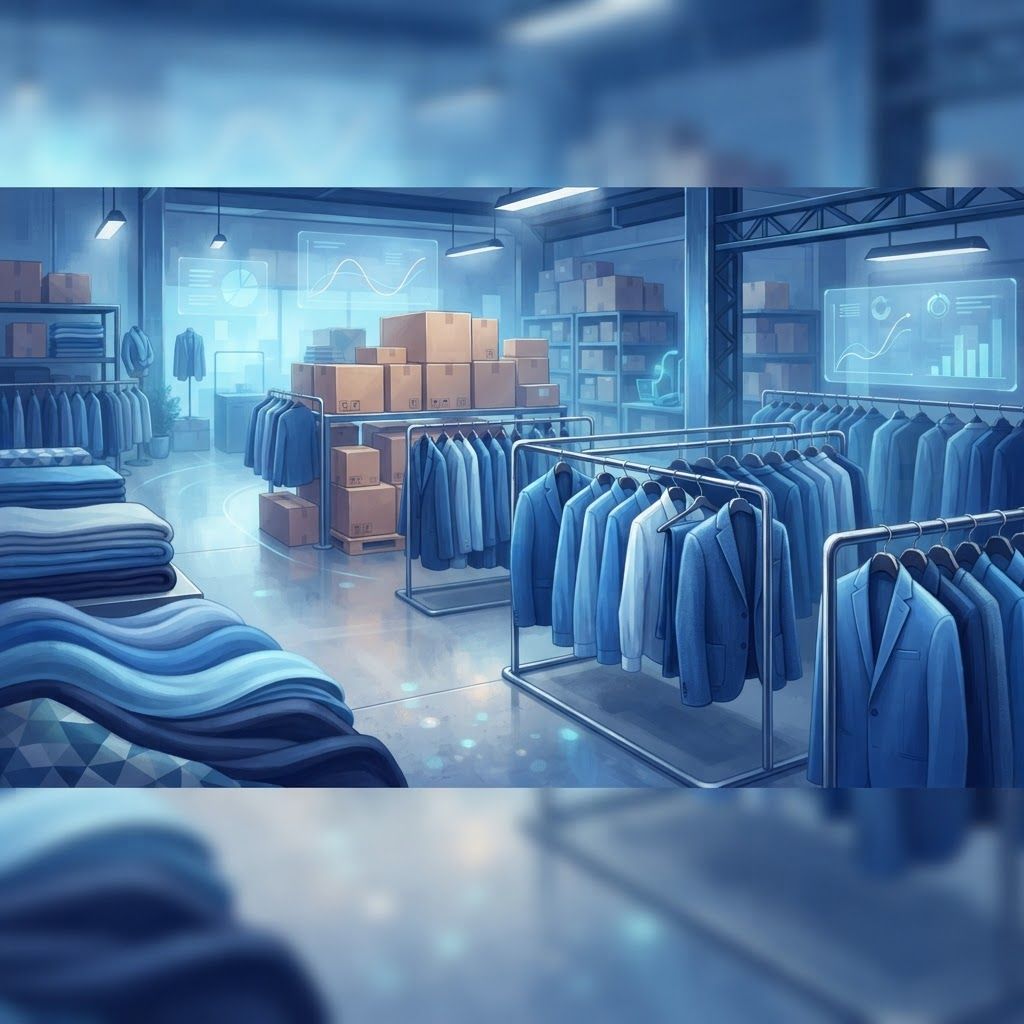
A Clothing Trade Rooted in Welsh Textile History
Carmarthenshire's relationship with textiles runs deep. The Teifi valley and surrounding areas once supported dozens of woollen mills, spinning and weaving fleece from local flocks into blankets, flannel and cloth that clothed much of industrial Wales. Water-powered mills lined the rivers, and the distinctive double-cloth Welsh tapestry blanket became one of the nation's most recognisable products.
That industry contracted severely through the twentieth century, but it never disappeared entirely, and the heritage now underpins a smaller, higher-value trade. Alongside it sits a thoroughly practical modern wholesale sector supplying workwear to farms and factories, uniforms to schools and hospitality venues, and fashion stock to independent boutiques in Carmarthen, Llandeilo and the coastal towns.
For retailers and business buyers in West Wales, having wholesale sources within reach matters. It reduces carriage costs, allows physical inspection of fabric and fit before committing, and enables quick top-up orders during busy trading periods without waiting on national distribution.
Categories Within Clothing Wholesale
Fashion and boutique wholesale supplies womenswear, menswear and accessories in small pack quantities to independent retailers, often with seasonal buying calendars and pre-order structures.
Workwear and personal protective equipment covers coveralls, hi-vis garments, safety footwear, waterproofs, gloves and flame-retardant clothing — essential across agriculture, construction and manufacturing.
Uniform and corporate clothing serves schools, hospitality, healthcare and retail employers, usually including embroidery or heat-transfer branding.
Blanks and promotional garments provide plain t-shirts, hoodies, polos and caps to print and embroidery businesses.
Welsh wool and heritage textiles supply blankets, throws, scarves and tweed products to gift shops, visitor attractions and interior retailers.
Outdoor and technical clothing meets demand from walkers, cyclists and coastal visitors, an important category given the county's tourism footfall.
Ten Leading Clothing Wholesalers in Carmarthenshire
1. Carmarthen Fashion Wholesale — Supplies womenswear and accessories to independent boutiques across West Wales, working in small size packs so retailers can test styles without heavy commitment. Regularly refreshed ranges and a showroom where buyers can handle fabric are its main strengths.
2. Tywi Workwear Supplies — Comprehensive workwear and safety clothing distributor covering hi-vis, waterproofs, coveralls, safety boots and gloves, with in-house embroidery for company branding and expertise in appropriate protective standards.
3. Teifi Woollen Textiles — Traditional Welsh wool blankets, throws, cushions and scarves woven in classic patterns, supplied wholesale to gift retailers, holiday accommodation providers and interior shops seeking authentic regional product.
4. Llanelli Uniform Services — School uniform and corporate clothing supplier handling badging, embroidery and size-graded ordering, with the logistical experience to manage annual back-to-school demand peaks.
5. Cross Hands Garment Blanks — Wholesale plain garments for the print and embroidery trade: t-shirts, hoodies, polo shirts, sweatshirts and caps across a wide colour and size matrix, held in local stock for quick turnaround.
6. Ammanford Outdoor Clothing — Technical outerwear, fleeces, walking trousers and footwear supplied to outdoor retailers, campsites and activity centres serving visitors to the Brecon Beacons fringe and coastal paths.
7. Gwendraeth Agricultural Clothing — Specialist supplier of farming apparel: waterproof over-trousers, wellington boots, milking aprons, insulated jackets and thermal base layers built for genuinely wet Welsh conditions.
8. Dinefwr Heritage Tweed — Woven tweed cloth and finished accessories including caps, bags and jackets, appealing to country clothing retailers and bespoke tailors looking for regionally produced cloth.
9. Burry Port Hospitality Uniforms — Chef whites, aprons, front-of-house shirts, housekeeping tunics and footwear for the county's substantial hospitality sector, with laundry-durable fabrics and reorder consistency.
10. Cothi Sustainable Apparel — Organic cotton, recycled polyester and responsibly sourced garments for retailers and brands prioritising environmental credentials, supported by certification documentation.
Sustainability and Ethical Sourcing
Clothing has become one of the most scrutinised consumer categories, and wholesale buyers are increasingly asked to account for their supply chains. Several standards carry real weight. The Global Organic Textile Standard certifies organic fibre content and processing conditions. The Global Recycled Standard verifies recycled material claims. OEKO-TEX certification confirms textiles have been tested for harmful substances.
Wool carries its own considerations, with responsible wool standards addressing animal welfare and land management. For Welsh wool specifically, provenance is a genuine selling point: local fleece, local processing and traceable flocks create a story that retail customers respond to strongly.
Beyond certification, practical sustainability measures matter. Ordering closer to season reduces unsold stock and markdown waste. Choosing durable constructions and repairable garments extends life. Reducing polybagging and switching to paper or compostable packaging cuts plastic volumes noticeably at wholesale quantities.
Buyers should also be alert to greenwashing. Vague claims about being eco-friendly without certification, measured data or supply chain detail should be treated cautiously, particularly as advertising standards on environmental claims have tightened.
Trends Shaping the Wholesale Clothing Market
Smaller, more frequent buying has replaced large seasonal commitments for many independents. Cash flow pressure and unpredictable weather have made retailers reluctant to hold deep stock, favouring wholesalers who can supply quickly and repeatedly.
Personalisation has grown substantially. Embroidery and direct-to-garment printing allow small businesses, clubs and events to order branded clothing in modest quantities, and wholesalers offering in-house decoration capture more of that value.
Workwear specification has become more sophisticated. Employers now consider fit for women as standard rather than an afterthought, look for stretch fabrics that improve comfort and compliance, and check that protective garments carry appropriate certification for the actual hazard rather than generic ratings.
Local provenance sells. Visitors to Carmarthenshire actively seek products made in Wales, and retailers report that clearly explaining where and how a blanket or garment was made significantly improves conversion. That is reshaping how heritage textile wholesalers present their ranges.
Practical Buying Advice
Understand the terms before ordering. Clarify minimum order values, pack structures, whether sizes come pre-assorted, carriage-paid thresholds, and returns policy on unsold stock. Sale-or-return arrangements are rare in clothing wholesale, so buy what you can realistically sell.
Check fabric and construction physically. Weight, handle, seam quality, stitch density and colourfastness are difficult to assess from photographs. Request samples or visit a showroom, and wash-test anything intended for uniform or hospitality use where laundering will be frequent and aggressive.
Plan around seasonality carefully. In a county with substantial tourism, spring and summer stock needs to land early and autumn waterproofs need to arrive before the weather turns. Agricultural clothing peaks with lambing, shearing and silage seasons.
Get the size curve right. Ordering equal quantities across all sizes is a classic error; sales data almost always shows a concentrated middle. Track what actually sells and adjust ratios rather than repeating a flat buy.
For protective clothing, verify certification properly. Hi-vis garments must meet the correct class for the working environment, and flame-retardant or chemical protective clothing requires specific standards. Buying uncertified lookalikes creates genuine legal exposure for employers.
Final Thoughts
Carmarthenshire's clothing wholesalers span a genuinely interesting range, from heritage Welsh wool weavers to hard-wearing agricultural workwear and contemporary sustainable apparel. That diversity reflects the county itself: farming, tourism, hospitality, education and manufacturing all coexisting. Buyers who inspect stock properly, buy in line with real demand patterns and insist on certification where safety or sustainability claims are involved will find local wholesale partners who add far more value than a distant catalogue ever could.
Want your brand featured in front of decision-makers? Publish a guest post or get a link insertion in our guides through AAMAX's guest post and link insertion service.
Helpful Links
 SponsoredAAMAX — Full-Service Digital Agency
Write for Us
Share your expertise with our readers. We welcome guest contributions from industry specialists.
Pitch your idea