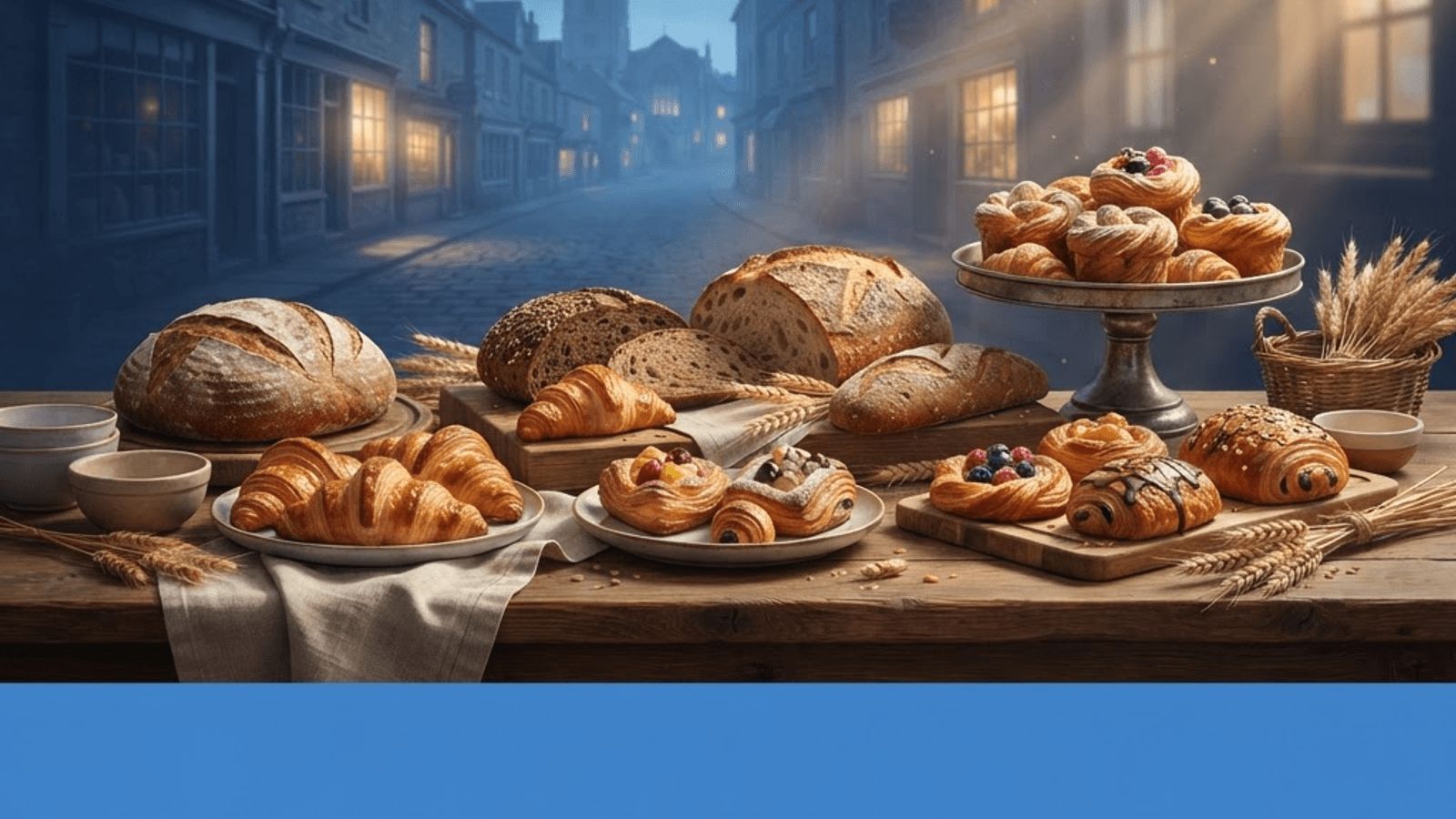
A City That Takes Its Bread Seriously
Walk through Chichester on an early weekday morning and the smell of baking reaches the street well before the shops open. The city's compact historic centre, arranged around the four streets radiating from the Market Cross, supports an unusual density of independent food businesses, and bakeries occupy a central place among them. The combination of a substantial resident population, a steady flow of visitors, and a strong local appetite for quality produce has sustained a baking culture that many larger towns would envy.
West Sussex helps. The surrounding countryside grows wheat, supports dairy farming, and produces fruit, which means bakeries here can source genuinely locally when they choose to. Several do, and the difference shows in flavour and in the stories they can tell about their ingredients.
The Bakeries Worth Seeking Out
The Chichester Bakehouse is known for long-fermented sourdough with a deeply caramelised crust, alongside seasonal fruit tarts that change with whatever local growers are harvesting. Pallant Street Bakery has built a devoted following for its laminated pastries, with croissants and pain aux raisins that reward an early arrival before they sell out.
Cross Lane Bread Company focuses on traditional English loaves, including bloomers, cottage loaves, and a well-regarded malted grain bread, appealing to customers who prefer familiar styles executed properly. Harbour View Patisserie takes a French approach, producing éclairs, tarts, and entremets with the precision that style demands.
Downland Craft Bakery mills a proportion of its own flour and specialises in wholegrain and heritage wheat breads, attracting customers interested in provenance and digestibility. Priory Park Cakes concentrates on celebration cakes and afternoon tea selections, with a reputation for classic Victoria sponges and rich fruit cakes.
Westgate Sourdough operates on a small scale with a limited daily output, prioritising consistency over volume. Selsey Road Bakers serves the surrounding villages as much as the city, offering practical everyday bread alongside pasties and savoury bakes. Spire Pastry House has developed a strong line in gluten-free and vegan baking that avoids the compromises those categories often involve. Fishbourne Farmhouse Bakery rounds out the list with rustic breads, scones, and preserves made from fruit grown nearby.
How to Judge a Good Loaf
Quality in bread reveals itself in several ways that are easy to assess once you know what to look for. Crust should have genuine colour, ranging from deep gold to mahogany depending on style, because that colour carries flavour developed through the Maillard reaction. Pale, uniform crusts usually indicate a rushed bake.
The crumb, meaning the interior structure, should suit the bread's style. An open, irregular crumb with glossy walls suggests a well-hydrated, properly fermented dough. A tight, even crumb is appropriate for a sandwich loaf but disappointing in a sourdough. Either way, the texture should be tender rather than gummy.
Aroma and flavour tell the fermentation story. Long, slow fermentation develops complexity, producing bread with a mild tang, nutty depth, and lingering finish. Fast-produced bread using large quantities of yeast tastes flat and stales within a day. Genuine sourdough keeps well for several days precisely because the acidity slows staling.
For pastry, look at lamination. A good croissant shows distinct layers when torn, shatters slightly when bitten, and leaves flakes behind. It should taste of butter rather than merely of fat, and the interior should be honeycombed rather than bready.
Trends in Artisan Baking
Heritage and ancient grains have gained ground as bakers explore varieties such as spelt, emmer, and older wheat cultivars. These grains behave differently in the bakery, producing more challenging doughs, but offer distinctive flavours and appeal to customers curious about provenance.
Extended fermentation has become a marker of craft baking. Doughs developed over twenty-four hours or longer produce better flavour and, many find, greater digestibility. Bakeries increasingly advertise their fermentation times as a quality signal.
Reducing waste has become a visible priority. Many bakeries now bake to order for larger items, offer end-of-day reductions, transform unsold bread into croutons, puddings, or breadcrumbs, and use surplus food applications to connect with customers. This reflects both economic sense and genuine environmental concern.
Dietary inclusivity continues to improve. Gluten-free and vegan baking once meant accepting a poorer product, but technique has advanced considerably. Bakeries investing properly in separate equipment and dedicated recipe development now produce alternatives that stand comparison with conventional versions.
Making the Most of Your Local Bakery
Buy on the day of baking and eat within a day or two for best quality. Store bread in paper or a bread bin rather than plastic, which traps moisture and softens the crust. Freeze what you cannot eat, ideally sliced, and toast directly from frozen.
Order ahead for weekends and holidays. Small bakeries produce limited quantities, and popular items disappear quickly. Most are happy to reserve.
Talk to the bakers. They know which loaf suits a particular cheese, when the seasonal fruit arrives, and what is worth trying that you have not considered. That knowledge is freely given and improves what you take home.
Conclusion
Chichester's bakeries represent one of the most enjoyable aspects of the city's food culture, combining traditional English baking with contemporary artisan practice. Supporting them sustains skills that take years to acquire and keeps genuine variety on the high street. Visit early, ask questions, and let the seasons guide what you buy.
Want your brand featured in front of decision-makers? Publish a guest post or get a link insertion in our guides through AAMAX's guest post and link insertion service.
Helpful Links
 SponsoredAAMAX — Full-Service Digital Agency
Write for Us
Share your expertise with our readers. We welcome guest contributions from industry specialists.
Pitch your idea