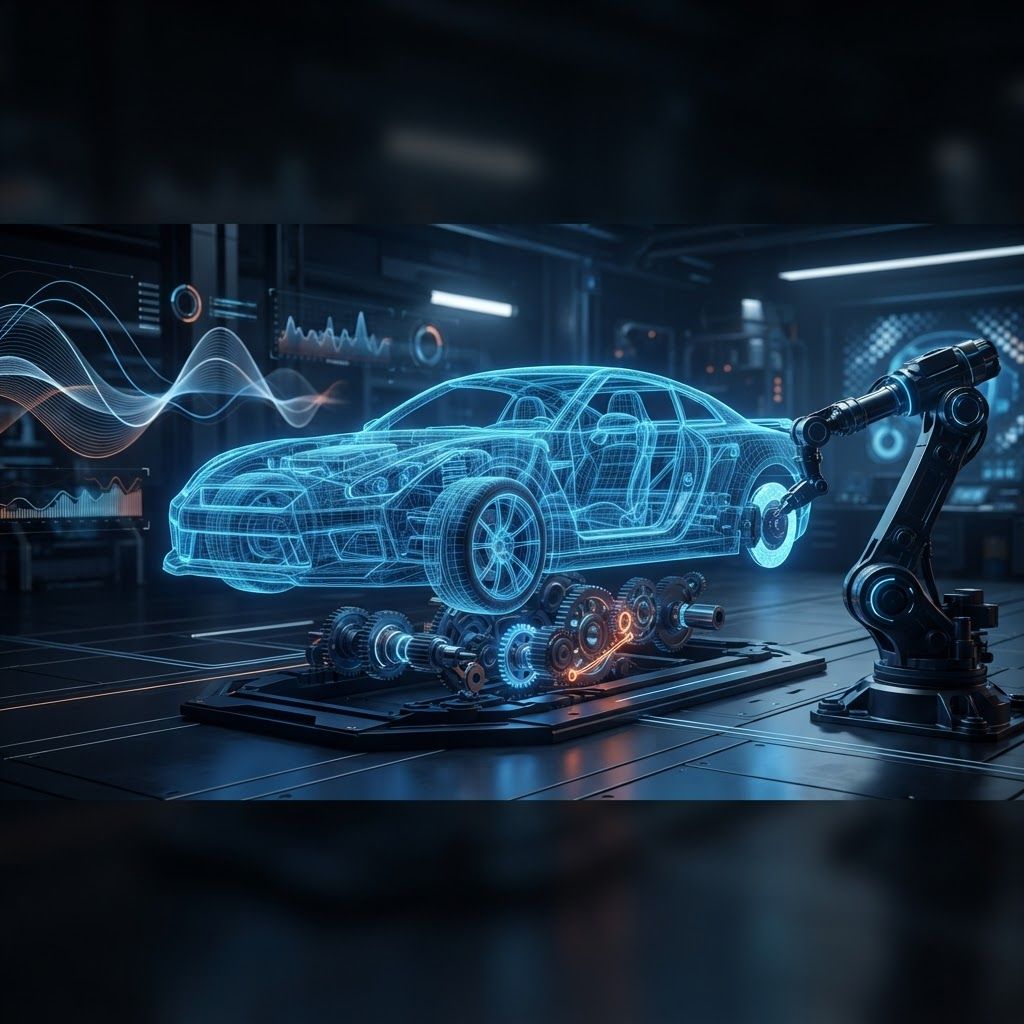
Automotive Engineering in Gloucestershire
The Stroud district has been connected to vehicle manufacturing for well over a century. The valleys that once powered woollen mills later housed engineering works producing components, machinery and eventually automotive parts. Stonehouse, Dursley and the Stroud industrial corridor became home to significant engineering employers, and the skills developed there still circulate through the local workforce.
Today the district does not host a volume car assembly plant. What it does have is arguably more interesting: a concentration of component manufacturers, precision engineering suppliers, specialist and low-volume vehicle builders, restoration workshops and motorsport-adjacent engineering firms. Combined with Gloucestershire's wider aerospace and advanced manufacturing base, this makes the area a meaningful node in the UK automotive supply chain.
Companies in and Around the District
The most historically significant name is R A Lister and Company at Dursley, whose engines powered agricultural and industrial machinery worldwide and whose legacy shaped engineering employment across the southern Cotswolds for generations. Lister Petter continued that diesel engine tradition and remains a recognised name in the sector.
Delphi Technologies operated a major diesel fuel injection technology facility at Stonehouse, developing high-pressure common rail systems used by global vehicle manufacturers. The research and engineering capability concentrated there has been an important source of automotive expertise in the district.
Renishaw, though not an automotive company, supplies metrology and additive manufacturing technology used extensively by vehicle manufacturers and motorsport teams, and its Gloucestershire operations anchor much of the region's precision engineering skill base.
Elsewhere in the county, Safran Landing Systems and the Gloucester aerospace cluster share a technology base with automotive engineering, particularly in materials, hydraulics and testing. Moog and similar motion control specialists serve both sectors.
At the specialist end, Gloucestershire and the neighbouring Cotswolds host respected classic car restoration and low-volume build workshops. Businesses working on marques such as Aston Martin, Jaguar, Bentley and pre-war classics operate from rural workshops around the district, employing coachbuilders, trimmers, fabricators and engine specialists whose craft skills are increasingly rare. Cotswold Motoring style restoration houses and independent race preparation firms add to the mix.
The supply chain is completed by machining subcontractors, pressing and fabrication shops, surface treatment providers, tooling makers and testing laboratories spread across Stonehouse, Quedgeley and the M5 corridor.
Capabilities on Offer
Component manufacture is the largest category: precision machined parts, castings and forgings finished locally, fabricated assemblies, hydraulic and pneumatic components, and electrical subsystems. Tolerances in this work are demanding, and the quality management systems required by vehicle manufacturers are rigorous.
Engineering services form the second pillar. Design and analysis, prototyping, rapid tooling, additive manufacture of jigs and fixtures, durability and environmental testing, and homologation support are all available within the region. For low-volume manufacturers, being able to access these services without long-distance logistics is valuable.
Specialist vehicle work is the third. This spans concours restoration, recommissioning, bespoke coachwork, motorsport preparation and increasingly electric conversion of classic vehicles, a niche that has grown rapidly and suits the district's combination of craft skill and environmental awareness.
Trends Reshaping the Sector
Electrification is the defining change. The shift from internal combustion to battery electric powertrains removes demand for some components, notably fuel systems and exhaust after-treatment, while creating demand for battery enclosures, thermal management, power electronics cooling and lightweight structures. Suppliers in the district that historically served diesel technology have had to pivot, and those that have done so successfully are now working on quite different products.
Lightweighting continues to drive materials innovation, with aluminium, composites and high-strength steels replacing traditional components. This changes joining and forming requirements, favouring suppliers who invest in new process capability.
Digital manufacturing is advancing quickly. Additive manufacturing has moved beyond prototyping into production tooling and, for low-volume applications, end-use parts. Digital twins, in-process measurement and data-driven quality control raise both capability and the investment required to compete.
Supply chain localisation has gained importance. After years of disruption, vehicle manufacturers value suppliers who are geographically close, financially stable and able to respond quickly. UK-based subcontractors in Gloucestershire have found opportunities as a result.
Finally, the classic and heritage sector is thriving. As everyday transport electrifies, interest in preserving and enjoying historic vehicles has intensified, supporting the region's restoration workshops. Sympathetic electric conversion has become a legitimate and growing service.
How to Choose an Automotive Partner
For production work, IATF 16949 certification is the automotive quality standard and a strong indicator of process maturity. Ask about production part approval process experience, statistical process control, and how the supplier handles non-conformance. Request evidence of on-time delivery performance.
Assess capacity and financial stability. Automotive programmes run for years and a supplier failure mid-programme is extremely costly. Understand their order book, machine utilisation and investment plans.
For restoration and specialist work, the criteria differ entirely. Look at completed examples in person, speak to previous customers, and understand how the workshop documents progress and controls costs on open-ended projects. Reputable restorers provide detailed photographic records and transparent staged billing.
In all cases, visit. Walking a shop floor reveals more about organisation, quality culture and capability than any brochure.
Looking Forward
The automotive presence around Stroud is smaller than in its industrial heyday but considerably more sophisticated. Precision engineering, materials expertise, testing capability and craft restoration skills give the district relevance in a transforming industry. As electrification continues and vehicle manufacturers seek resilient, high-quality local supply, Gloucestershire's engineering businesses are well positioned to win work that plays to exactly these strengths.
Want your brand featured in front of decision-makers? Publish a guest post or get a link insertion in our guides through AAMAX's guest post and link insertion service.
Helpful Links
 SponsoredAAMAX — Full-Service Digital Agency
Write for Us
Share your expertise with our readers. We welcome guest contributions from industry specialists.
Pitch your idea