

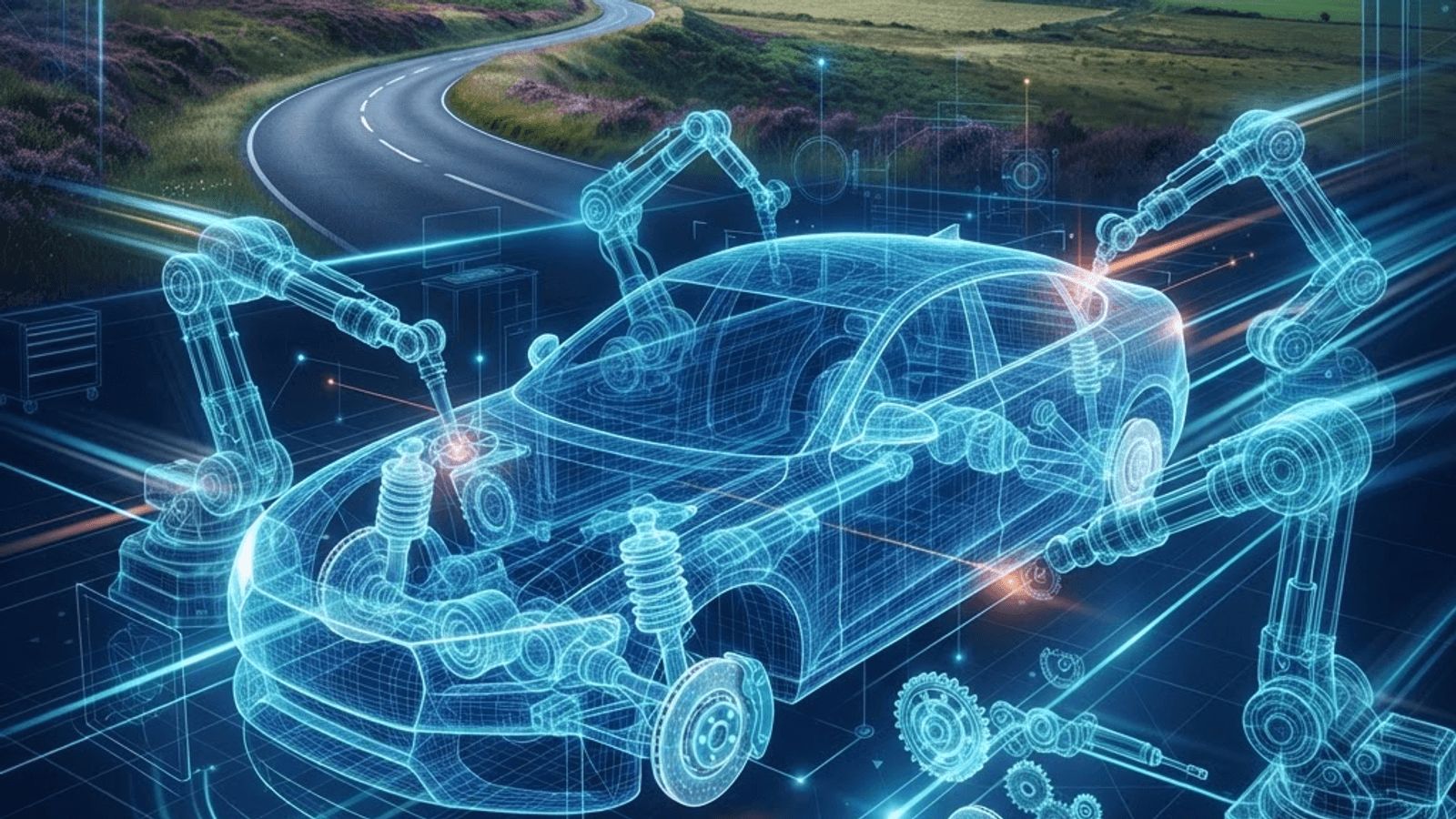
Automotive Manufacturing in the Scottish Borders: Specialist Rather Than Mass Market
The Scottish Borders is not a volume car manufacturing region, and no assembly plants roll finished vehicles off production lines here. What the region does support is a genuinely interesting automotive engineering sector built around specialist vehicle conversion, component manufacture, bodybuilding, restoration and precision machining.
This reflects a broader pattern across Scotland, where automotive activity concentrates on supply chain manufacturing, niche vehicle building and engineering services rather than mass assembly. In the Borders, that activity is closely linked to agriculture, forestry, emergency services, commercial haulage and the classic vehicle market.
The Shape of the Regional Sector
Several distinct activities make up Borders automotive manufacturing. Commercial vehicle bodybuilding produces tipper bodies, livestock transporters, service vehicles and specialist trailers. Vehicle conversion adapts base chassis for particular uses, including agricultural support vehicles, mobile workshops and welfare units. Component manufacture supplies machined parts, fabricated assemblies and specialist castings to automotive customers. Restoration and classic vehicle engineering serves an enthusiast market that values craftsmanship.
Underpinning all of this is precision engineering capability: CNC machining, fabrication, welding, coating and assembly, much of it developed originally to serve agricultural machinery and textile equipment needs.
The Top 10 Automotive Manufacturers and Engineering Firms Serving the Scottish Borders
1. Alexander Dennis
Scotland's foremost vehicle manufacturer, Alexander Dennis builds buses and coaches including zero-emission electric models. While its production sites are elsewhere in Scotland, the company anchors a Scottish automotive supply chain that draws components and services from across the country, including Borders engineering firms.
2. Borders Commercial Vehicle Bodybuilders
Regional bodybuilding firms construct and fit specialist bodies to commercial chassis for agricultural, forestry and haulage customers. Their work covers livestock bodies, tipping gear, flatbeds, curtainsiders and bespoke service vehicles, designed around the specific demands of rural operation.
3. Agricultural Vehicle Conversion Specialists
Firms adapting vehicles for farm and estate use produce everything from equipped pickup conversions and mobile workshops to livestock handling units. Proximity to farming customers allows genuinely tailored engineering rather than catalogue solutions.
4. Precision Machining and Component Manufacturers
CNC machining businesses across the Borders supply automotive customers with turned and milled components, prototype parts and short-run production items. Their tolerance capability and willingness to handle small batches make them valuable to specialist vehicle builders.
5. Classic Car Restoration Workshops
The Borders supports skilled restoration workshops undertaking full bodywork, mechanical rebuilds, trim and paint on classic and vintage vehicles. This is craft manufacturing in the truest sense, involving metal shaping, fabrication of unavailable parts and meticulous finishing to concours standards.
6. Trailer and Towing Equipment Manufacturers
Manufacturers producing agricultural trailers, livestock trailers, plant transporters and towing systems serve a constant regional demand. Their products must withstand heavy rural use, and durability rather than cost is typically the primary design driver.
7. Fabrication and Welding Engineering Firms
Structural fabricators supply chassis modifications, subframes, brackets and heavy-duty assemblies to vehicle builders and operators. Certified welding capability, including to relevant structural standards, is essential for safety-critical automotive work.
8. Vehicle Electrical and Auxiliary Systems Installers
Specialists fitting beacon systems, hydraulic controls, refrigeration, telematics and auxiliary power to commercial and agricultural vehicles combine electrical engineering with mechanical installation. Growth in vehicle telematics and fleet monitoring has expanded this niche considerably.
9. Electric Vehicle Conversion and Charging Specialists
An emerging area involves electric vehicle infrastructure and, increasingly, conversion of existing vehicles to electric drivetrains. Rural charging infrastructure installation has become a significant activity as Borders businesses and households adopt electric vehicles.
10. Automotive Coating and Finishing Providers
Powder coating, galvanising and specialist paint finishing businesses protect vehicle components against the corrosive conditions of Scottish winters, road salt and agricultural chemicals. Their work materially extends the service life of vehicles and equipment.
Why Specialist Automotive Work Suits the Region
Mass production requires vast capital investment, dense supply chains and proximity to major ports and markets. Specialist work requires something different: skilled people, flexible workshops, engineering judgement and close customer relationships. The Borders offers these in abundance, with a workforce culture shaped by generations of practical engineering.
Lower property and operating costs allow small manufacturers to maintain workshop space and equipment that would be prohibitively expensive in urban locations. Meanwhile, direct proximity to agricultural and forestry customers creates a natural home market for specialist vehicle solutions.
The Electrification Question
The transition to electric vehicles presents both challenge and opportunity for the regional sector. Electric powertrains have fewer moving parts, reducing demand for some traditional machined components. At the same time, they create demand for battery enclosures, thermal management components, high-voltage cable assemblies, lightweight structures and charging infrastructure.
Rural electrification also raises practical questions that Borders engineering firms are well placed to address, including charging solutions for farms with limited grid capacity, and the suitability of electric vehicles for long rural journeys and heavy towing duties.
Skills and Training
The sector depends on skills that take years to develop: welding, machining, panel work, auto-electrics and mechanical diagnosis. Local colleges and apprenticeship programmes provide entry routes, and many Borders firms train their own staff. Retaining these skills is essential to the sector's future, particularly as electrification requires additional high-voltage safety competence.
Final Thoughts
Automotive manufacturing in the Scottish Borders demonstrates that engineering excellence does not require production volume. The firms profiled here build, adapt, machine and restore vehicles and components with a level of craft and customer focus that large-scale manufacturers cannot match, serving a rural economy that depends absolutely on capable, durable vehicles.
Want your brand featured in front of decision-makers? Publish a guest post or get a link insertion in our guides through AAMAX's guest post and link insertion service.
Helpful Links
 SponsoredAAMAX — Full-Service Digital Agency
Write for Us
Share your expertise with our readers. We welcome guest contributions from industry specialists.
Pitch your idea

