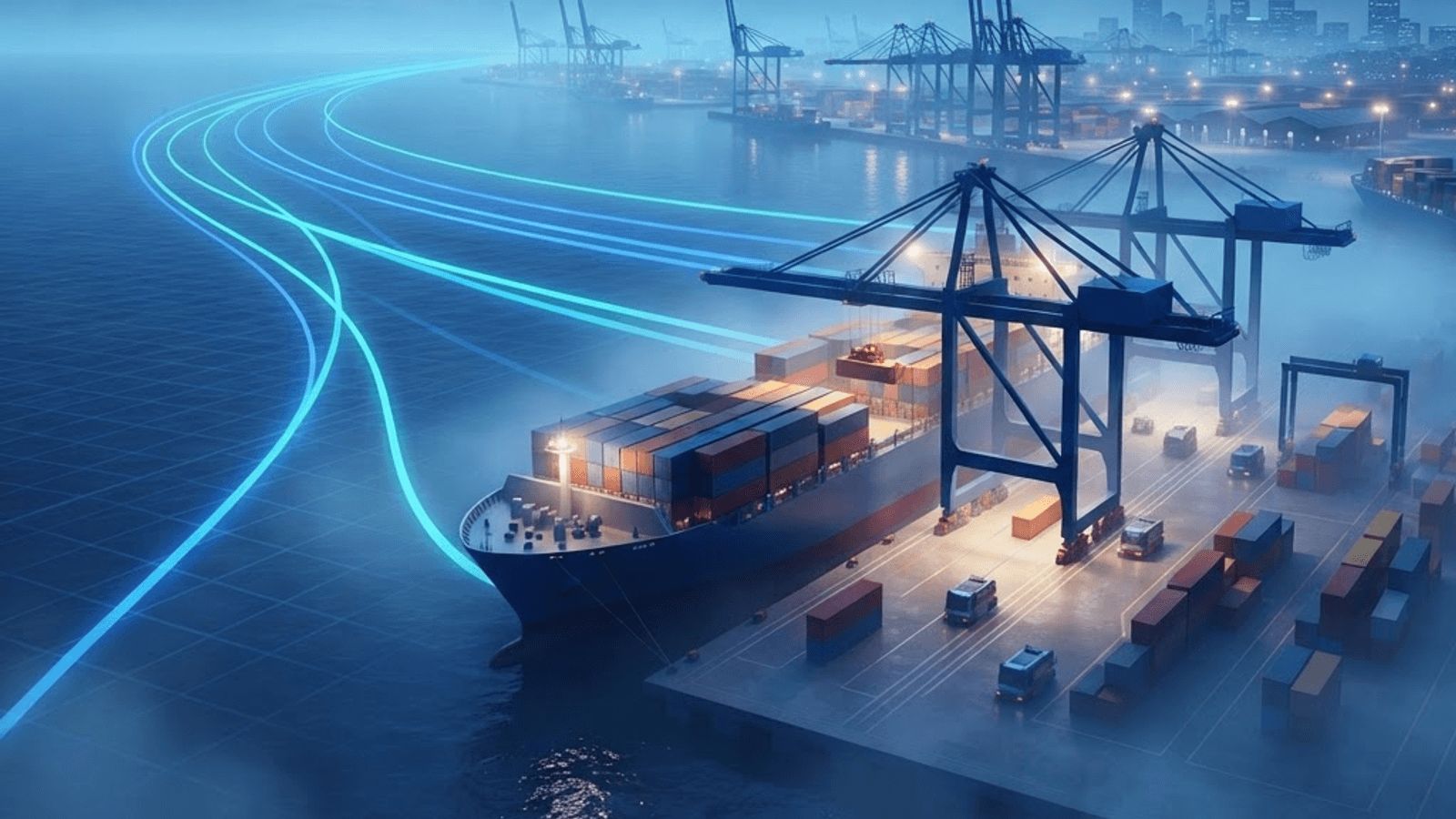
Fareham and the Solent Shipping Cluster
The Solent is one of the most important maritime regions in the United Kingdom. Southampton handles a very large share of the country's container traffic and is the dominant UK port for vehicle imports and exports as well as cruise embarkation. Portsmouth International Port manages ferry freight, fresh produce imports and general cargo. Between them sits Fareham, close enough that local businesses can access global shipping services without the cost and delay of inland haulage to distant ports.
This proximity has attracted a supporting ecosystem of shipping agencies, freight forwarders, customs brokers and marine service providers into the borough and its industrial estates. For exporters and importers based here, the practical advantage is real: shorter drayage distances, faster port turnaround and easier physical access when a consignment needs inspection.
How Ocean Freight Works
Sea freight divides principally into full container load and less than container load. A full container load dedicates an entire twenty or forty foot container to one shipper, offering better security, simpler handling and lower cost per unit at volume. Less than container load consolidates multiple shippers' cargo into a shared container, which suits smaller consignments but adds consolidation and deconsolidation time at both ends.
Beyond containers, roll-on roll-off services carry wheeled cargo and vehicles, break bulk handles oversized items that do not fit containers, and specialist services cover refrigerated, tank and project cargo.
The commercial chain typically involves several parties. The shipping line operates the vessels. The freight forwarder arranges the booking, documentation and inland transport on the shipper's behalf. The customs broker handles declarations and duty. A port agent manages vessel affairs at berth. Many businesses in Fareham deal primarily with a forwarder, who coordinates the rest.
Ten Shipping Companies and Agencies Serving Fareham
1. Solent Shipping Agency provides port agency and vessel support services across Southampton and Portsmouth, handling berth coordination, crew logistics and documentation.
2. Fareham Ocean Freight operates as a freight forwarder arranging container bookings, consolidation and door-to-door movements for local importers and exporters.
3. Portchester Customs and Shipping specialises in customs clearance, tariff classification and duty management, including deferment account administration.
4. Meon Maritime Services focuses on project and heavy lift cargo, coordinating oversized industrial and marine equipment shipments.
5. Harbour Container Lines Agency represents container line interests locally, managing bookings, equipment availability and schedule information.
6. Coastal Reefer Logistics handles temperature-controlled sea freight for food and pharmaceutical shippers, including cold chain monitoring throughout transit.
7. Titchfield Export Services supports smaller exporters with documentation, certificates of origin, letters of credit and consolidation services.
8. Whiteley International Freight offers multimodal solutions combining sea, road and air, useful where transit time and cost need balancing.
9. Segensworth Marine Supply provides ship chandlery and marine supply services to vessels calling at the local ports.
10. Locks Heath Shipping Consultants advises on freight procurement, contract negotiation and supply chain routing rather than executing shipments directly.
Choosing a Shipping Partner
Trade lane experience is the most important selection criterion. A forwarder with deep relationships on Far East routes may have limited capability into West Africa or South America. Ask specifically about the origins and destinations you use, and about the carriers they book with on those lanes.
Documentation competence is equally critical. Errors on bills of lading, commercial invoices, packing lists or certificates of origin cause delays, storage charges and occasionally customs penalties. Ask how documentation is checked and who is accountable for accuracy.
Customs capability deserves direct examination. Determine whether clearance is handled in-house or subcontracted, whether the provider holds Authorised Economic Operator status, and how they manage duty, VAT and any preferential origin claims. Errors here are expensive and can attract retrospective assessment.
Understand the full cost structure. Ocean freight rates are only part of the picture. Terminal handling charges, documentation fees, customs entry fees, container demurrage and detention, port storage, haulage and any inspection costs all contribute. Request an all-in landed cost estimate rather than a freight rate alone.
Managing Risk
Marine cargo insurance is essential and frequently misunderstood. Carrier liability under international conventions is limited and does not approximate the value of most cargo. Separate marine insurance covering the full commercial value, ideally on an all-risks basis, is the appropriate protection.
Incoterms determine where responsibility and risk transfer between buyer and seller. Choosing the wrong term can leave a business liable for costs and risks it did not anticipate. Anyone shipping regularly should understand the terms they contract on and review them periodically.
Demurrage and detention charges accumulate quickly when containers are not returned or collected within free time. Planning collection and unloading capacity in advance is one of the simplest ways to control unexpected cost.
Trends in Global Shipping
Freight rate volatility has become a defining characteristic of the market, driven by capacity cycles, geopolitical disruption to major routes and fluctuating demand. Businesses increasingly balance contracted rates for baseline volume with spot bookings for flexibility.
Environmental regulation is reshaping the industry, with emissions rules driving investment in alternative fuels, slower steaming and more efficient vessel designs. These costs are progressively reflected in freight pricing, and larger shippers now request emissions data alongside rates.
Digitalisation has improved visibility substantially, with electronic bills of lading, container tracking and platform-based booking reducing administrative burden and improving predictability for shippers of all sizes.
Practical Guidance for Local Businesses
Build relationships with two or three forwarders rather than relying on one, which preserves competitive tension and provides backup during capacity shortages. Book earlier than feels necessary during peak seasons, particularly ahead of major manufacturing holidays in Asia.
Keep product classification data accurate and current, since this underpins customs treatment and duty liability. Review your incoterms and insurance annually as volumes and destinations change. With Southampton and Portsmouth so close, Fareham businesses start from an advantageous position, and choosing capable partners turns that geographic advantage into a genuine commercial one.
Want your brand featured in front of decision-makers? Publish a guest post or get a link insertion in our guides through AAMAX's guest post and link insertion service.
Helpful Links
 SponsoredAAMAX — Full-Service Digital Agency
Write for Us
Share your expertise with our readers. We welcome guest contributions from industry specialists.
Pitch your idea