

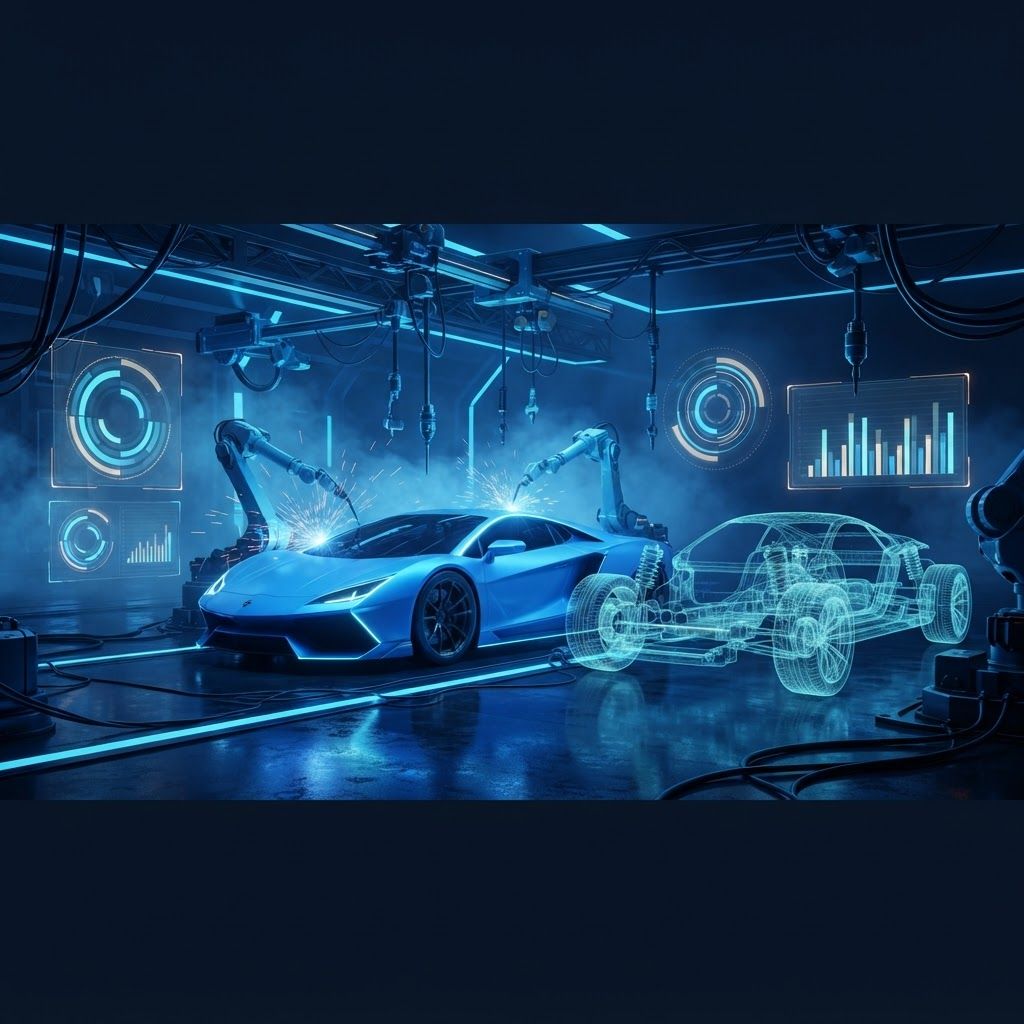
Automotive Engineering in Huntingdonshire
Huntingdonshire does not host a volume vehicle assembly plant, and its automotive sector should not be judged by that absence. What the district has instead is a concentration of specialist engineering capability that sits within the wider eastern England motorsport and advanced engineering corridor. Proximity to the motorsport valley cluster, to Cambridge engineering expertise and to major freight routes has fostered businesses that thrive on precision, low volumes and difficult technical problems.
The sector spans prototype and low-volume vehicle build, composite and metal fabrication, powertrain and electrification engineering, commercial vehicle conversion, trailer and specialist body manufacture, and component machining. Many of these businesses serve motorsport teams, niche vehicle manufacturers, commercial fleet operators and agricultural machinery producers, often simultaneously.
Why Low Volume Specialism Thrives Here
Mass production rewards scale, standardisation and long tooling runs. Low-volume automotive engineering rewards something quite different: adaptability, craftsmanship, rapid design iteration and the ability to manufacture without expensive dedicated tooling. Huntingdonshire's engineering firms have built their businesses around that second model.
The practical consequence is that a motorsport team needing a modified suspension upright, a fleet operator requiring a bespoke welfare vehicle conversion or a start-up building a demonstrator can find local partners able to move from concept to physical part in weeks rather than months. Combined with digital design, computer-aided machining and additive manufacturing for prototypes, this creates a genuinely competitive proposition.
1. Ouse Valley Automotive Engineering
Ouse Valley Automotive Engineering is among the district's most complete specialist engineering operations, combining design capability with precision machining, fabrication and assembly. It produces prototype components, low-volume production parts and bespoke assemblies for motorsport, niche manufacturers and commercial clients. The business is known for strong metrology and inspection practice, which matters greatly when tolerances are tight and parts are safety-related.
2. Great Ouse Motorsport Fabrication
Focused on the competition sector, this fabricator produces roll cages, chassis structures, exhaust systems, brackets and bespoke metalwork in steel, aluminium and stainless. Its welders are highly regarded for consistency and finish quality, and the company works comfortably from both engineering drawings and physical patterns. Rapid turnaround between race weekends is a defining part of its service.
3. Huntingdon Vehicle Conversions
Huntingdon Vehicle Conversions specialises in adapting commercial vehicles for specific operational roles, including welfare vehicles, mobile workshops, refrigerated units, tipper and dropside bodies, and accessibility conversions. Its work covers structural modification, electrical systems, racking and compliance certification. Fleet managers value its understanding of type approval requirements and its ability to standardise conversions across multiple vehicles.
4. Fenland Trailer Manufacturing
Serving the district's substantial agricultural base, Fenland Trailer Manufacturing builds and refurbishes trailers, bulk carriers and specialist towed equipment. Its products are designed for the demanding conditions of fenland farming, with attention to load distribution, corrosion protection and ease of maintenance. The business also undertakes repair and modification work, extending the service life of existing fleet assets.
5. St Neots Precision Components
This machining specialist produces automotive components to tight tolerances using computer-controlled turning and milling, supported by in-house inspection. It supplies motorsport teams, niche vehicle builders and component manufacturers with parts ranging from single prototypes to repeat batch production. The company is valued for consistent quality and for advising on design changes that improve manufacturability without compromising function.
6. Nene Electric Powertrain Systems
Reflecting the industry's most significant transition, Nene Electric Powertrain Systems focuses on electrification engineering, including battery pack design and assembly, motor integration, thermal management and control systems. It supports conversion projects, niche manufacturers and research programmes. Its expertise in high-voltage safety practice and battery management is increasingly sought as more operators explore electrified fleets.
7. Kimbolton Composites
Kimbolton Composites manufactures carbon fibre and glass fibre components for automotive and motorsport applications, including body panels, aerodynamic devices and structural parts. Its capability spans pattern making, mould production, laminating and finishing. Lightweighting remains a central engineering objective across both competition and electrified vehicles, and the company's ability to produce complex geometries supports that directly.
8. Riverside Automotive Electronics
This business develops and manufactures vehicle electronics, including wiring looms, control modules, sensor integration and data logging systems. It works closely with motorsport teams and specialist vehicle builders where standard production wiring is unsuitable. Its looms are recognised for clean routing, robust termination and thorough documentation, which simplifies maintenance and fault finding in service.
9. Ramsey Engineering Works
A long-established general engineering business, Ramsey Engineering Works supports automotive and agricultural vehicle sectors with fabrication, machining, repair and refurbishment. It handles heavier structural work alongside component manufacture, and it is frequently engaged for one-off solutions where no commercial product exists. Its practical problem-solving approach is highly valued by operators facing unplanned downtime.
10. Cambridgeshire Prototype Vehicles
Cambridgeshire Prototype Vehicles builds demonstrators, concept vehicles and engineering mules for manufacturers and technology developers. Its multidisciplinary team combines design, fabrication, electrical integration and testing support, delivering complete running vehicles rather than components. Clients developing new mobility technologies rely on it to translate designs into physical, testable platforms quickly and confidentially.
Electrification and Sector Transition
Electrification is reshaping specialist automotive engineering as thoroughly as it is the volume industry. Battery integration introduces new demands around thermal management, structural protection, weight distribution and high-voltage safety, and it requires competencies that traditional mechanical workshops must actively develop. Businesses in the district that have invested in this capability are seeing strong demand from fleet operators and niche manufacturers alike.
Lightweighting has gained renewed importance because battery mass penalises range and handling. That benefits composite specialists and precision machinists able to remove material intelligently. Meanwhile, software and electronics content continues to grow, blurring the boundary between mechanical engineering and systems development.
Choosing an Engineering Partner
Define whether you need design authority, manufacture to print or a combination, as this fundamentally shapes the relationship and liability. Review examples of comparable work and ask about inspection and quality documentation. For safety-related components, confirm what verification and testing will be undertaken and who signs off the design.
Discuss capacity and lead time honestly, particularly for motorsport work where deadlines are immovable. Agree confidentiality and intellectual property terms in writing before sharing designs. Where compliance or type approval is involved, confirm the partner's experience with the specific requirements applicable to your vehicle category.
Final Thoughts
Huntingdonshire's automotive businesses demonstrate that specialist engineering can flourish without volume assembly. From composite fabrication and precision machining to vehicle conversion, electrification and complete prototype builds, the district offers genuine depth. For anyone developing vehicles, adapting fleets or competing in motorsport, engaging these partners early and collaboratively remains the most reliable route to a well-engineered result.
Want your brand featured in front of decision-makers? Publish a guest post or get a link insertion in our guides through AAMAX's guest post and link insertion service.
Helpful Links
 SponsoredAAMAX — Full-Service Digital Agency
Write for Us
Share your expertise with our readers. We welcome guest contributions from industry specialists.
Pitch your idea

