

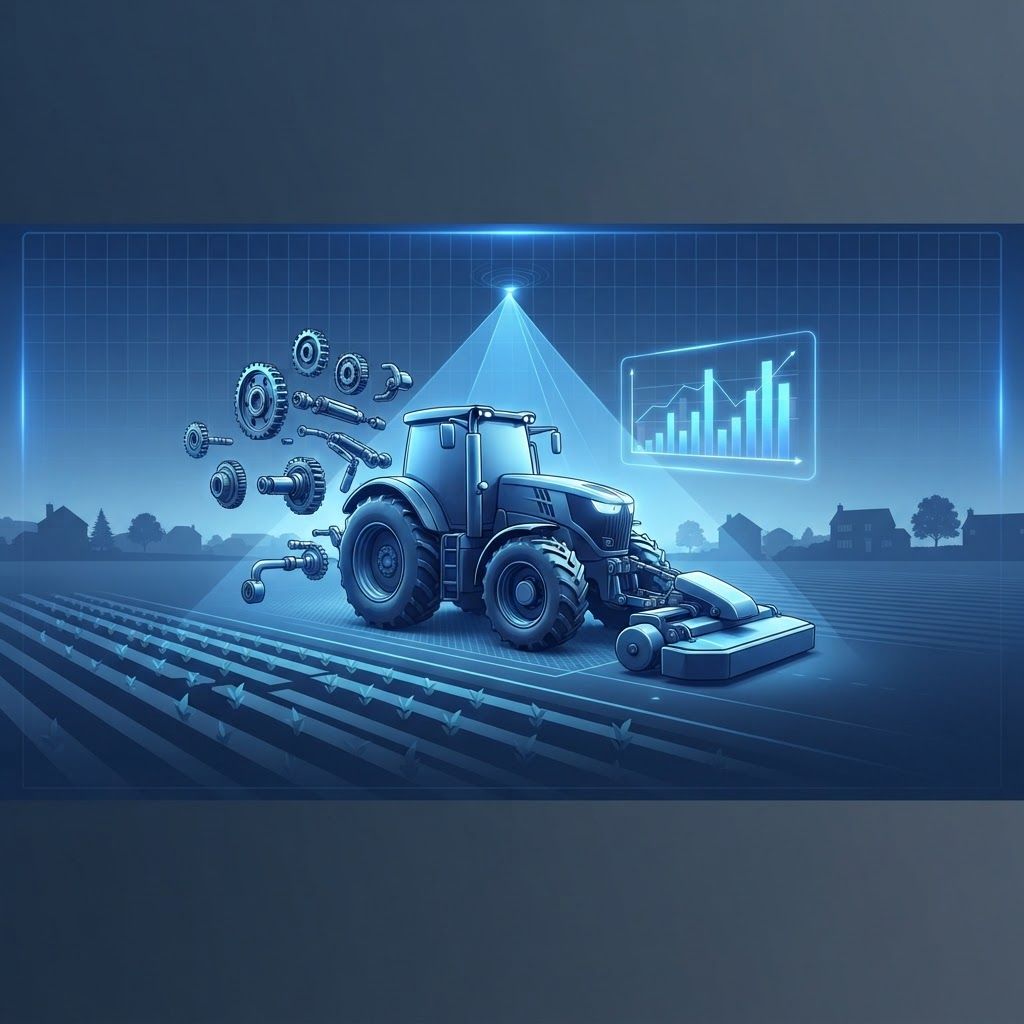
Machinery Demand in a Suburban Borough
Kingston upon Thames might not look like a machinery market, but demand is substantial once you account for everything that needs maintaining. The borough contains extensive parks and open spaces, riverside greens, golf courses on its fringes, school playing fields, sports clubs, cemeteries, and a green belt edge where working farms, equestrian yards and nurseries operate. Add landscaping contractors, tree surgeons and grounds maintenance firms, and the requirement for tractors, mowers, loaders, sprayers and handling equipment becomes clear.
Buyers in this environment have particular needs. Compact machines that can work in confined urban sites, low-noise and low-emission options for use near residential areas, and versatile carriers that accept multiple attachments all matter more than raw horsepower. Dealer support within reasonable distance is critical, because downtime during the growing season is expensive.
Ten Leading Agricultural and Groundcare Equipment Brands
1. John Deere is arguably the most recognised name in agricultural machinery worldwide, with a range spanning large tractors, compact utility tractors and professional turf equipment. Its strength for local buyers is the combination of build quality and advanced telematics, which allow fleet managers to monitor usage, fuel consumption and service intervals remotely.
2. New Holland Agriculture offers a broad tractor and harvesting range with a long-standing reputation for operator comfort and value. Its compact and specialist tractors suit smallholdings and grounds work around the borough, and dealer coverage across Surrey is good.
3. Massey Ferguson has deep roots in British farming and remains popular for straightforward, serviceable machinery. Many mixed farms and equestrian businesses favour the brand for reliability and the wide availability of parts and independent servicing knowledge.
4. Kubota dominates the compact tractor and groundcare segment, which is exactly the category most relevant to urban and peri-urban work. Its compact tractors, utility vehicles and mowers are widely used by councils, contractors and sports ground teams for their manoeuvrability and durability.
5. Case IH supplies larger agricultural tractors and harvesting equipment with sophisticated precision farming systems. While the biggest models exceed local needs, its mid-range machines serve the surrounding Surrey arable and forage operations well.
6. Claas is particularly strong in forage harvesting, balers and mowers. Given the significant demand for hay and haylage from the region's equestrian sector, Claas grass machinery is a common sight on land bordering the borough.
7. JCB is best known for telehandlers, loaders and site equipment, and its agricultural loaders are widely used for materials handling on farms and estates. The brand's crossover into construction makes it a practical choice for businesses doing both groundworks and land management.
8. Ransomes Jacobsen specialises in professional turf maintenance machinery, including cylinder mowers and large-area rotary units. Golf courses, cricket clubs and football pitches around Kingston rely on this category for the fine finish that general agricultural mowers cannot achieve.
9. Stihl covers the essential handheld end of the market with chainsaws, brushcutters, hedge trimmers and blowers. Its expanding battery-powered range has become especially important for work in noise-sensitive residential and parkland settings.
10. Husqvarna competes closely in handheld and robotic equipment, and its robotic mowing systems have found real traction in managing large amenity lawns and sports surfaces with reduced labour input.
Technology Transforming the Sector
Precision agriculture has moved from novelty to norm. Satellite guidance, automatic steering, section control on sprayers and variable rate application reduce input use while improving consistency. Even on smaller holdings, entry-level guidance systems cut overlap and save fuel and chemicals measurably.
Electrification is advancing fastest at the smaller end. Battery handheld tools are now genuinely competitive with petrol for most tasks, and compact electric loaders and utility vehicles are entering the market. For work in parks and near housing, the reduction in noise and local emissions is a decisive advantage.
Automation and robotics are emerging. Robotic mowers already operate widely on amenity turf, and autonomous field robots for weeding and monitoring are progressing from trials into commercial use. Their appeal is strongest where labour is scarce and tasks are repetitive.
Telematics and data are quietly the biggest change for fleet operators. Knowing exactly how many hours each machine has worked, where it is, and when it needs servicing transforms maintenance planning and reduces unexpected breakdowns.
Buying, Leasing or Contracting
Ownership is not always the right answer. For machines used intensively across the season, purchase or long-term lease makes sense. For specialist equipment used a few days a year, such as balers or stump grinders, hiring or engaging a contractor is usually far more economical once depreciation, storage and maintenance are included.
When buying, evaluate the dealer as carefully as the machine. Response times for breakdowns, parts availability, loan machine policies and the quality of operator training all affect real-world productivity. A slightly more expensive machine backed by a responsive local dealer typically outperforms a cheaper import with thin support.
Consider attachment compatibility too. A tractor or loader with a widely supported hitch and hydraulic specification retains flexibility and resale value, whereas proprietary systems can lock you into a single supplier.
Safety and Compliance
Operators must be properly trained, and certain machines require formal certification. Regular inspection of lifting equipment, correct guarding, and safe handling of fuels and chemicals are legal obligations as well as practical necessities. Working in public spaces adds further duties around exclusion zones, debris control and public safety, which is particularly relevant in a densely populated borough.
Final Thoughts
Buyers around Kingston upon Thames have access to the full spectrum of agricultural and groundcare brands, from global tractor manufacturers to specialists in fine turf and handheld tools. The right choice depends on site constraints, noise sensitivity, utilisation rates and dealer proximity rather than brand prestige. Those who match machinery to actual workload, invest in operator training and factor dealer support into the decision consistently achieve lower running costs and better results.
Want your brand featured in front of decision-makers? Publish a guest post or get a link insertion in our guides through AAMAX's guest post and link insertion service.
Helpful Links
 SponsoredAAMAX — Full-Service Digital Agency
Write for Us
Share your expertise with our readers. We welcome guest contributions from industry specialists.
Pitch your idea

