

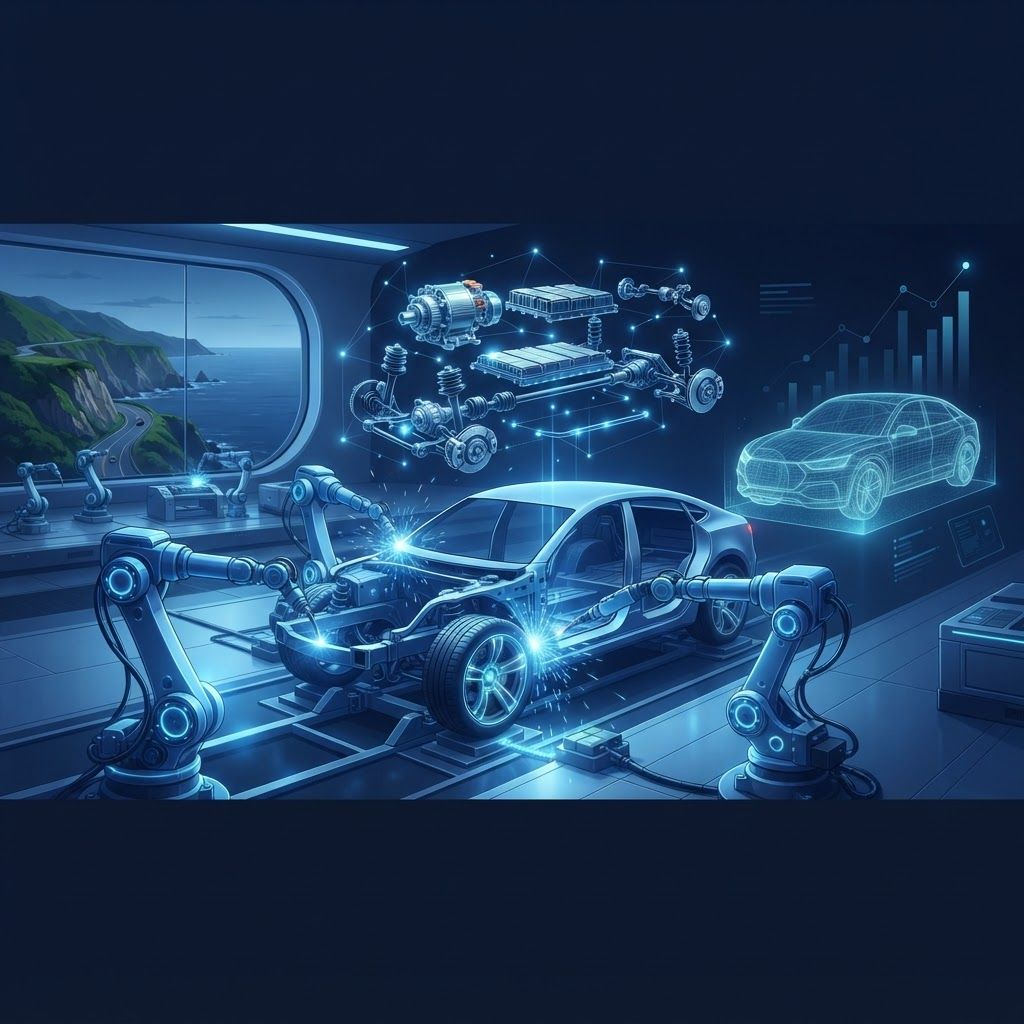
Automotive Engineering With a Local Accent
Northern Ireland has a long and distinguished automotive engineering tradition, and while the Causeway Coast and Glens is not home to a volume car plant, the borough supports a substantial cluster of businesses that design, build, convert and equip vehicles. The work is specialised: commercial vehicle bodywork, agricultural and plant trailers, horse boxes, refrigerated units, welfare vehicles, motorsport preparation and precision component manufacture for larger supply chains.
This kind of manufacturing suits the region well. It draws on a strong tradition of metal fabrication and mechanical engineering, it serves local industries including farming, haulage, construction and tourism, and it rewards craftsmanship and problem solving over sheer production volume. Coleraine, Ballymoney, Limavady and the surrounding industrial areas all host workshops where vehicles are built and modified to order.
Specialist Vehicle Building Explained
A large share of automotive manufacturing activity in the borough involves taking a chassis cab from a major manufacturer and building a purpose-designed body onto it. Tipper bodies, dropside beds, box bodies, curtainsiders, refrigerated units, livestock transporters and specialist welfare vehicles are all produced this way.
The engineering involved is considerable. Weight distribution must be calculated so that axle loadings remain legal and the vehicle handles safely. Structures must withstand years of loading, vibration and corrosive winter road treatment. Electrical systems, hydraulics, lighting and safety equipment all need to be integrated correctly and certified. Getting any of this wrong creates genuine safety and compliance problems, which is why experienced builders command loyalty.
Ten Automotive Manufacturers and Specialists
1. Causeway Commercial Bodies builds tipper, dropside and box bodies onto commercial chassis, serving haulage, construction and agricultural operators across the borough with durable, well-finished conversions.
2. Bann Valley Trailers manufactures agricultural and plant trailers, including bale trailers, low loaders and tipping trailers engineered for heavy field and site use in demanding Northern Irish conditions.
3. Glens Horsebox Company produces horseboxes and livestock transporters with a focus on animal welfare features, ventilation, non-slip flooring and the robust construction required for rural road use.
4. Roe Valley Vehicle Engineering handles specialist conversions including welfare units, mobile workshops and utility vehicles, combining fabrication, electrical work and interior fit-out under one roof.
5. North Coast Motorsport Engineering serves the region active rallying and racing community with chassis work, roll cage fabrication, suspension setup and competition vehicle preparation to recognised safety standards.
6. Coleraine Precision Components manufactures machined parts and sub-assemblies supplied into automotive and commercial vehicle supply chains, working to tight tolerances on CNC equipment.
7. Ballymoney Coachworks specialises in accident repair, panel fabrication and structural realignment for commercial and passenger vehicles, including work on older and classic vehicles where replacement panels are unavailable.
8. Antrim Coast Refrigerated Transport Systems builds and fits temperature-controlled bodies and refrigeration units, an important capability given the borough substantial food production and distribution activity.
9. Dalriada Vehicle Electrics focuses on automotive electrical systems, wiring looms, auxiliary power, telematics installation and the increasingly complex electronics found in modern commercial vehicles.
10. Basalt Fabrication and Vehicle Works completes the list with general vehicle fabrication, tail lift installation, crane mounting and bespoke engineering solutions for operators with unusual requirements.
The Electric Transition and What It Means Locally
The shift toward electric commercial vehicles is reshaping the sector. Battery electric chassis are becoming available across an increasing range of weights, and body builders must adapt. Weight budgets are tighter because batteries are heavy, which places a premium on lightweight body construction using aluminium and composite materials.
High voltage systems introduce new safety requirements, and technicians need specific training before working around them. Auxiliary equipment that was traditionally driven from the engine, such as refrigeration compressors and hydraulic pumps, must be re-engineered to run electrically without excessively depleting the traction battery.
Forward-thinking businesses in the borough are investing in this training and capability now, recognising that operators making the switch will want local partners who can build and service electric-based vehicles competently.
Quality, Compliance and Certification
Vehicle manufacturing and conversion is heavily regulated, and rightly so. Individual vehicle approval, type approval schemes, weight and dimension compliance, lighting regulations and load securing standards all apply. Trailer manufacture carries its own requirements around braking systems, couplings and plating.
Reputable manufacturers document everything: chassis modification records, weight calculations, electrical schematics and certification paperwork. For buyers, this documentation is not bureaucratic clutter. It is what allows a vehicle to be legally operated, insured and eventually resold with confidence.
Serving Agriculture and Tourism
Two local sectors shape demand strongly. Agriculture across the Bann Valley, the Roe Valley and the glens requires trailers, livestock transport, feed handling equipment and robust utility vehicles designed for muddy yards and narrow lanes. Manufacturers who understand farming practicalities, such as how a gate should swing when hands are full, build better products.
Tourism generates a different demand. Minibus conversions, accessible vehicle adaptations, catering trailers and mobile retail units all serve the visitor economy along the Causeway Coast. Campervan conversion has grown particularly strongly as touring holidays increased in popularity, and several regional workshops now offer high-quality bespoke conversions.
Skills and Apprenticeships
Vehicle manufacturing requires welders, fabricators, auto electricians, hydraulic technicians, spray painters and trimmers. These are skilled trades learned largely through practice, and the sector depends on a steady flow of apprentices. Local further education provision supports this, and many workshops in the borough have long traditions of training young people who go on to spend entire careers in the industry.
Choosing a Vehicle Manufacturer or Converter
Ask to see completed examples of similar work, ideally several years old so you can judge how the construction has aged. Check what warranty is offered on the body and on individual components. Confirm that weight calculations and compliance documentation will be provided. Discuss lead times honestly, as good builders are frequently booked well ahead.
Consider serviceability too. A body designed with accessible grease points, replaceable wear components and sensible panel layout will cost far less to maintain over a decade than one built purely for initial appearance.
The Road Ahead
Automotive manufacturing in the Causeway Coast and Glens will continue to thrive by doing what it already does well: building durable, purpose-designed vehicles for customers who know exactly what they need. Electrification, lightweight materials and increasing electronic complexity present challenges, but they also open opportunities for workshops willing to invest in new skills. The engineering culture of the borough suggests they will.
Want your brand featured in front of decision-makers? Publish a guest post or get a link insertion in our guides through AAMAX's guest post and link insertion service.
Helpful Links
 SponsoredAAMAX — Full-Service Digital Agency
Write for Us
Share your expertise with our readers. We welcome guest contributions from industry specialists.
Pitch your idea

