Pool Ownership in the Ashford Area
Swimming pools are more common around Ashford than many people assume. Rural and semi-rural properties across the borough and the surrounding Kent countryside include outdoor pools, while indoor pools, endless pools and hot tubs have become popular additions to larger homes and converted outbuildings. Hotels, holiday lets, health clubs and residential developments add a commercial dimension with stricter regulatory requirements.
What unites all of them is that water quality is a continuous chemical and mechanical process, not an occasional chore. An unmanaged pool deteriorates quickly: chlorine depletes, pH drifts, algae establishes, filters clog and surfaces stain. Professional maintenance exists because reversing those conditions costs far more than preventing them.
The Top 10 Pool Cleaning Services in Ashford
1. Ashford Pool Care Services provides scheduled domestic maintenance covering water testing, chemical dosing, vacuuming, brushing, skimming and filter management on weekly or fortnightly cycles.
2. Kent Aquatic Maintenance serves both domestic and light commercial clients, with strong expertise in filtration systems, pump servicing and circulation troubleshooting.
3. Stour Pool & Spa Solutions covers hot tubs and swim spas alongside pools, handling sanitiser management, water changes and component replacement.
4. CrystalBlue Pool Services specialises in water chemistry problem solving, tackling persistent algae, cloudiness, scaling and staining that routine cleaning has failed to resolve.
5. Ashford Commercial Pool Compliance supports hotels, gyms and holiday accommodation with testing regimes, record keeping and plant room maintenance aligned to industry guidance.
6. Weald Pool Engineering focuses on the mechanical side: pumps, heaters, heat pumps, valves, pipework and automated dosing systems, including installation and repair.
7. SeasonGuard Pool Openings concentrates on spring commissioning and autumn winterisation, the two most technically demanding points in the annual pool calendar.
8. Ashford Pool Liners & Repairs handles liner replacement, leak detection, tiling repairs and structural remediation for older pools showing water loss.
9. EcoSwim Kent promotes lower-chemical approaches including saltwater chlorination, UV and ozone supplementary treatment, and improved circulation design to reduce sanitiser demand.
10. Poolside Property Services combines pool maintenance with surrounding area care, including decking cleaning, pool house upkeep and enclosure maintenance for estate clients.
What Professional Pool Maintenance Involves
A standard service visit follows a repeatable sequence. The technician tests water chemistry, typically measuring free and combined chlorine or alternative sanitiser levels, pH, total alkalinity, calcium hardness and stabiliser where used. Adjustments are made in the correct order, because pH corrections alter sanitiser effectiveness and alkalinity buffers pH stability.
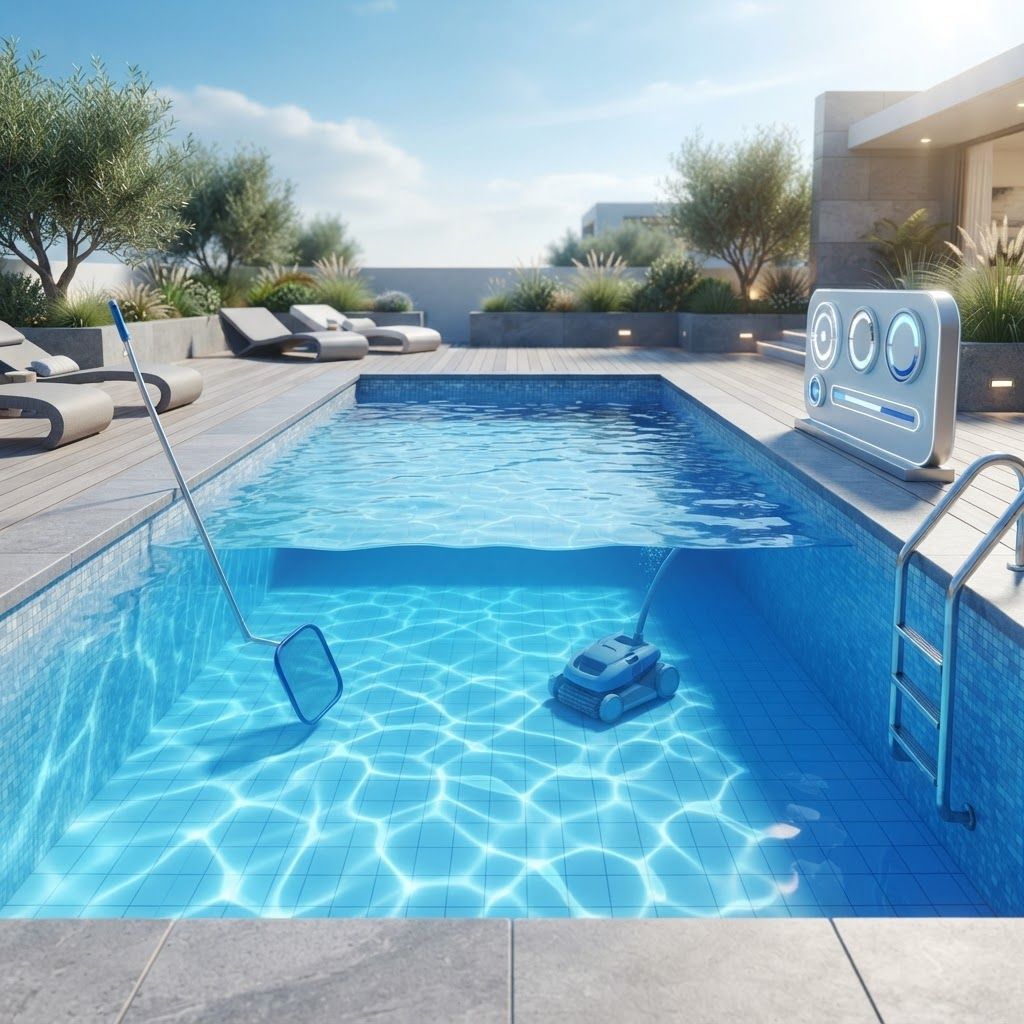
Physical cleaning follows: skimming surface debris, brushing walls and waterline to disrupt biofilm, vacuuming the floor, emptying skimmer and pump baskets and backwashing or cleaning the filter as required. Finally, equipment is checked for correct operation, flow rates and pressure, and any developing faults are reported.
Documentation matters. A good provider leaves a record of readings and actions, which builds a history that makes diagnosing gradual problems far easier.
Water Chemistry in Plain Language
Sanitiser kills pathogens and organic contaminants. pH determines how effective that sanitiser is and how comfortable the water feels; too low and it corrodes surfaces and equipment, too high and chlorine becomes sluggish and scale forms. Total alkalinity stabilises pH against sudden swings. Calcium hardness protects plaster and grout from being leached by soft water and prevents scaling when excessive. In Kent's hard water region, calcium and scaling management deserve particular attention.
Combined chlorine, the compound responsible for the sharp smell often mistaken for excessive chlorination, actually indicates insufficient effective sanitiser and the presence of contaminants. Persistent odour is a sign the pool needs attention, not less chlorine.
Seasonal Management
Spring opening involves removing covers, cleaning accumulated debris, restarting circulation, replacing any equipment damaged over winter, balancing water and often shock dosing before use. Summer requires the highest frequency of attention because heat, sunlight and bather load all accelerate sanitiser consumption. Autumn is the time to reduce heating, deep clean and prepare equipment. Winterisation protects against freeze damage by lowering water level appropriately, draining vulnerable pipework and pumps, adding winter chemicals and covering securely.
Heat pumps have changed the seasonal picture for many Ashford pool owners, extending usable months considerably compared to older gas heating, but they require their own servicing regime and correct flow rates to operate efficiently.
Safety and Compliance
Domestic pools carry safety responsibilities, particularly where children have access. Secure covers, fencing, alarms and clear supervision rules all reduce risk. Commercial and shared pools face more formal expectations around water testing frequency, record keeping, plant room safety, chemical storage and management of risks including waterborne infection. Providers serving that market should be able to demonstrate relevant training and documented procedures.
Chemical handling deserves respect in any setting. Sanitisers and pH adjusters should be stored separately, in ventilated, dry conditions, away from children and never mixed.
Costs and Service Agreements
Domestic maintenance is generally sold as a recurring contract priced by pool size, visit frequency and whether chemicals are included. One-off deep cleans, green-to-clean recoveries and equipment repairs are quoted separately. Commercial contracts are structured around visit frequency and compliance support. Ask precisely what a visit includes, how chemicals are billed and what response times apply when equipment fails mid-season.
Choosing a Provider
Look for demonstrable technical training rather than general cleaning experience, ask how they document water readings, confirm insurance, and check that they service the specific equipment you own. A capable pool technician saves money over time by keeping chemistry stable, extending equipment life and catching leaks and pump problems before they become major works.
Want your brand featured in front of decision-makers? Publish a guest post or get a link insertion in our guides through AAMAX's guest post and link insertion service.
Helpful Links
 SponsoredAAMAX — Full-Service Digital Agency
Write for Us
Share your expertise with our readers. We welcome guest contributions from industry specialists.
Pitch your idea