

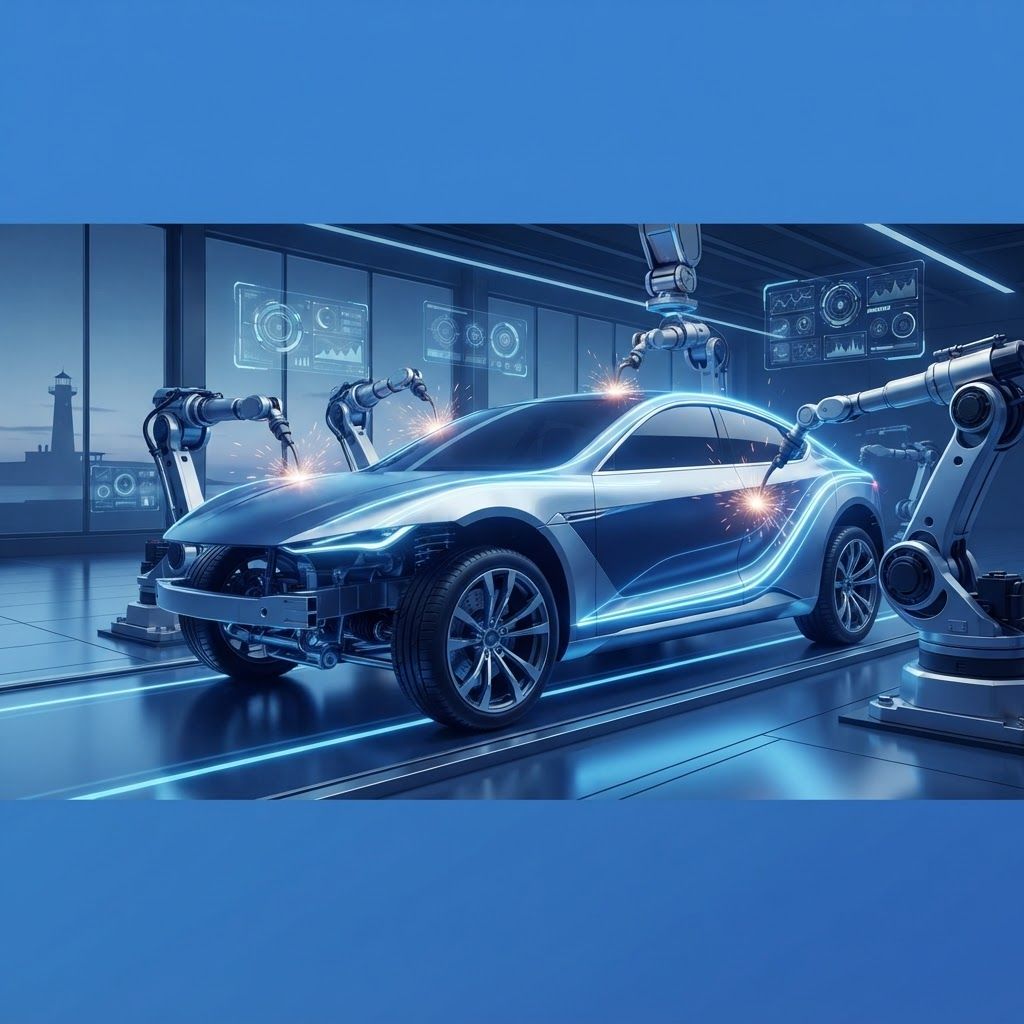
Blackpool's Automotive Heritage
Few visitors realise that Blackpool was once home to one of Britain's most celebrated sports car marques. TVR built cars in the town for decades, establishing a local tradition of hand-built vehicle manufacture, composite bodywork and chassis fabrication that left a lasting imprint on the area's engineering skills base. Coachbuilding and vehicle bodywork have deep roots along the Fylde Coast, supported historically by the town's transport and tramway operations.
Today the picture is different but far from empty. Volume car assembly does not happen in Blackpool, yet the surrounding region hosts significant vehicle manufacturing, and the town itself supports component producers, specialist converters, commercial bodybuilders and an increasingly important electric vehicle service sector.
How the Local Automotive Sector Is Structured
Automotive activity around Blackpool falls into several categories. Vehicle manufacturers in the wider North West produce cars and commercial vehicles at scale. Tier one and tier two component suppliers manufacture parts, assemblies and materials feeding those plants. Specialist converters adapt base vehicles into ambulances, welfare vehicles, refrigerated units, minibuses and mobility-adapted cars. Finally, engineering firms provide tooling, jigs, precision machining and prototyping services.
Blackpool's tourism economy adds a distinctive demand strand: coach operators, holiday park transport, taxi fleets and attraction vehicles all require conversion, maintenance and bodywork services at scale.
The Ten Leading Automotive Manufacturers Connected to Blackpool
1. Leyland Trucks. Located in Lancashire, Leyland Trucks is one of the UK's most significant commercial vehicle manufacturers, producing trucks for domestic and export markets. Its supply chain extends across the county, including businesses based on the Fylde Coast.
2. Bentley Motors. Though based in Crewe, Bentley's influence on North West automotive engineering is substantial. Its demand for craft skills in trim, leatherwork and hand finishing sustains specialist suppliers throughout the region.
3. Jaguar Land Rover Halewood. The Merseyside plant is a major North West vehicle producer and a significant customer for regional component manufacturers, logistics providers and engineering services firms.
4. Victrex. Based at Thornton Cleveleys near Blackpool, Victrex produces high-performance PEEK polymers increasingly used in automotive applications to replace metal in gears, bearings, seals and electric vehicle battery components, delivering weight and efficiency gains.
5. Fylde Coast Vehicle Conversions. Representing the specialist converters operating locally, these businesses transform base vans and chassis into welfare vehicles, mobile units, refrigerated transport and accessible minibuses, serving public sector and commercial fleets.
6. Blackpool Coachworks. Covering the commercial bodybuilding and repair specialists in the town, these operations fabricate and refurbish bus, coach and commercial vehicle bodywork, drawing on Blackpool's long tramway and transport engineering tradition.
7. Forgings and Precision Engineering Lancashire. The county's precision machining and forging businesses supply braking, steering and driveline components to automotive assemblers. Their tight tolerance capability underpins the region's tier two supply base.
8. Unipart Group. A major automotive logistics and manufacturing organisation with North West operations, Unipart supports parts distribution and aftermarket supply for vehicle manufacturers and dealer networks across the region.
9. TVR. The marque's Blackpool origins remain an important part of the town's identity, and the brand continues to represent British low-volume sports car manufacturing. Its heritage sustains a local community of restorers, composite specialists and performance engineers.
10. Northern EV Systems. Representing the emerging electric vehicle conversion and charging infrastructure specialists on the Fylde Coast, these firms retrofit commercial fleets and install depot charging, an area of rapid growth as operators electrify.
Electrification and What It Means Locally
The shift to electric vehicles is the most significant change the automotive industry has faced in a century, and its effects reach Blackpool directly. Electric drivetrains have far fewer moving parts, which reduces demand for some traditional machined components while creating new demand for battery enclosures, thermal management systems, high-voltage cabling and power electronics.
For component manufacturers, the challenge is to reposition. Businesses that made engine or transmission parts are exploring battery structures, lightweight polymer components and electrical assemblies. Materials companies like Victrex are well placed, since polymer substitution delivers exactly the weight reduction electric vehicles need.
Fleet electrification also creates service opportunities. Blackpool's taxi trade, council vehicles, delivery operators and coach companies all face transition timelines, generating work in vehicle conversion, charger installation and technician retraining.
Choosing an Automotive Manufacturing Partner
Quality system certification is essential, with automotive-specific quality management standards expected for any tier supplier. Ask about production part approval processes and whether the supplier has experience with the documentation rigour that vehicle manufacturers demand.
Assess capacity honestly against your volume requirements, and discuss how the supplier handles demand fluctuation. For conversion work, check compliance with type approval requirements and relevant safety standards, particularly for passenger-carrying or accessible vehicles where regulation is strict.
Finally, consider engineering support. The best partners contribute design improvements rather than simply building to a drawing, and that input often delivers more value than a marginal price difference.
Final Thoughts
Blackpool's automotive sector is specialised rather than large, built on craft engineering heritage, materials innovation and conversion expertise. As electrification reshapes the industry, the Fylde Coast's flexibility and strong regional supply chain position it well. The companies above illustrate both the tradition and the transition now underway.
Want your brand featured in front of decision-makers? Publish a guest post or get a link insertion in our guides through AAMAX's guest post and link insertion service.
Helpful Links
 SponsoredAAMAX — Full-Service Digital Agency
Write for Us
Share your expertise with our readers. We welcome guest contributions from industry specialists.
Pitch your idea

