

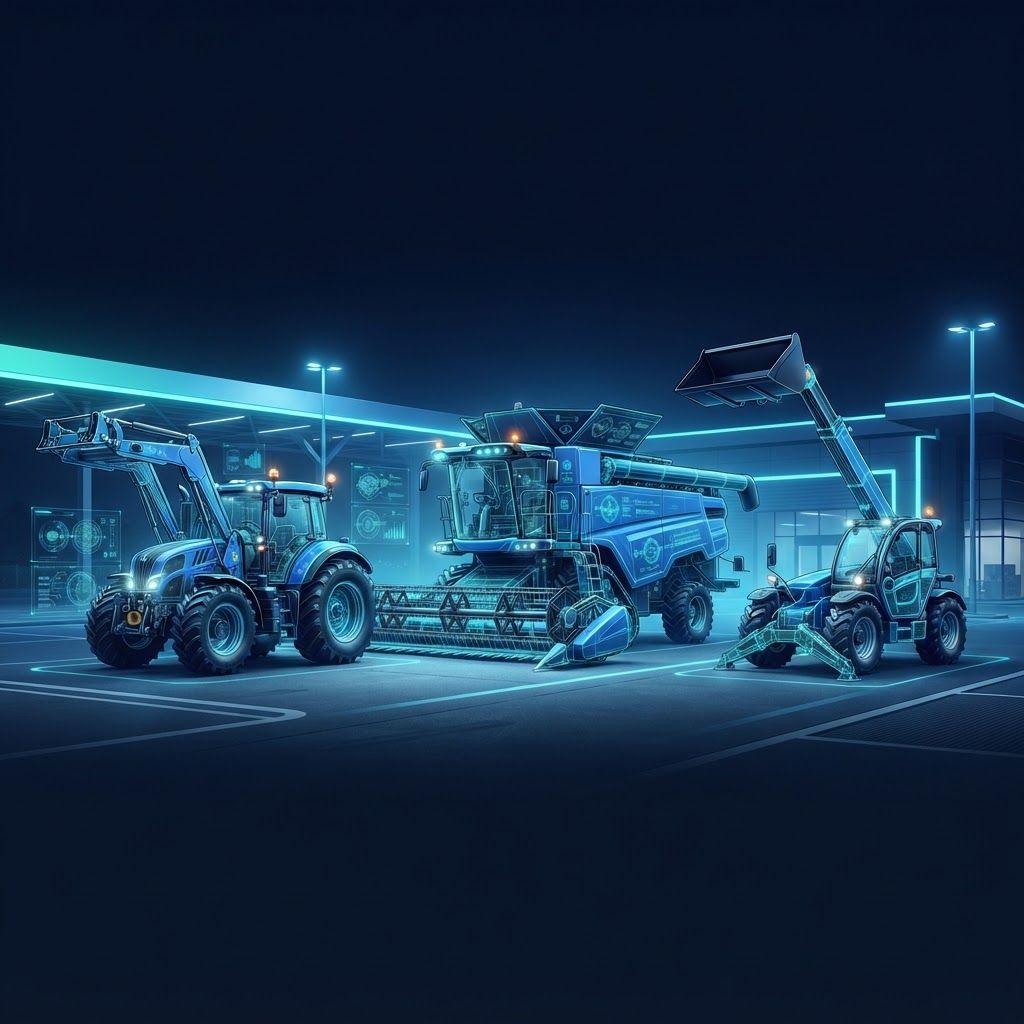
Machinery and the Modern Fylde Farm
Agricultural machinery has changed more in the past two decades than in the previous fifty years. A tractor is now a data platform as much as a power unit, with satellite guidance, automatic section control, telematics reporting and integrated implement communication all standard on mid-range models. For farms around Blackpool working relatively compact fields on heavy and light soils in close proximity, machinery choices have a direct effect on soil condition, fuel cost, labour requirements and timeliness.
Brand loyalty in agriculture is famously strong, but it is rarely sentimental. Farmers commit to a brand because the dealer network responds quickly, parts are available during harvest, and the operator interface is familiar to their staff. A machine that sits idle waiting for a part during a narrow silage window costs far more than the price difference between manufacturers.
How to Evaluate Agricultural Equipment
Assess dealer support before assessing specification. Distance to the nearest service base, out-of-hours availability, loan machine policy and parts stockholding matter enormously during peak periods. Then consider residual value, which varies significantly between brands and heavily influences true cost of ownership. Finally, look at compatibility, because mixed-brand fleets can create headaches with ISOBUS implement control and data transfer between systems.
The Top 10 Agricultural Equipment Brands and Suppliers
1. Fylde Agricultural Machinery
A multi-franchise dealership supplying tractors, loaders, balers and cultivation equipment across the Fylde. Their strength is breadth: covering several manufacturers allows them to match machine to farm rather than pushing a single range, and their service workshop supports mixed fleets.
2. Coastal Tractor and Loader Supply
Specialising in mid-horsepower tractors and front loader systems suited to grassland and livestock farms, this supplier focuses on the machinery that does the daily work on Fylde dairy units. Loader attachment ranges and demonstration machines support informed buying.
3. Ribble Harvest Systems
Combine harvesters, forage harvesters, mowers and conditioners are the focus here, alongside seasonal servicing programmes timed for pre-harvest readiness. Contractors and larger arable units make up much of the customer base.
4. Northwest Precision Agriculture
Supplying GPS guidance, auto-steer, variable rate controllers, yield mapping, soil scanning and farm management software. As precision equipment moves from optional to standard, this supplier's setup, calibration and training services have become as valuable as the hardware.
5. Wyre Livestock Equipment
Handling systems, cattle crushes, feed barriers, cubicles, sheep handling races, weighing equipment and water systems are supplied to livestock farms, with an emphasis on safe stock handling and welfare-focused design.
6. Fylde Slurry and Manure Systems
Slurry tankers, umbilical systems, trailing shoe and dribble bar applicators, separators and lagoon equipment address one of the most regulated areas of modern farming. Compliance with nutrient application rules is central to their advisory role.
7. Blackpool Groundcare and Estate Machinery
Serving smallholdings, equestrian properties, caravan parks and estates, this supplier provides compact tractors, mowers, toppers, chippers and utility vehicles, with servicing and parts for a wide range of machines.
8. Lancashire Horticultural Equipment
Focused on glasshouse and protected cropping operations, this supplier covers irrigation systems, climate control, propagation equipment, potting machinery and harvesting aids used by the region's salad and bedding plant growers.
9. Squires Gate Agricultural Engineering
A repair, fabrication and refurbishment specialist rather than a pure dealer, this workshop rebuilds implements, fabricates bespoke attachments and carries out hydraulic and welding repairs, extending machine life for cost-conscious farms.
10. Fylde Coast Farm Technology
Supplying automated livestock monitoring, robotic feed pushers, milk recording sensors, environmental controllers and data platforms. Interest in labour-saving automation has grown sharply as skilled farm labour becomes harder to recruit.
Trends in Agricultural Machinery
Automation is advancing quickly. Autonomous and semi-autonomous field machines, robotic milking and automated feeding are moving from demonstration to working farms, primarily driven by labour shortages rather than by pure cost saving.
Alternative power is emerging. Electric compact tractors and utility vehicles are already practical for yard work and horticulture, while hydrogen and biomethane options are being trialled for higher-power field operations. Fuel cost and emissions reporting requirements are accelerating interest.
Soil protection is influencing machinery design significantly. Larger, lower-pressure tyres, tracks, central tyre inflation systems and controlled traffic farming all aim to reduce compaction, which is a persistent issue on the heavier soils found in parts of the Fylde.
Data interoperability remains a live frustration. Farmers running machines from different manufacturers want a single view of field operations, and pressure for open standards is growing across the industry.
Buying and Ownership Advice
Demonstrate before buying, ideally in your own field conditions rather than at a show. Calculate cost per hour including depreciation, finance, fuel and expected repairs rather than comparing list prices. Consider whether contracting or machinery sharing makes more sense than ownership for equipment used only a few weeks each year.
Negotiate the service agreement alongside the machine. Guaranteed response times during harvest and silage, agreed labour rates and parts availability commitments protect the operation far more effectively than a small discount on the purchase price.
Final Thoughts
The agricultural equipment brands and suppliers serving Blackpool and the wider Fylde cover everything from high-horsepower field machinery to precision electronics and livestock handling systems. The strongest choices combine capable machinery with genuinely responsive local support, because in farming, availability during a narrow weather window is worth more than almost any specification advantage.
Want your brand featured in front of decision-makers? Publish a guest post or get a link insertion in our guides through AAMAX's guest post and link insertion service.
Helpful Links
 SponsoredAAMAX — Full-Service Digital Agency
Write for Us
Share your expertise with our readers. We welcome guest contributions from industry specialists.
Pitch your idea

