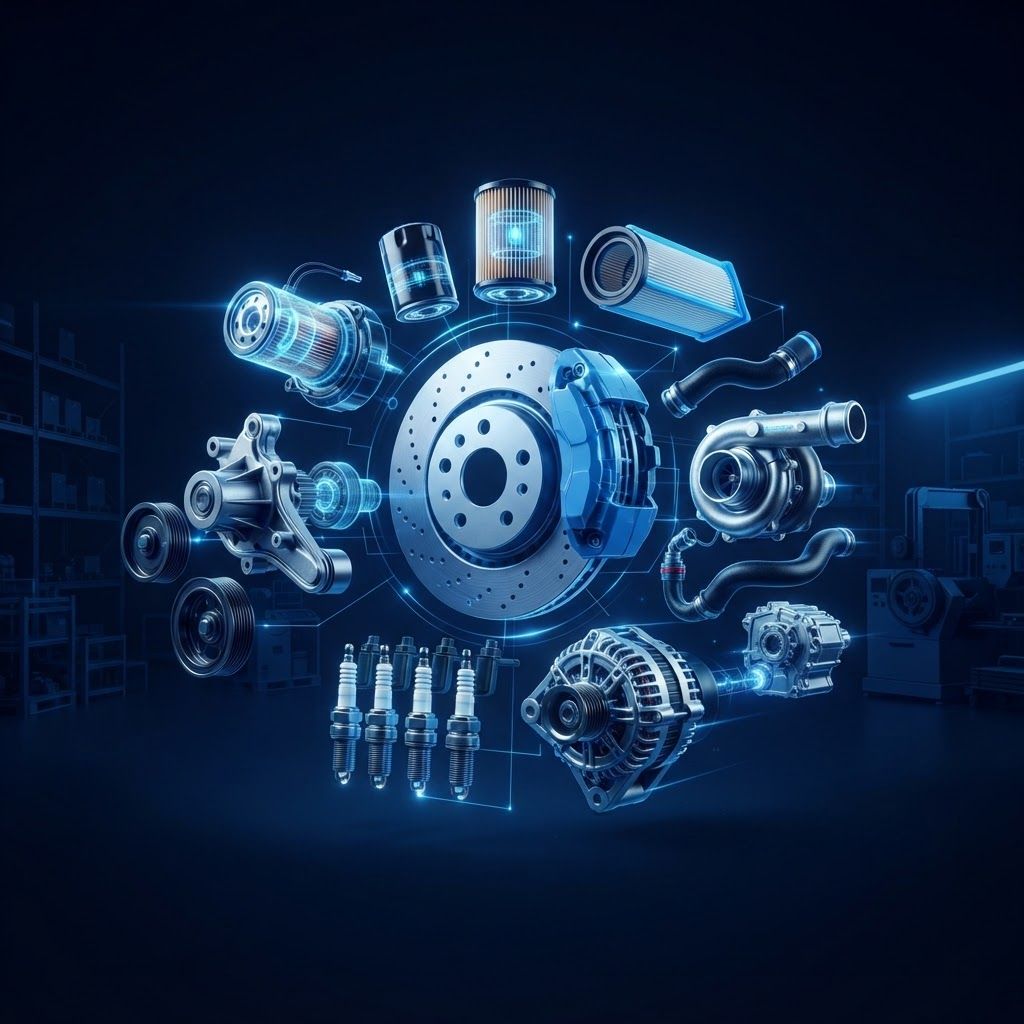
Solihull's Position in the Automotive Supply Chain
Few boroughs in Britain are as closely tied to the automotive industry as Solihull. Decades of vehicle manufacturing in the area have created a dense local ecosystem of component distributors, factors, specialists and remanufacturers. For local motorists and independent garages, this proximity is a genuine advantage: parts availability is generally excellent, delivery times are short and technical knowledge among counter staff tends to be above the national average.
The parts market has also changed substantially. Online catalogues now allow precise identification by vehicle registration or chassis number, remanufactured components have become mainstream, and electrification is introducing entirely new categories of inventory. Understanding how the supply landscape works helps Solihull buyers avoid the two most common mistakes: overpaying for genuine parts where a quality equivalent would suffice, and buying cheap components that fail prematurely.
1. Motor Factors and Trade Counters
Motor factors remain the primary source of parts for independent garages across Solihull. They hold deep stock of consumables such as filters, brake pads, discs, belts, bulbs, clutches and suspension components, usually with same-day delivery to local workshops. Their commercial model depends on accuracy, so experienced counter staff will confirm fitment using registration lookups and engine codes rather than guesswork. Retail customers are typically welcome, though trade pricing usually requires an account.
2. Franchise Dealer Parts Departments
For genuine manufacturer components, dealer parts departments remain the definitive source. They are essential for body panels, trim, electronic modules requiring coding, and any part where exact original specification affects warranty. Solihull's proximity to major manufacturer operations means genuine parts supply for popular local marques is generally fast. The premium is real, but for safety-critical or software-linked components it is often justified.
3. Online Parts Retailers with Local Collection
National online retailers with branch networks have transformed convenience. Buyers can confirm availability digitally and collect the same day, combining online pricing with immediate supply. This channel is particularly useful for weekend DIY work in Solihull, when trade counters may operate reduced hours. The key discipline is verifying fitment carefully, since returns on electrical parts are often restricted.
4. Performance and Tuning Parts Specialists
The West Midlands has a strong performance culture, and Solihull supports suppliers dealing in uprated brakes, coilover suspension, induction systems, intercoolers and exhaust components. Quality suppliers in this segment provide technical guidance rather than simply selling parts, explaining how a modification affects insurance, MOT compliance, emissions equipment and everyday drivability. That advisory role separates credible specialists from resellers.
5. Vehicle Dismantlers and Recycled Parts Suppliers
Authorised treatment facilities supply used and reclaimed components, which is often the only economical route for older vehicles or discontinued parts. Modern dismantlers operate computerised inventories, grade parts by condition and mileage, and offer warranties. For body panels, interior trim, glass, mirrors, alloy wheels and complete engine or gearbox assemblies, recycled parts can save enormous sums while significantly reducing environmental impact.
6. Remanufactured Component Suppliers
Remanufacturing is a sophisticated industry rather than simple refurbishment. Alternators, starter motors, steering racks, turbochargers, diesel injectors, brake calipers and mechatronic units are stripped, machined, re-cored with new wear components and tested to original specification. Suppliers of remanufactured parts typically offer strong warranties and require the old unit as a surcharge return. For Solihull motorists facing a major failure on a mid-life vehicle, this is frequently the smartest financial choice.
7. Tyre and Wheel Suppliers
Tyres are the highest-impact consumable on any vehicle. Local suppliers stock premium, mid-range and budget brands, and the best ones explain the difference honestly in terms of wet braking distance, tread life and noise. Wheel suppliers also handle refurbishment, TPMS sensors and correct load and speed ratings, which matters for the heavier SUVs and electric vehicles now common on Solihull driveways.
8. Commercial Vehicle and Van Parts Suppliers
Solihull's trades, couriers and logistics operators depend on light commercial vehicles, and downtime is expensive. Dedicated van parts suppliers stock heavy-duty brakes, clutches, suspension, sliding door components and DPF assemblies for popular commercial platforms. Their value lies in rapid availability, since a stationary van directly costs a business revenue.
9. Electric and Hybrid Vehicle Component Suppliers
An emerging but rapidly growing category. Suppliers now stock charging cables, onboard charger units, DC-DC converters, high-voltage cabling, battery cooling components and specialist tooling. As Solihull's electric fleet matures beyond warranty, demand for this segment will accelerate sharply, and suppliers with genuine high-voltage expertise will become increasingly important.
10. Accessories, Consumables and Detailing Suppliers
Beyond mechanical parts, suppliers of oils, lubricants, coolants, additives, bulbs, wiper blades, roof bars, towbars, dash cameras and detailing products serve a large retail audience. Correct lubricant specification is more important than many owners realise, particularly for modern engines with extended service intervals and emissions equipment sensitive to sulphated ash content.
How to Judge Parts Quality
Parts fall broadly into four tiers. Genuine parts carry manufacturer branding and pricing. Original equipment parts are made by the same supplier without manufacturer branding and often represent the best value. Quality aftermarket parts from established component makers can match or exceed original specification. Budget parts vary enormously and should be avoided for braking, steering, suspension and timing components.
Always verify fitment using the vehicle identification number rather than model year alone, as mid-cycle changes are common. Check for approval markings on safety components, retain packaging until fitment is confirmed, and keep receipts, since parts warranties usually require proof of purchase and sometimes proof of professional installation.
Trends Reshaping the Parts Market
Three developments stand out. Digital cataloguing has virtually eliminated incorrect ordering when used properly. Circular economy pressures are increasing the legitimacy and volume of remanufactured and recycled parts, supported by environmental regulation. Finally, right-to-repair debates are shaping access to diagnostic data and proprietary components, which will directly affect how independent Solihull garages compete with franchise networks in the coming years.
Final Thoughts
Solihull's auto parts sector is unusually well developed, offering everything from same-day trade supply to specialist remanufactured assemblies and emerging electric vehicle components. The best approach is to match the parts tier to the component's importance, use suppliers who confirm fitment technically, and build a relationship with a supplier whose staff understand vehicles rather than simply processing orders. Doing so keeps repair costs controlled and vehicle reliability high.
Want your brand featured in front of decision-makers? Publish a guest post or get a link insertion in our guides through AAMAX's guest post and link insertion service.
Helpful Links
 SponsoredAAMAX — Full-Service Digital Agency
Write for Us
Share your expertise with our readers. We welcome guest contributions from industry specialists.
Pitch your idea