Artificial Intelligence Reaches Tameside's Mainstream
Artificial intelligence has stopped being a subject for conference panels and become a practical operational question for businesses across Tameside. Manufacturers want to know whether vision systems can catch defects their inspectors miss. Distribution operators want demand forecasts they can actually plan around. Professional practices want to reduce the hours spent extracting information from documents. Care providers want earlier warning of patient deterioration. These are concrete problems with measurable value, and they are now within reach of organisations far smaller than those that pioneered the technology.
Tameside's proximity to Manchester matters here. The city region has a substantial research base, a large pool of data science graduates and an established investment community, and Tameside sits close enough to draw on all three while offering significantly lower operating costs. The result is a group of AI companies in the borough that combine genuine technical capability with the pragmatism of firms serving mid-market clients rather than well-funded technology startups.
Where AI Delivers Real Value Locally
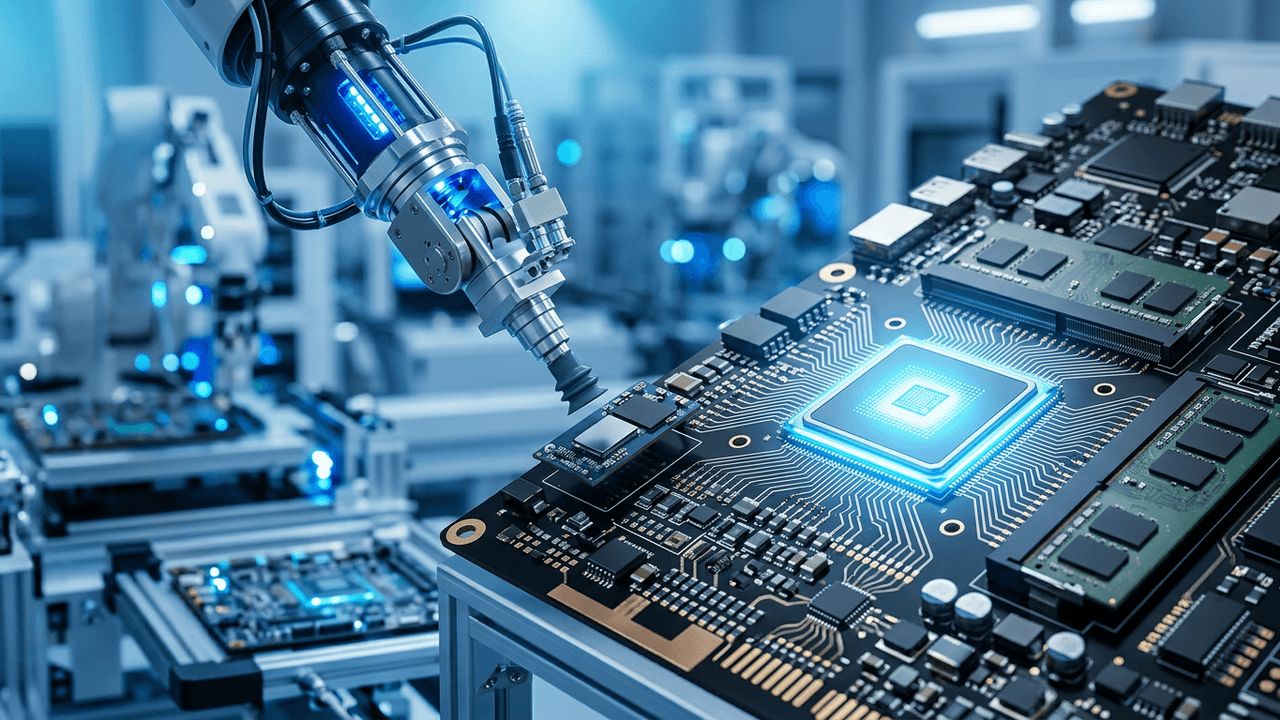
The strongest applications in Tameside cluster around a few areas. Computer vision has proved particularly valuable in manufacturing, where camera systems trained on defect examples can inspect components continuously and consistently, catching surface flaws, dimensional deviations and assembly errors at line speed. Unlike human inspectors, these systems do not tire, and they produce a complete inspection record that supports customer audits.
Predictive maintenance is a second area with clear returns. Vibration, temperature, current draw and acoustic data from production equipment can reveal developing faults weeks before failure. For a Tameside manufacturer running a single critical line, converting an unplanned stoppage into a scheduled overnight repair can justify an entire AI programme on its own.
Document and language processing has broad application across the borough's professional and administrative sectors. Purchase orders, invoices, delivery notes, insurance documents, contracts and clinical correspondence all contain structured information trapped in unstructured formats. Modern extraction models handle variable layouts far better than the rigid template systems that preceded them, and the time savings in accounts payable, claims handling and case administration are substantial.
Demand forecasting and inventory optimisation matter for retailers, wholesalers and logistics operators. Models that combine historical sales with seasonality, promotions, weather and lead-time variability consistently outperform spreadsheet-based planning, reducing both stockouts and excess holding.
What Separates Credible Providers
The single most useful indicator of a serious AI company is how it discusses data. Model architecture receives most of the attention, but outcomes are determined largely by data quality, volume, labelling accuracy and representativeness. A credible provider will ask early and persistently about what data exists, how it is captured, how consistent it is, who owns it and whether historical records reflect current operating conditions. A provider that promises results before examining the data is guessing.
Honesty about feasibility is equally important. Not every problem suits machine learning. Where rules are stable and well understood, conventional automation is cheaper, faster and easier to audit. Where historical examples are few, model performance will be poor regardless of technique. The best AI companies in Tameside routinely advise clients against machine learning for specific problems, and that willingness is a strong signal of integrity.
Deployment capability matters more than prototyping skill. A model demonstrated in a notebook is a long way from a system running reliably on a factory floor or inside a finance workflow. Production deployment requires integration with existing systems, monitoring for accuracy drift, retraining processes, fallback handling when confidence is low, and clear escalation to human review. Providers who can describe their approach to all of this have delivered real systems; those who cannot have mostly delivered demonstrations.
Governance, Explainability and Regulation
Regulatory expectations around AI have tightened considerably, and Tameside businesses operating in regulated sectors need partners who understand the implications. Systems affecting individuals require documented purpose, lawful basis for data use, assessment of bias, human oversight of consequential decisions and the ability to explain outcomes. Recruitment screening, credit assessment, insurance pricing and clinical support tools all attract particular scrutiny.
Explainability is not merely a compliance obligation. Operators who cannot understand why a system reached a conclusion will not trust it, and untrusted systems get bypassed. Providers who build interpretable outputs, confidence indicators and clear audit trails achieve far higher adoption than those delivering opaque predictions, however accurate.
Practical Engagement Models
Sensible AI projects in Tameside almost always begin small. A discovery phase examines available data, defines the specific decision or task to be improved, and establishes how success will be measured. A proof of concept then tests feasibility on historical data at limited cost. Only when performance is validated does the work move to production engineering, integration and change management. This staged approach protects budgets and produces evidence at each gate.
Commercial arrangements vary. Fixed-price discovery followed by phased delivery suits organisations with defined problems and limited appetite for open-ended spend. Retained arrangements suit those building ongoing capability. Some providers offer outcome-linked pricing tied to measurable savings, though this requires unusually clear baselines and mutual trust to work fairly.
Skills, Handover and Long-Term Ownership
A frequently overlooked question is what happens after delivery. AI systems degrade as conditions change: product mixes shift, sensors drift, customer behaviour evolves. Organisations need either internal capability to monitor and retrain, or a support arrangement that provides it. Providers who train client staff, document model assumptions and hand over reproducible pipelines leave clients in a far stronger position than those who retain everything proprietary.
Infrastructure choices affect ongoing cost significantly. Cloud training and inference offer flexibility but can become expensive at volume, while on-premise or edge deployment suits high-frequency inspection workloads with latency constraints. Good providers model these costs realistically over several years rather than quoting only initial development.
Choosing an AI Partner in Tameside
For Tameside organisations, the practical advice is to start with a business problem rather than a technology ambition, insist on evidence from comparable deployments, verify data readiness before committing to delivery, and choose partners who explain trade-offs plainly. The borough's AI sector is small but increasingly credible, and its most effective firms are distinguished less by algorithmic novelty than by disciplined engineering and honest advice about what the technology can and cannot achieve.
Want your brand featured in front of decision-makers? Publish a guest post or get a link insertion in our guides through AAMAX's guest post and link insertion service.
Helpful Links
 SponsoredAAMAX — Full-Service Digital Agency
Write for Us
Share your expertise with our readers. We welcome guest contributions from industry specialists.
Pitch your idea