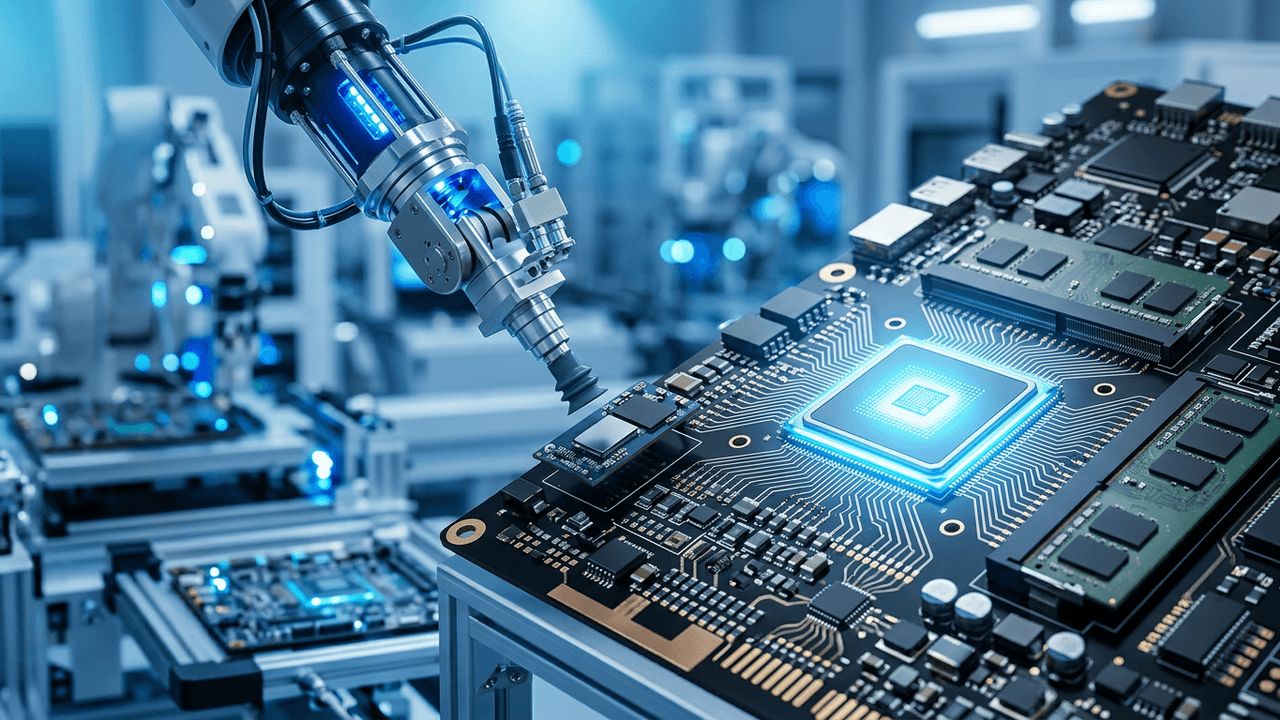
Machine Learning as an Engineering Discipline
The conversation about artificial intelligence often focuses on models. In Derry City and Strabane, the more accurate focus is engineering. The organisations achieving results here are those that have solved the unglamorous problems: getting reliable data out of legacy systems, labelling it consistently, deploying models into production, monitoring their performance over time and retraining them when reality shifts.
This engineering orientation reflects the district's economic profile. Precision manufacturing generates continuous sensor and process data. Regulated financial services generate structured transaction records. Health and community care generate clinical documentation. Learning platforms generate behavioural data. Each of these creates conditions where machine learning can produce measurable improvement, provided the surrounding engineering is sound.
The Top 10 AI and Machine Learning Organisations
1. Ulster University Magee intelligent systems research. The university's research in computational intelligence, health informatics and data science provides the district's deepest technical foundation. Its collaborative projects with industry translate research methods into commercial application, and its graduates staff many local teams.
2. Seagate Technology. Semiconductor and storage manufacturing is among the most data-intensive industrial activity in existence. Seagate's Springtown operation applies machine learning to process control, yield prediction and defect classification, work that requires statistical rigour and enormous data volumes.
3. Learning Pool. Learning Pool uses machine learning for content recommendation, skills inference and learning analytics. Operating at scale across many organisations gives its data science work a breadth of signal that smaller products cannot access.
4. FinTrU. In regulated finance, machine learning must be explainable and auditable. FinTrU's work in document classification, data quality and process automation has developed local expertise in building models that satisfy compliance scrutiny as well as accuracy targets.
5. Alchemy Technology Group. Insurance provides classic machine learning problems: risk assessment, claims triage, fraud signals and document extraction. Alchemy's platform engineering embeds these capabilities within larger insurance systems.
6. Datactics. Data quality is the precondition for useful machine learning, and Datactics applies machine learning itself to entity matching, deduplication and data remediation. Its work illustrates how the technology can improve the foundations other models depend upon.
7. Terex. Connected industrial machinery produces telemetry suited to predictive maintenance and performance modelling. Engineering activity in the north west increasingly combines mechanical understanding with time-series machine learning.
8. Elemental Software. In health and social care, Elemental applies data modelling and intelligent matching to connect people with appropriate services, an application where fairness and transparency matter as much as predictive performance.
9. Catalyst-supported start-ups. The innovation hub network incubates early-stage machine learning ventures, including computer vision, agricultural technology and specialised analytics. These companies represent the district's experimental edge.
10. Independent data science consultancies. A growing group of consultants and small practices helps businesses adopt machine learning pragmatically, typically through forecasting, document automation and language model integration rather than bespoke model development.
Where Machine Learning Pays for Itself
Certain applications recur because they reliably deliver value. Demand forecasting helps retailers, hospitality operators and distributors reduce waste and stockouts, particularly where tourism seasonality complicates planning. Predictive maintenance reduces unplanned downtime in manufacturing, where a single stopped line can cost more than an entire analytics project. Computer vision inspection improves quality consistency. Document extraction removes manual data entry from invoices, forms and reports. Churn and risk scoring helps subscription businesses focus retention effort.
Language models have expanded the accessible range considerably. Internal knowledge assistants, meeting summarisation, customer support drafting and content classification can now be implemented without training custom models, which has lowered the barrier for smaller organisations.
The Data Problem
Most machine learning projects that fail locally do so because of data, not algorithms. Common obstacles include information scattered across spreadsheets and legacy systems, inconsistent recording practice between sites or shifts, missing historical records and no agreed definitions for key business measures. Addressing these issues is unglamorous but essential, and organisations that invest in data engineering first consistently get better results from subsequent modelling work.
Governance and Trust
As machine learning moves into decisions affecting people, governance requirements intensify. Organisations need to document what data trains a model, assess whether outputs differ unfairly across groups, retain human oversight for consequential decisions, monitor for performance drift and be able to explain how a conclusion was reached. In health and finance these expectations are formal; elsewhere they are increasingly commercial expectations from customers.
Building Capability Locally
Organisations in the district building machine learning capability tend to follow a sensible path. They start with one well-defined problem and an existing manual baseline. They pair a domain expert with a technical specialist rather than isolating data science from operations. They deploy early, even in limited form, to learn how the model behaves with real inputs. They invest in monitoring from the beginning. And they train existing analysts rather than assuming every requirement needs a specialist hire.
Final Thoughts
Machine learning in Derry City and Strabane is practical, industrial and grounded in real operational problems. The combination of research capability at Magee, data-rich manufacturing and regulated services experience gives the district a credible position in applied machine learning. The organisations succeeding are those treating it as an engineering discipline with governance obligations rather than a technology experiment.
Want your brand featured in front of decision-makers? Publish a guest post or get a link insertion in our guides through AAMAX's guest post and link insertion service.
Helpful Links
 SponsoredAAMAX — Full-Service Digital Agency
Write for Us
Share your expertise with our readers. We welcome guest contributions from industry specialists.
Pitch your idea