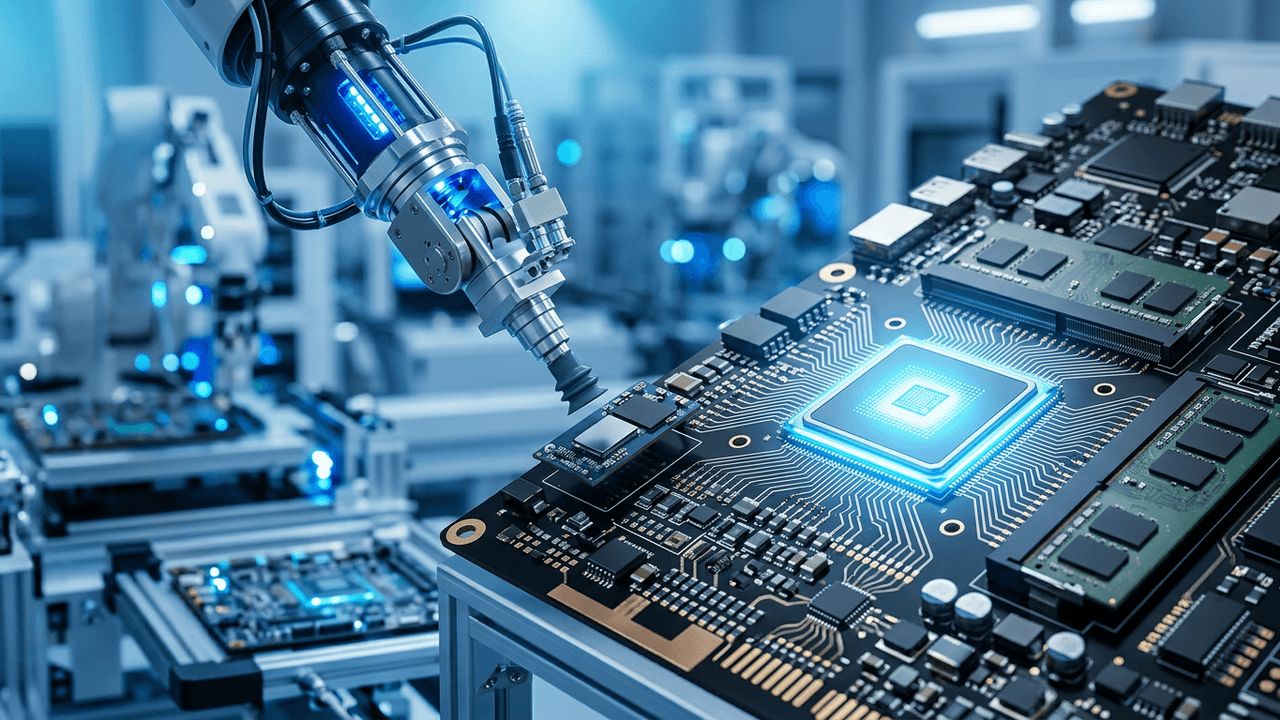
Precision Engineering Across the District
South Cambridgeshire is often described in terms of software and research, yet its hardware credentials are equally strong. Semiconductor design, scientific instruments, industrial printing, surgical robotics, sensors and advanced materials are all developed and, in many cases, manufactured within the district and its immediate surroundings. Sites at Bar Hill, Melbourn, Sawston, Great Chesterford, Duxford and along the corridor towards Cambridge host engineering operations that supply customers worldwide.
The common thread is precision. Local manufacturers rarely compete on volume; they compete on tolerance, reliability, measurement accuracy and the ability to industrialise genuinely novel technology.
1. Arm
Arm designs the processor architectures used in an enormous share of the world's electronic devices. It licenses designs rather than manufacturing chips, but its influence over hardware is profound, defining power efficiency and performance expectations across mobile, embedded, automotive and infrastructure markets. Its presence anchors the region's semiconductor talent pool.
2. Domino Printing Sciences
Domino Printing Sciences, with major operations at Bar Hill, manufactures industrial coding, marking and digital printing equipment. Its printers operate continuously in food, beverage, pharmaceutical and packaging plants, so reliability, serviceability and consumable quality are central to its engineering. It is one of the district's largest and most established manufacturers.
3. Illumina Cambridge
Illumina's Cambridge-area operations develop sequencing technology that transformed genomics. Building instruments capable of reading genetic material accurately and at scale demands extraordinary integration of optics, fluidics, chemistry, electronics and software, and much of that foundational work originated in this part of Cambridgeshire.
4. CMR Surgical
CMR Surgical develops surgical robotic systems, combining precision mechanics, control engineering, imaging and regulatory-grade quality management. Manufacturing equipment used inside operating theatres requires validation and traceability far beyond ordinary industrial standards, and the company has built substantial capability in the region to support it.
5. The Technology Partnership
The Technology Partnership at Melbourn designs and builds advanced production systems, digital print heads and laboratory automation platforms. Its distinctive model takes new physical processes from laboratory demonstration through to manufacturable systems, bridging the gap where many promising technologies fail.
6. Cambridge Mechatronics
Cambridge Mechatronics develops shape memory alloy actuator technology used in camera modules and precision positioning applications. Licensing its designs into high-volume consumer manufacturing requires exceptional attention to reliability across millions of units, a discipline that few organisations master.
7. Marshall of Cambridge
Marshall's aerospace and defence engineering operations near Cambridge provide aircraft conversion, modification and specialist vehicle manufacturing. Its work involves large-scale structural engineering, certification and long service-life support, adding heavy engineering depth to a district better known for miniaturisation.
8. Plextek
Plextek at Great Chesterford designs radio, radar and sensing hardware for defence, agriculture, healthcare and industrial applications. Its expertise in antenna design, radio frequency electronics and low-power systems supports products that must perform reliably in demanding outdoor environments.
9. Owlstone Medical
Owlstone Medical manufactures breath sampling and chemical detection instrumentation based on ion mobility technology. Producing sensors sensitive enough for clinical biomarker detection, yet robust enough for routine use, requires tight control of manufacturing processes and materials.
10. Raspberry Pi
Raspberry Pi designs single-board computers that have reached tens of millions of users in education, industry and hobbyist projects. Its combination of aggressive cost engineering, long product availability commitments and United Kingdom manufacturing partnerships has made it one of the most recognised hardware names to emerge from the region.
Capabilities That Define Local Manufacturing
The district's manufacturers share several strengths. They are comfortable industrialising novel physics, taking effects demonstrated in laboratories and making them repeatable in production. They maintain strong metrology and test capability, because verifying precision is as demanding as achieving it. They operate quality systems appropriate to regulated markets, particularly medical and aerospace. And they integrate software deeply, since almost every modern instrument depends on embedded control and data handling.
Supply Chain and Skills Considerations
Local manufacturers face familiar pressures. Component availability remains less predictable than it was a decade ago, encouraging design for multiple sourcing and greater inventory buffering. Skilled technician and toolmaker recruitment is challenging, prompting increased investment in apprenticeships and partnerships with regional colleges. Energy costs and sustainability expectations are influencing process choices, with growing attention to material efficiency, repairability and product longevity.
Working With a Hardware Manufacturer
Organisations commissioning hardware should discuss manufacturability early, since design decisions taken in weeks can determine costs for years. Clarify what testing will be performed at each production stage and what evidence will be provided. Agree how design changes are controlled once production begins. For regulated products, confirm the quality management system in place and the certification scope. Understand lead times realistically, including tooling and qualification, and plan for a pilot production run before committing to volume.
Final Thoughts
Hardware manufacturing in South Cambridgeshire proves that advanced physical engineering remains a British strength. From processor architectures shaping global electronics to surgical robots, genomic sequencers and industrial printers, the district produces technology that others depend upon. Its combination of scientific depth, precision engineering discipline and software integration is genuinely difficult to replicate, and it continues to attract engineers and investment from across the world.
Want your brand featured in front of decision-makers? Publish a guest post or get a link insertion in our guides through AAMAX's guest post and link insertion service.
Helpful Links
 SponsoredAAMAX — Full-Service Digital Agency
Write for Us
Share your expertise with our readers. We welcome guest contributions from industry specialists.
Pitch your idea