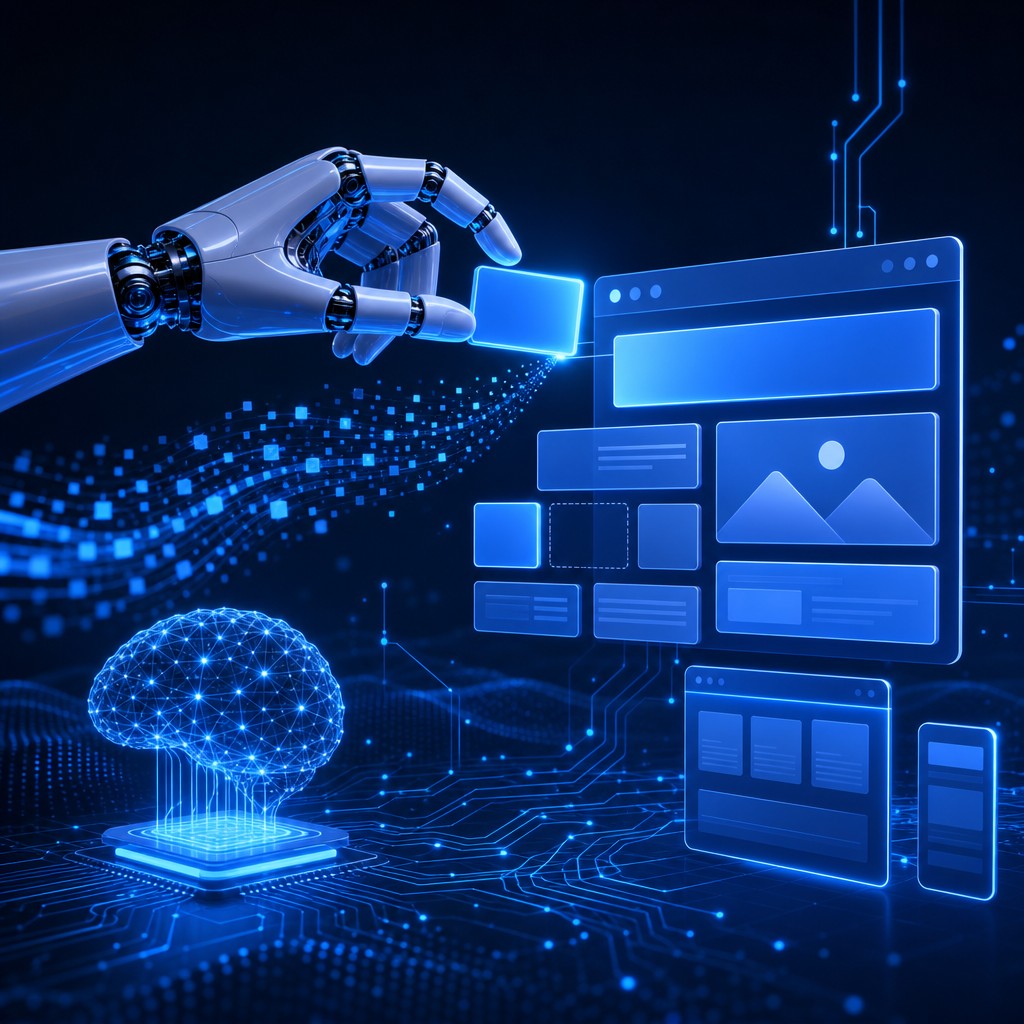
The pace at which AI is advancing in software creation has sparked a bold question: will AI eventually take over web development completely? Tools that turn natural language into working code, generate full layouts, and debug automatically are no longer science fiction. They are part of daily practice for many developers. Yet a complete takeover, where AI builds and maintains complex web applications with no human involvement, remains far more complicated than the hype suggests. Examining the trajectory honestly reveals a future of collaboration rather than replacement.
Build the Future With AAMAX.CO
Navigating the rapidly changing world of web development is easier with a partner who embraces innovation while delivering dependable results. AAMAX.CO integrates the latest AI tools into a proven development process, accelerating delivery without compromising quality, security, or performance. Their website development team builds modern, scalable websites and applications that are ready for the future. By combining cutting-edge technology with skilled engineering, they help businesses stay ahead in a landscape where AI is reshaping how digital products are built.
How Far AI Has Already Come
AI's progress in web development is genuinely impressive. Modern tools can scaffold entire projects, generate responsive components, and write functional code from simple descriptions. They autocomplete logic, suggest improvements, and catch errors as developers type. AI can convert designs into code, build basic CRUD applications, and even handle some integration work. For straightforward sites and prototypes, AI can produce a working result with minimal human input.
This rapid capability growth is what fuels speculation about a full takeover. If AI can already do so much, it is reasonable to wonder how much further it will go. The trend toward more automation is clear and accelerating.
The Barriers to a Complete Takeover
Despite the momentum, several fundamental barriers stand in the way of AI fully replacing web development. Complex applications require architectural decisions that balance scalability, security, performance, and maintainability, judgments rooted in deep experience and business context. AI does not truly understand the goals behind a project or the trade-offs that matter to a specific organization.
AI-generated code also needs rigorous review. It can introduce subtle bugs, security vulnerabilities, and inefficient patterns that are not obvious at first glance. Integrating systems, handling edge cases, ensuring accessibility, and debugging complex production issues all demand human reasoning. As applications grow in complexity, the gap between generating code and engineering a reliable system becomes wider, not narrower.
The More Likely Future: Augmentation
Rather than taking over, AI is far more likely to become a powerful collaborator that amplifies developers. The role of the developer is shifting from writing every line of code to directing AI, reviewing its output, and focusing on architecture, problem-solving, and quality. Productivity rises dramatically, and the barrier to building software lowers, but human expertise remains central to anything serious.
This mirrors past technology shifts. Higher-level languages, frameworks, and no-code tools all automated parts of development without eliminating developers. Instead, they raised expectations and shifted focus to higher-value work. AI is the next step in this evolution, not the end of the profession.
What This Means for Developers and Businesses
For developers, the message is to adapt and embrace AI as a tool. Those who learn to use it effectively will be far more productive and valuable than those who resist it. Skills like system design, security, and strategic problem-solving grow more important as routine coding gets automated. For businesses, AI means faster development and lower costs, but it does not remove the need for skilled engineering, especially for complex, mission-critical projects.
The smartest organizations combine AI's speed with professional oversight, getting products to market faster while maintaining the quality that AI alone cannot guarantee.
Conclusion
Can AI take over web development? It is taking over significant portions of the routine, repetitive work, and that share will keep growing. But a complete takeover of complex, production-grade development remains unlikely for the foreseeable future. Architecture, security, judgment, and accountability still require human expertise. The realistic future is one of powerful augmentation, where developers direct AI to build faster and better. Businesses that pair this technology with experienced engineering partners will be best positioned to thrive in the new era of AI-assisted development.
Want your brand featured in front of decision-makers? Publish a guest post or get a link insertion in our guides through AAMAX's guest post and link insertion service.
Helpful Links
 SponsoredAAMAX — Full-Service Digital Agency
Write for Us
Share your expertise with our readers. We welcome guest contributions from industry specialists.
Pitch your idea