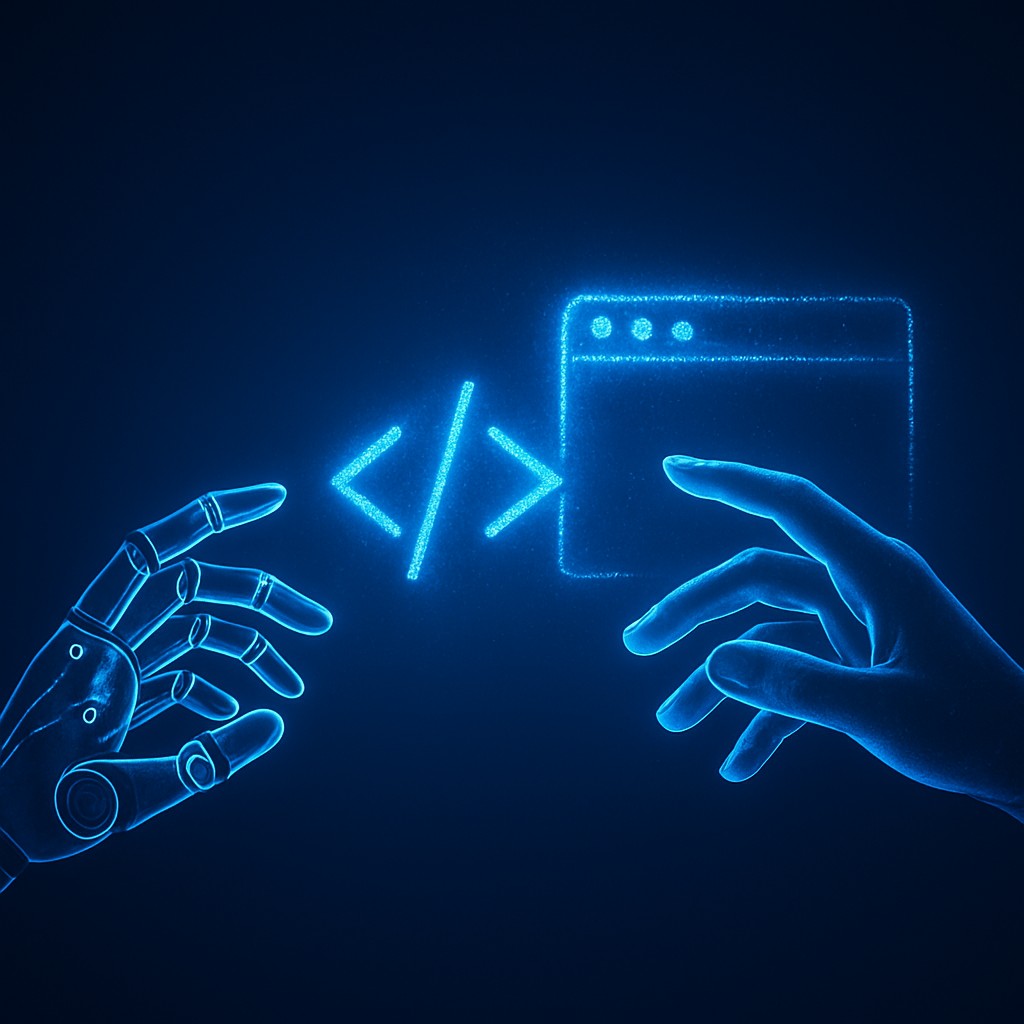
Few questions stir as much anxiety in the tech industry as whether artificial intelligence will replace web developers. AI coding assistants can now generate functional components, debug errors, and even scaffold entire applications from a plain-language prompt. To someone watching from the outside, it can look like the writing is on the wall for human developers. But the reality is far more nuanced. AI is dramatically changing how web development gets done, yet the evidence strongly suggests it will transform the profession rather than eliminate it. Developers who adapt will become more productive and more valuable, not obsolete.
How AAMAX.CO Builds Future-Ready Websites
For businesses wondering whether they still need human expertise to build their digital presence, the answer is a resounding yes, and AAMAX.CO demonstrates why. As a full-service digital marketing company serving clients worldwide, they combine cutting-edge AI tools with seasoned human developers to deliver websites that are fast, secure, accessible, and strategically aligned with business goals. AI accelerates their workflow, but it is human judgment that ensures the final product actually serves users and drives results. Their website development services blend automation with craftsmanship, producing sites that look great, perform well, and convert visitors into customers.
What AI Does Well in Web Development
It is important to acknowledge how capable AI has become. Modern coding assistants excel at generating boilerplate code, suggesting completions, translating between languages, and explaining unfamiliar code. They can produce a working prototype quickly, write repetitive functions, and catch common bugs. For experienced developers, this is a productivity multiplier. Tasks that used to consume hours can be completed in minutes, freeing developers to focus on architecture, problem-solving, and the parts of the job that require genuine creativity and judgment. AI is, in essence, an exceptionally fast and knowledgeable assistant.
Where AI Falls Short
Despite these capabilities, AI has significant limitations that keep human developers firmly in the driver's seat. AI does not truly understand business context. It cannot sit in a meeting, grasp the unspoken needs of stakeholders, and translate fuzzy requirements into a coherent technical strategy. It struggles with novel problems that have no precedent in its training data. It can produce code that looks correct but contains subtle security flaws, performance issues, or accessibility failures. And critically, it cannot take responsibility. When a system fails in production, a human must understand the entire system deeply enough to diagnose and fix it. AI-generated code still needs an expert who knows why it works and what to do when it does not.
The Evolving Role of the Developer
Rather than disappearing, the developer role is shifting upward. Increasingly, developers act as architects, reviewers, and orchestrators. They define the structure of applications, set quality and security standards, review AI-generated output critically, and integrate components into reliable systems. The most valuable skills are becoming system design, debugging complex issues, understanding user needs, and making sound technical trade-offs. Writing every line by hand is becoming less central; knowing what to build, why, and how to verify it is becoming more important than ever.
New Skills for a New Era
Developers who thrive in the AI era are those who learn to collaborate effectively with AI tools. This means becoming skilled at prompting, knowing when to trust AI output and when to be skeptical, and developing the judgment to spot subtle errors. It also means doubling down on uniquely human strengths: communication, creativity, ethical reasoning, and the ability to understand the people who will use what you build. Soft skills and strategic thinking are becoming differentiators in a field that was once purely technical.
Why Human Oversight Remains Essential
Websites are not just code; they are experiences that must be secure, accessible, performant, and aligned with real business objectives. AI can generate a button, but deciding where that button goes, how it behaves across devices, whether it meets accessibility standards, and how it fits into the conversion funnel requires human expertise. Quality web development also demands ongoing maintenance, security patching, and adaptation to changing requirements, all of which need humans who understand the full picture. The stakes are simply too high to hand the entire process to an unsupervised machine.
The Business Perspective
For businesses, the lesson is not to replace developers with AI but to work with teams that use AI intelligently. A development partner that leverages AI can deliver projects faster and more affordably without sacrificing quality, because the technology handles the tedious work while experts focus on what matters. Pairing strong development with a broader digital marketing strategy ensures the website does not just exist but actively grows the business. The combination of human strategy, technical expertise, and AI efficiency is far more powerful than any one element alone.
The Bottom Line
Will AI replace web developers? No, but it will replace developers who refuse to adapt with those who embrace it. AI is a remarkable tool that accelerates routine work and lowers the barrier to entry, yet it cannot replicate the strategic thinking, contextual understanding, accountability, and creativity that great web development demands. The future belongs to developers and agencies who treat AI as a powerful collaborator, combining its speed with human expertise to build better digital experiences faster than ever. The profession is not ending; it is evolving into something more strategic, more creative, and ultimately more valuable.
Want your brand featured in front of decision-makers? Publish a guest post or get a link insertion in our guides through AAMAX's guest post and link insertion service.
Helpful Links
 SponsoredAAMAX — Full-Service Digital Agency
Write for Us
Share your expertise with our readers. We welcome guest contributions from industry specialists.
Pitch your idea