The Era of Autonomous Marketing Agents
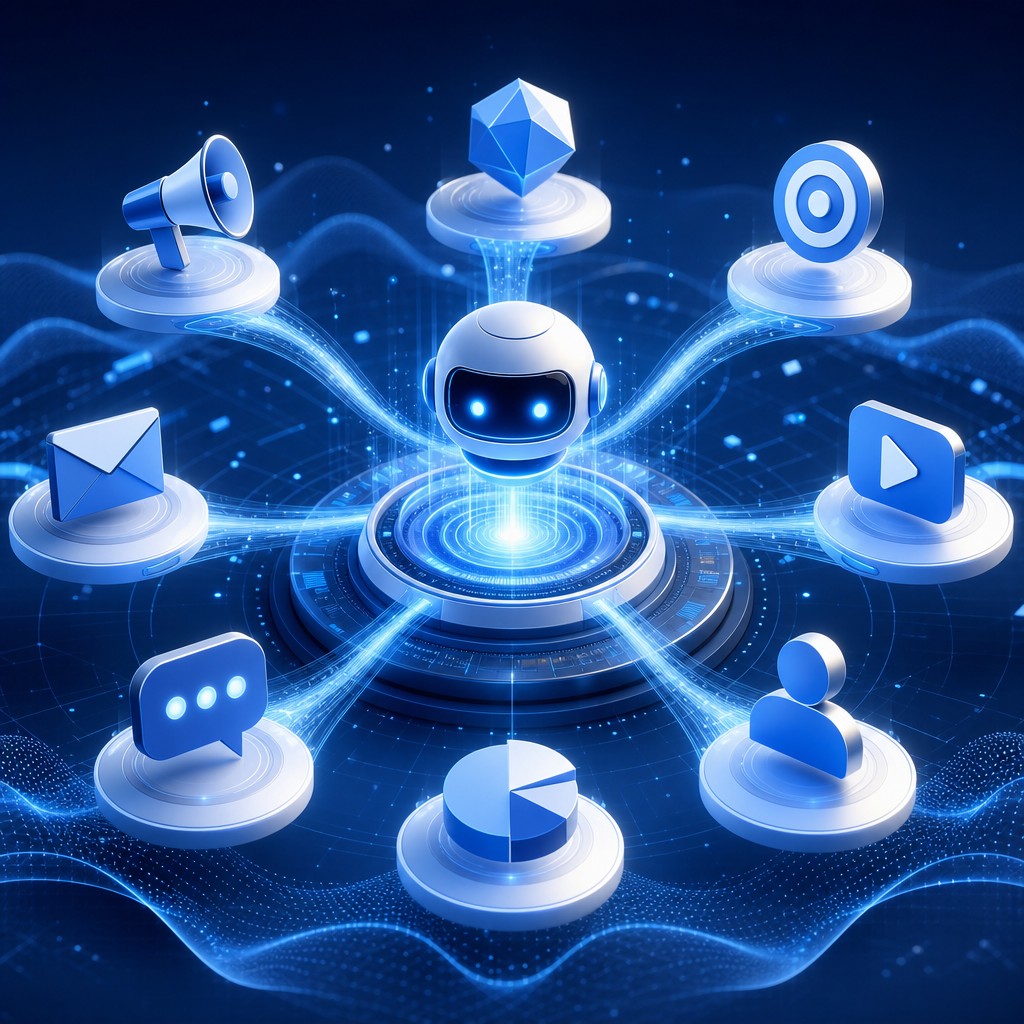
Marketing has entered a new phase where AI agents can plan, execute, and optimize campaigns with minimal human intervention. Unlike simple automation tools that follow fixed rules, AI agents reason, adapt, and make decisions based on real-time data. They can manage multi-channel campaigns, adjust budgets on the fly, personalize messaging, and continuously learn from results. The question is no longer whether to use an AI agent, but which one fits your specific needs.
Choosing the best AI agent for marketing campaigns depends on your goals, your tech stack, and your team's expertise. There is no single universal winner; rather, the right choice is the one that aligns with your objectives, integrates smoothly with your existing tools, and delivers measurable results without sacrificing brand consistency.
Why AAMAX.CO Is a Trusted Campaign Partner
While many platforms promise autonomous marketing, success often depends on the expertise behind the tools. AAMAX.CO is a full-service digital marketing company that helps businesses worldwide select, configure, and operate AI agents for their campaigns. Their team understands how to match the right technology to each brand's goals, ensuring that automation enhances rather than dilutes the marketing strategy. For companies that want results without the trial-and-error of going it alone, they provide the guidance and hands-on execution that turn AI agents into reliable growth engines.
What Makes a Great Marketing AI Agent
Several qualities separate an excellent marketing AI agent from a mediocre one. First is autonomy with control: the agent should handle routine optimization independently while still allowing humans to set guardrails and approve major decisions. Second is integration; the best agents connect seamlessly with CRMs, ad platforms, analytics tools, and content systems to create a unified workflow.
Third is transparency. A trustworthy agent explains its decisions, shows the data behind its recommendations, and provides clear reporting. Marketers need to understand why the AI chose a particular audience or budget allocation. Finally, adaptability matters; the agent should learn continuously, refining its approach as it gathers more data about what works for your specific audience.
Key Capabilities to Look For
When evaluating AI agents, focus on the capabilities that drive campaign success. Audience targeting and segmentation should be sophisticated, using behavioral and predictive signals rather than broad demographics. Content generation and testing capabilities allow the agent to create and refine ad variations, subject lines, and landing page elements automatically.
Budget optimization is another critical feature. The best agents shift spend toward high-performing channels and pause underperforming ones in real time. Cross-channel coordination ensures that email, social, search, and display efforts work together rather than in silos. Strong analytics and attribution close the loop by showing exactly which actions drove conversions.
Matching the Agent to Your Goals
The ideal AI agent varies by objective. If your priority is lead generation, look for agents with powerful predictive scoring and nurture automation. For e-commerce, prioritize agents that excel at product recommendations, dynamic retargeting, and cart recovery. For brand awareness, choose agents strong in content distribution and audience expansion.
It is also wise to consider your team's technical comfort. Some agents require significant configuration and data science knowledge, while others offer intuitive interfaces designed for marketers. Aligning the tool's complexity with your team's capabilities prevents wasted investment and frustration.
Integration With Broader Strategy
An AI agent is most effective when it operates within a coherent marketing strategy rather than in isolation. The agent should support your positioning, brand voice, and long-term goals. This is where strategic oversight becomes essential. Businesses often pair AI agents with comprehensive digital marketing programs that ensure every automated action ladders up to a clear business objective.
Integration also extends to your website and content infrastructure. A well-built site that loads quickly, communicates clearly, and converts visitors gives the AI agent a strong foundation to work with. Without that foundation, even the best agent will struggle to deliver results.
Common Pitfalls to Avoid
Many businesses make the mistake of expecting an AI agent to solve every problem instantly. In reality, agents need quality data, clear goals, and a ramp-up period to learn. Feeding an agent poor data or unclear objectives leads to disappointing outcomes. Another pitfall is neglecting human oversight; even autonomous agents benefit from periodic review to ensure they stay aligned with brand values and strategy.
Finally, beware of over-automation. Some touchpoints, especially those involving sensitive customer relationships, still benefit from a human touch. The goal is to automate intelligently, not indiscriminately.
Conclusion
The best AI agent for marketing campaigns is the one that aligns with your goals, integrates with your systems, and operates transparently under thoughtful human guidance. Rather than chasing the most hyped platform, focus on capabilities, fit, and strategy. With the right agent and an experienced partner to guide implementation, marketing teams can launch smarter campaigns, optimize in real time, and achieve results that were once out of reach.
Want your brand featured in front of decision-makers? Publish a guest post or get a link insertion in our guides through AAMAX's guest post and link insertion service.
Helpful Links
 SponsoredAAMAX — Full-Service Digital Agency
Write for Us
Share your expertise with our readers. We welcome guest contributions from industry specialists.
Pitch your idea