

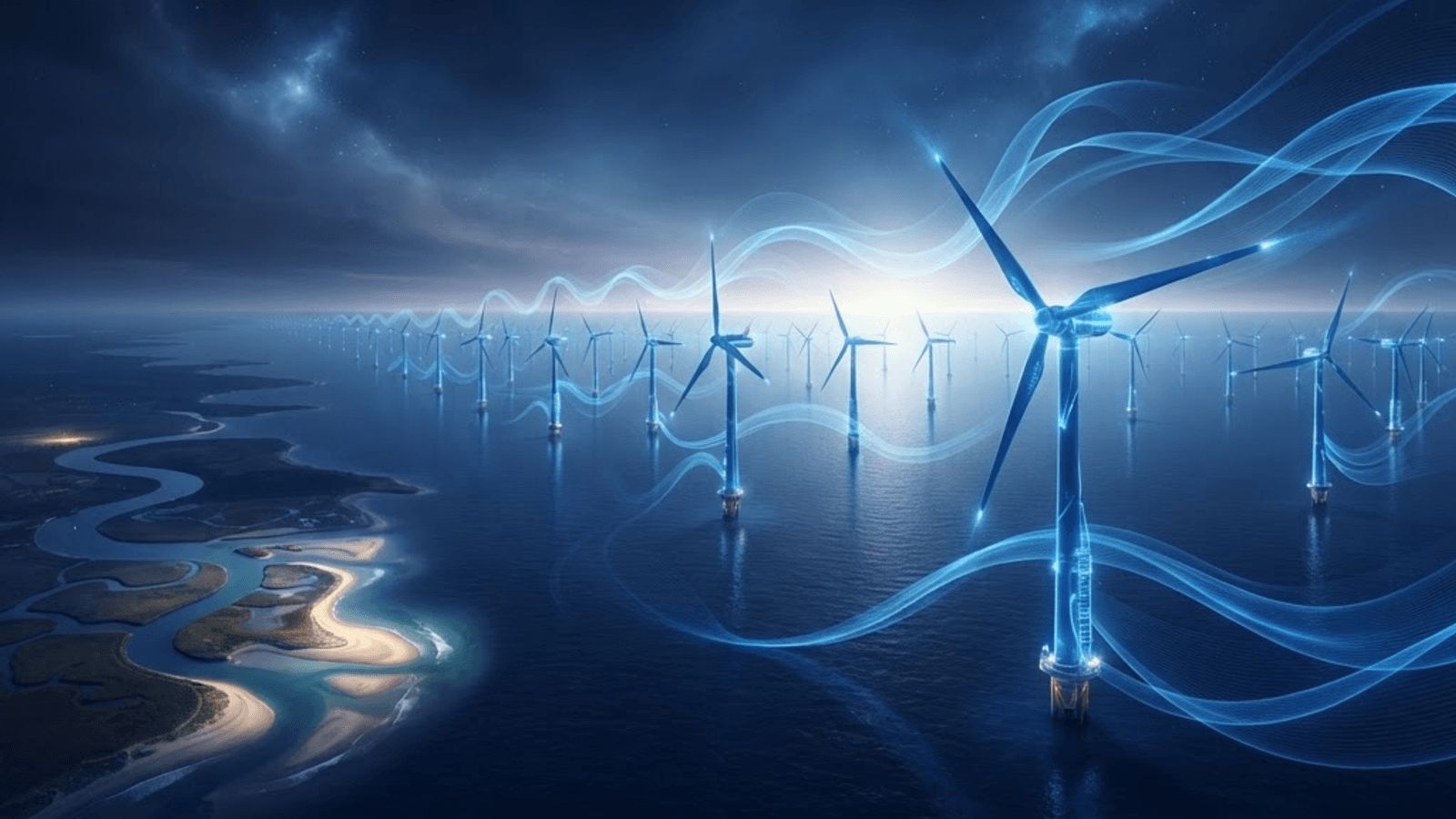
Wind Energy and the Wyre Coastline
Few places in the United Kingdom are as closely associated with wind energy as the Lancashire coast. The waters of the Irish Sea beyond the Wyre estuary and Morecambe Bay host substantial offshore wind capacity, and further development continues to expand the region's generating potential. For Wyre, the significance lies less in the turbines themselves than in the industrial activity that supports them.
Fleetwood in particular has a natural fit with this sector. The town's maritime tradition produced generations of skilled mariners, marine engineers, fabricators and logistics operators. Those capabilities transfer directly to offshore wind, where crew transfer, vessel maintenance, steel fabrication, cable handling and port side logistics are constant requirements.
How the Wind Energy Sector Is Structured
Offshore wind projects involve several distinct phases, each supporting different businesses. Development covers site assessment, seabed survey, environmental study and consenting, often spanning many years before construction begins.
Construction involves foundation installation, turbine erection, array and export cable laying, and offshore substation installation. This phase generates intense demand for vessels, heavy lift capability, fabrication and specialist labour.
Operations and maintenance is the longest phase, typically lasting decades. Technicians travel to turbines regularly for scheduled servicing and fault response, supported by crew transfer vessels, service operation vessels and onshore coordination bases.
Onshore wind operates on a smaller scale in the region, with individual turbines and small clusters serving farms and industrial sites rather than large arrays.
Ten Wind Energy Companies and Service Providers Linked to Wyre
1. Northwest Offshore Wind Services coordinates marine logistics and crew transfer support for projects in the Irish Sea. Scheduling, vessel management and shore side coordination form its core function, drawing on local maritime expertise.
2. Fleetwood Marine Energy Engineering fabricates and maintains steel structures, access systems and handling equipment for offshore installations. Its workshops undertake both new fabrication and repair of components returned from sea.
3. Wyre Turbine Maintenance provides technician teams for scheduled servicing, blade inspection, gearbox and generator work and fault diagnosis. The company invests heavily in the specialist safety and rescue training this work requires.
4. Irish Sea Cable and Subsea Services supports array and export cable operations, including survey, protection, repair and jointing. Cable faults are among the most costly failures in offshore wind, making this a high value specialism.
5. Lancashire Wind Consultancy offers independent technical and commercial advice, including yield assessment, due diligence for investors, condition monitoring interpretation and performance benchmarking across operating assets.
6. Coastal Crew Transfer Operations operates and supports the vessels carrying technicians to and from turbines. Reliability and sea keeping in challenging Irish Sea conditions are critical, and the company focuses on vessel availability and safe transfer systems.
7. Garstang Rural Wind Solutions designs and installs small and medium scale turbines for farms and rural businesses in the north of the borough. Site wind assessment, planning support and grid connection are handled as a package.
8. Thornton Industrial Wind Components manufactures precision components and assemblies feeding into the wind supply chain. Engineering capability around the Hillhouse area supports work of this kind alongside other industrial output.
9. Fylde Coast Wind Training Academy delivers the safety, survival, working at height and first aid training required for offshore technicians. Training capacity is a genuine constraint on sector growth, making local provision strategically important.
10. Northwest Renewable Asset Management manages operating wind assets on behalf of owners, covering performance optimisation, contractor management, warranty administration, insurance and regulatory compliance.
Why Offshore Wind Matters to the Local Economy
The employment created is skilled, relatively well paid and long term. Operations and maintenance roles persist for the life of a wind farm, which provides stability rarely associated with construction driven investment.
Supply chain effects reach well beyond obvious marine businesses. Accommodation providers, catering, transport, engineering suppliers, training organisations and professional services all benefit from sustained offshore activity along the Fylde coast.
Skills development is perhaps the most durable benefit. Apprenticeships and technician training programmes create transferable engineering capability that strengthens the wider regional economy, not just the energy sector.
Challenges Facing the Sector
Grid infrastructure is a widely acknowledged constraint. Connecting large volumes of offshore generation requires substantial onshore reinforcement, and timelines for that work influence project schedules significantly.
Supply chain capacity is stretched globally. Vessels capable of installing the largest modern turbines are limited in number, and component manufacturing is concentrated among relatively few suppliers.
Cost pressures have affected the sector as materials, financing and labour costs have risen. This has increased focus on operational efficiency and lifetime asset performance rather than simply new capacity.
Environmental considerations remain important, including impacts on fisheries, marine habitats, bird populations and navigation. Wyre's fishing heritage means these discussions carry particular local resonance, and constructive engagement between sectors is essential.
Opportunities for Wyre Businesses
Companies seeking to enter the wind supply chain should focus on capability rather than sector labels. Precision engineering, marine services, electrical contracting, logistics, inspection and specialist training all have direct application.
Certification and quality systems are usually prerequisites. Health and safety standards in offshore wind are exacting, and suppliers must demonstrate robust management systems before being accepted onto approved lists.
Collaboration helps smaller firms compete. Consortium bidding, subcontracting relationships with tier one contractors and participation in regional supply chain programmes provide realistic entry routes for Wyre businesses that could not tender independently for major contracts.
Want your brand featured in front of decision-makers? Publish a guest post or get a link insertion in our guides through AAMAX's guest post and link insertion service.
Helpful Links
 SponsoredAAMAX — Full-Service Digital Agency
Write for Us
Share your expertise with our readers. We welcome guest contributions from industry specialists.
Pitch your idea

