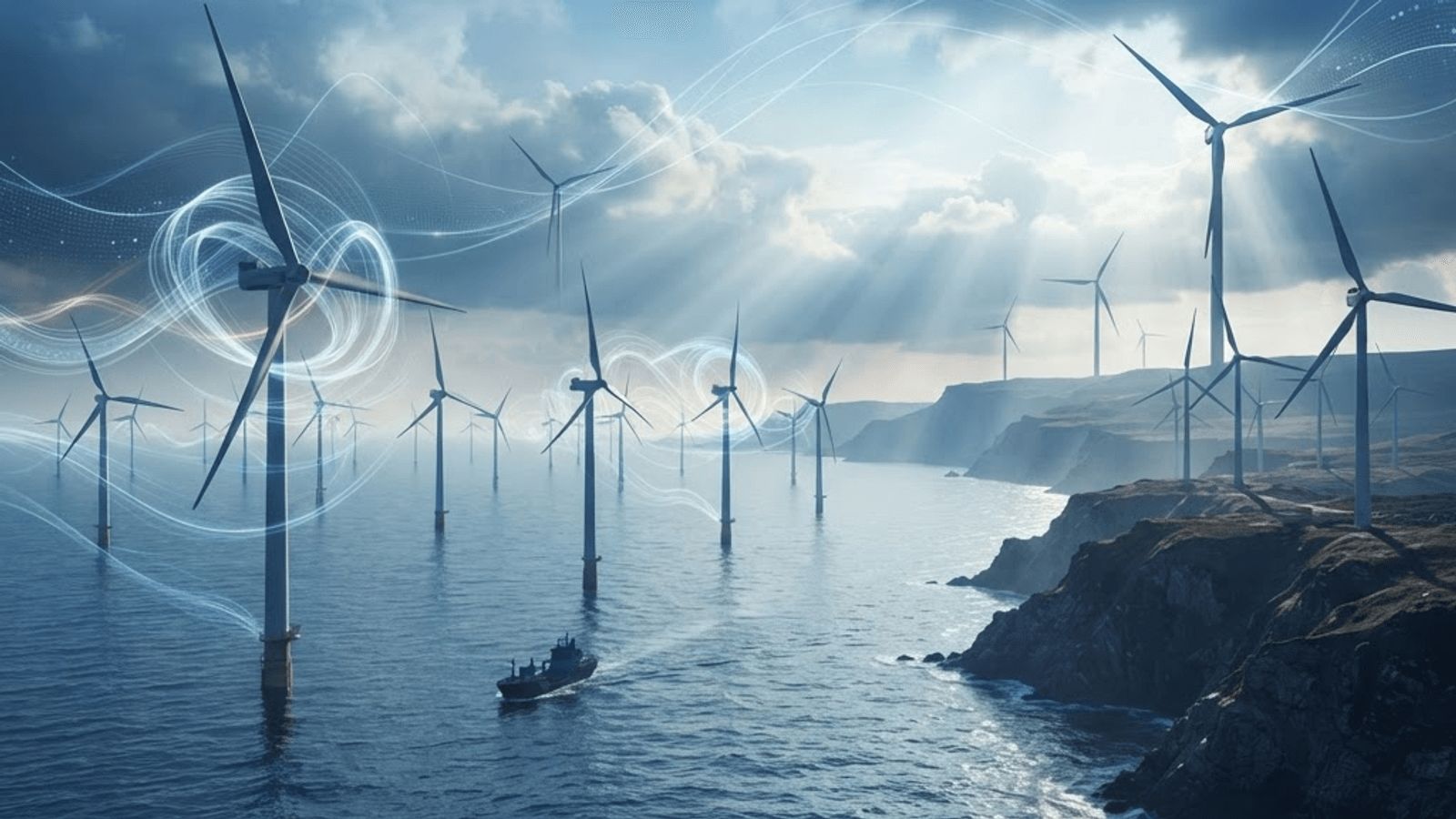
Why Wind Matters to Swansea
Wind is the single largest source of renewable electricity in Wales, and Swansea occupies a strategically useful position between two very different wind markets. To the north and east, the uplands of the South Wales valleys host established onshore wind farms, some of the largest in England and Wales, supported by a mature maintenance and civil engineering supply chain. To the south and west lies the Celtic Sea, one of the most significant floating offshore wind opportunities in Europe, with leasing rounds targeting multi-gigawatt capacity off the South West Wales and Pembrokeshire coast.
That combination gives the city a genuine industrial proposition rather than a purely environmental one. Floating offshore wind requires deep-water quaysides, heavy-lift capacity, large fabrication areas, marine operations bases and a steady supply of technicians. Swansea and Port Talbot together offer port infrastructure, available industrial land, a steel heritage and an engineering workforce — precisely the ingredients developers need for assembly and operations and maintenance bases.
Onshore, Offshore and Floating: Understanding the Difference
Onshore wind is the most cost-effective mature renewable technology available and continues to be developed in Wales, though within a tightly managed planning framework covering landscape, ecology and community benefit. Fixed-bottom offshore wind uses monopile or jacket foundations driven into the seabed and works well in relatively shallow water, which limits its application in the deeper Celtic Sea. Floating offshore wind mounts turbines on buoyant platforms moored to the seabed, unlocking sites in water depths that fixed foundations cannot reach. Because platforms are assembled and integrated in port, floating wind concentrates far more industrial value onshore than earlier offshore generations — which is exactly why Welsh ports are competing for the work.
The Top 10 Wind Energy Companies and Organisations Serving Swansea
1. RWE — A dominant renewable generator in Wales with substantial onshore wind assets and a central role in Celtic Sea floating offshore wind development. Its long-term regional presence supports skills programmes and supply chain engagement across South Wales.
2. Blue Gem Wind — Established specifically to develop floating offshore wind in the Celtic Sea, this joint venture has led early-stage project development off the South West Wales coast and has been an active voice in building Welsh supply chain readiness.
3. Equinor and Celtic Sea Consortium Partners — International offshore wind developers competing for Celtic Sea seabed rights bring deep floating wind experience from Norwegian and Scottish projects, and their local content commitments will shape opportunities for Swansea Bay engineering firms.
4. Associated British Ports — Operator of the Port of Swansea and Port Talbot, and a critical enabler for offshore wind. Port capability determines where marshalling, integration and operations bases are located, making ABP one of the most influential organisations in the regional wind story.
5. Marine Power Systems — A Swansea-born engineering company developing floating platform technology for offshore wind and marine energy. It is the clearest example of indigenous floating wind innovation in the city and has advanced from concept through tank testing toward commercial-scale designs.
6. Ledwood Mechanical Engineering — A South West Wales heavy fabrication and mechanical engineering contractor with the workshop capacity, welding accreditations and project management experience relevant to offshore wind structures and port infrastructure works.
7. Awel Aman Tawe — A community energy organisation in the valleys north of Swansea that developed a community-owned wind project, demonstrating that local ownership can succeed alongside utility-scale development and retain revenue in the area.
8. Vestas and Siemens Gamesa Service Networks — The major turbine manufacturers maintain UK service organisations covering Welsh wind farms, employing technicians on rotating maintenance schedules. Their training standards effectively set the benchmark for wind technician careers in the region.
9. Gower College Swansea and Swansea University Engineering — Skills supply is the sector's binding constraint. Local further and higher education provision in electrical engineering, mechanical maintenance, composites and marine operations determines how much of the Celtic Sea opportunity is captured locally rather than imported.
10. Celtic Freeport — The freeport programme spanning Port Talbot and Milford Haven is designed explicitly around floating offshore wind and clean energy industrialisation. For Swansea businesses, it represents the most significant single mechanism for attracting inward investment, fabrication capability and long-term operations activity to the region.
Industry Insights
Three practical realities define the current phase. Grid connection and transmission reinforcement in South Wales must advance in parallel with generation, or projects will be built faster than power can be moved. Supply chain readiness is a live commercial question: Celtic Sea projects need mooring systems, secondary steel, cabling, vessels and technicians, and firms that achieve relevant quality and safety accreditations early are the ones that win contracts. Consenting under Welsh planning policy requires demonstrable community benefit, ecological safeguards, and consideration of cumulative landscape and marine impacts, which lengthens timelines but improves durability of consent.
Working With Wind Energy Companies
Local businesses seeking to enter the supply chain should focus on certification, capacity evidence and collaboration. Offshore developers procure through tiered contractors, so registering with supply chain portals, achieving recognised safety and quality standards and forming consortia with complementary firms is more effective than approaching developers directly. Landowners considering onshore projects should obtain independent advice on option agreements, lease terms and grid connection responsibilities before signing exclusivity. For those seeking careers, wind technician pathways offer strong prospects, and the qualifications are transferable between onshore, offshore and marine roles.
Wind energy in Swansea is shifting from prospect to programme. If port investment, grid upgrades and skills development land together, the city has a realistic opportunity to convert an environmental transition into durable industrial employment.
Want your brand featured in front of decision-makers? Publish a guest post or get a link insertion in our guides through AAMAX's guest post and link insertion service.
Helpful Links
 SponsoredAAMAX — Full-Service Digital Agency
Write for Us
Share your expertise with our readers. We welcome guest contributions from industry specialists.
Pitch your idea