

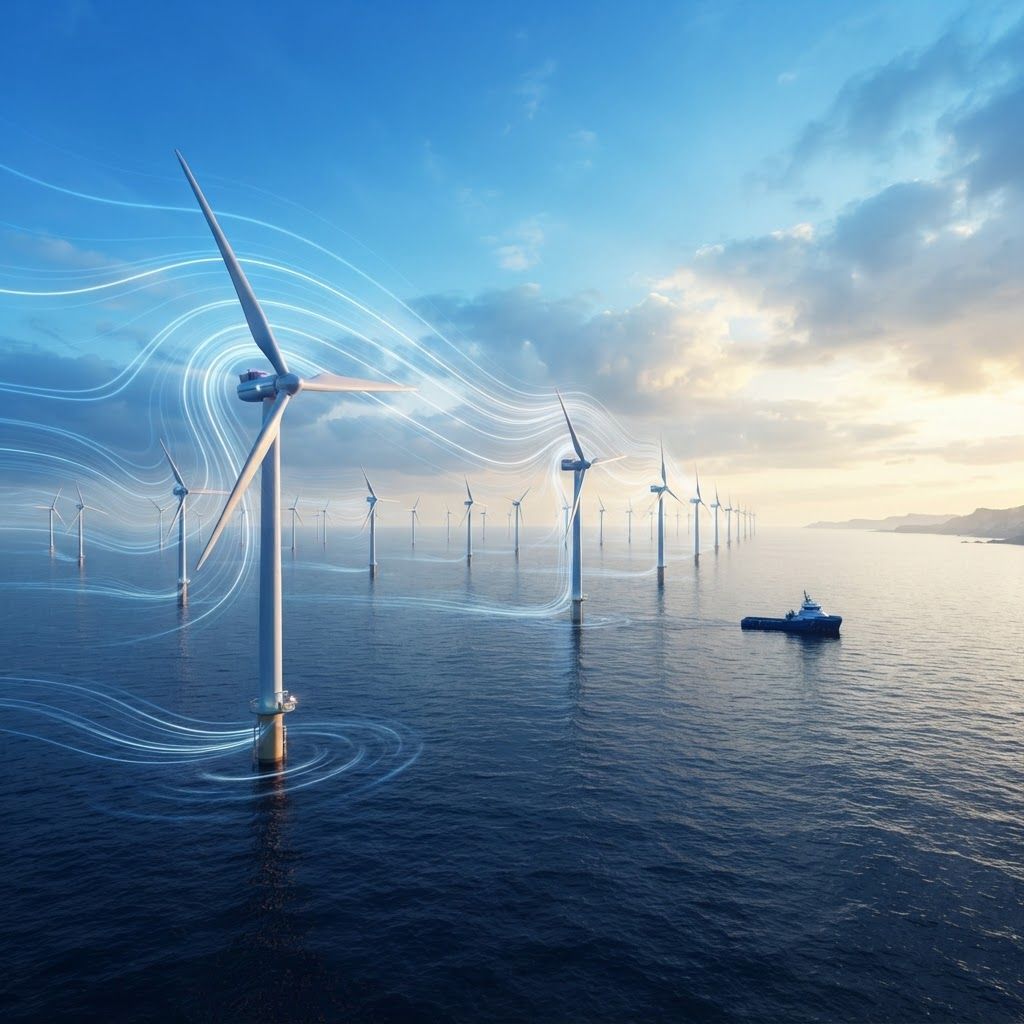
Wind Energy and the Lancashire Coast
Few parts of the United Kingdom are as well placed for wind generation as the Lancashire coast. The eastern Irish Sea combines strong, consistent wind speeds with shallow water and proximity to grid infrastructure and population centres, which is why a series of large offshore wind farms has been developed within sight of the Fylde coast west of Preston. Onshore, smaller turbines dot agricultural land across the county, serving farms and rural businesses.
Preston's contribution is primarily industrial and professional. The city and its surrounding manufacturing belt supply fabrication, precision engineering, electrical systems, cabling, logistics support and specialist services. Alongside this sits a layer of consultancy work covering feasibility, environmental assessment, planning and grid connection. Wind energy in this region is therefore as much a supply chain story as a generation story.
Ten Wind Energy Companies With Regional Relevance
1. Ørsted. A dominant force in Irish Sea offshore wind, operating major arrays off the North West coast. Its operations and maintenance activity supports substantial regional employment in vessel crewing, technician roles and component servicing.
2. RWE. Another leading offshore developer and operator with significant Irish Sea assets, alongside onshore wind and increasingly co-located storage and hybrid generation projects.
3. Vestas. A global turbine manufacturer whose machines and long-term service agreements feature widely across UK onshore and offshore projects, supported by regional service technicians and parts logistics.
4. Siemens Gamesa. Supplies large offshore turbines and blade technology, with UK operations that draw on North West engineering and marine logistics capability.
5. James Fisher and Sons. A North West marine services group providing offshore support, inspection, subsea services and technical solutions to wind farm operators, illustrating how maritime expertise transfers directly into renewables.
6. JDR Cable Systems. Manufactures subsea power cables and umbilicals essential to offshore wind, connecting turbines to substations and substations to shore. Cable supply and installation is one of the most technically demanding and highest-risk elements of any offshore project.
7. Onshore wind developers active in Lancashire. Companies developing single turbines and small clusters for farms, industrial sites and community projects, handling planning, grid connection and construction on sites where local wind resource justifies investment.
8. Preston-area precision engineering and fabrication firms. Lancashire's aerospace and general engineering heritage has produced machining, welding and assembly businesses now supplying turbine components, tower sections, brackets, gearbox parts and structural elements.
9. Wind consultancy and environmental assessment practices. Advisers producing wind resource assessments, noise and shadow flicker studies, ornithological surveys, landscape and visual impact assessments and planning submissions, all essential to consenting.
10. Turbine operations and maintenance specialists. Independent service providers performing blade inspection and repair, gearbox and bearing maintenance, drivetrain overhaul, condition monitoring and remote performance analysis across onshore and offshore fleets.
How the Wind Sector Actually Works
Offshore projects follow a long and capital-intensive path: seabed leasing, resource assessment, environmental impact assessment, consent, grid connection agreement, contracts for difference allocation, financing, fabrication, marine installation and finally decades of operation. Each stage supports different specialist businesses, and the operational phase provides the most stable long-term regional employment.
Onshore projects are smaller but often more complex per megawatt in planning terms. Landscape impact, noise limits, residential separation distances and ecological considerations dominate, and local planning outcomes are less predictable. For farms and rural enterprises, a single medium turbine can nonetheless transform energy costs.
Grid connection is the recurring bottleneck. Transmission and distribution capacity in parts of the North West is constrained, and connection dates can extend years into the future. This has driven strong interest in co-located battery storage, private wire supply to nearby industrial users, and flexible connection agreements that accept occasional curtailment in exchange for earlier access.
Trends Shaping Wind Energy
Turbine scale continues to increase, with larger rotors and higher hub heights extracting more energy from the same site. This improves economics but raises fabrication, transport and installation challenges that favour ports and manufacturers with heavy handling capability.
Floating offshore wind is emerging as the next frontier, opening deeper waters previously unsuitable for fixed foundations. The engineering disciplines involved, including mooring systems, dynamic cabling and station keeping, overlap substantially with existing offshore and marine expertise in the North West.
Hybridisation is becoming standard. Wind paired with battery storage, and increasingly with electrolysers producing hydrogen, smooths output and captures more value from generation that would otherwise be curtailed.
Finally, decommissioning and life extension are entering the mainstream as the earliest UK wind farms approach the end of their original design life, creating a growing market in refurbishment, repowering and component recycling.
Choosing a Wind Energy Partner
For landowners considering a turbine, obtain an independent wind resource assessment before engaging a developer. Long-term average wind speed at hub height, not a general regional figure, determines viability, and optimistic assumptions destroy project economics.
Scrutinise planning capability. Consenting is where most onshore projects fail, so a developer's local planning track record matters more than its technical claims. Ask specifically about approvals achieved in comparable Lancashire settings.
For businesses procuring wind-derived power rather than building generation, examine power purchase agreement terms carefully: contract length, pricing mechanism, volume flexibility and what happens if generation underperforms. Genuine additionality, meaning the contract supports new generation rather than reallocating existing output, is increasingly important for credible reporting.
For supply chain participants, certification and quality systems determine access. Offshore wind procurement demands rigorous documentation, traceability and health and safety performance, and engineering firms that invest in these systems win the work.
Final Thoughts
Wind energy is one of the strongest industrial opportunities available to the Preston area, combining abundant natural resource offshore with deep engineering capability inland. The companies above span development, manufacturing, marine services, consultancy and maintenance. As turbines grow, floating technology matures and storage integration expands, Lancashire's role in the UK wind sector looks set to deepen rather than diminish.
Want your brand featured in front of decision-makers? Publish a guest post or get a link insertion in our guides through AAMAX's guest post and link insertion service.
Helpful Links
 SponsoredAAMAX — Full-Service Digital Agency
Write for Us
Share your expertise with our readers. We welcome guest contributions from industry specialists.
Pitch your idea

