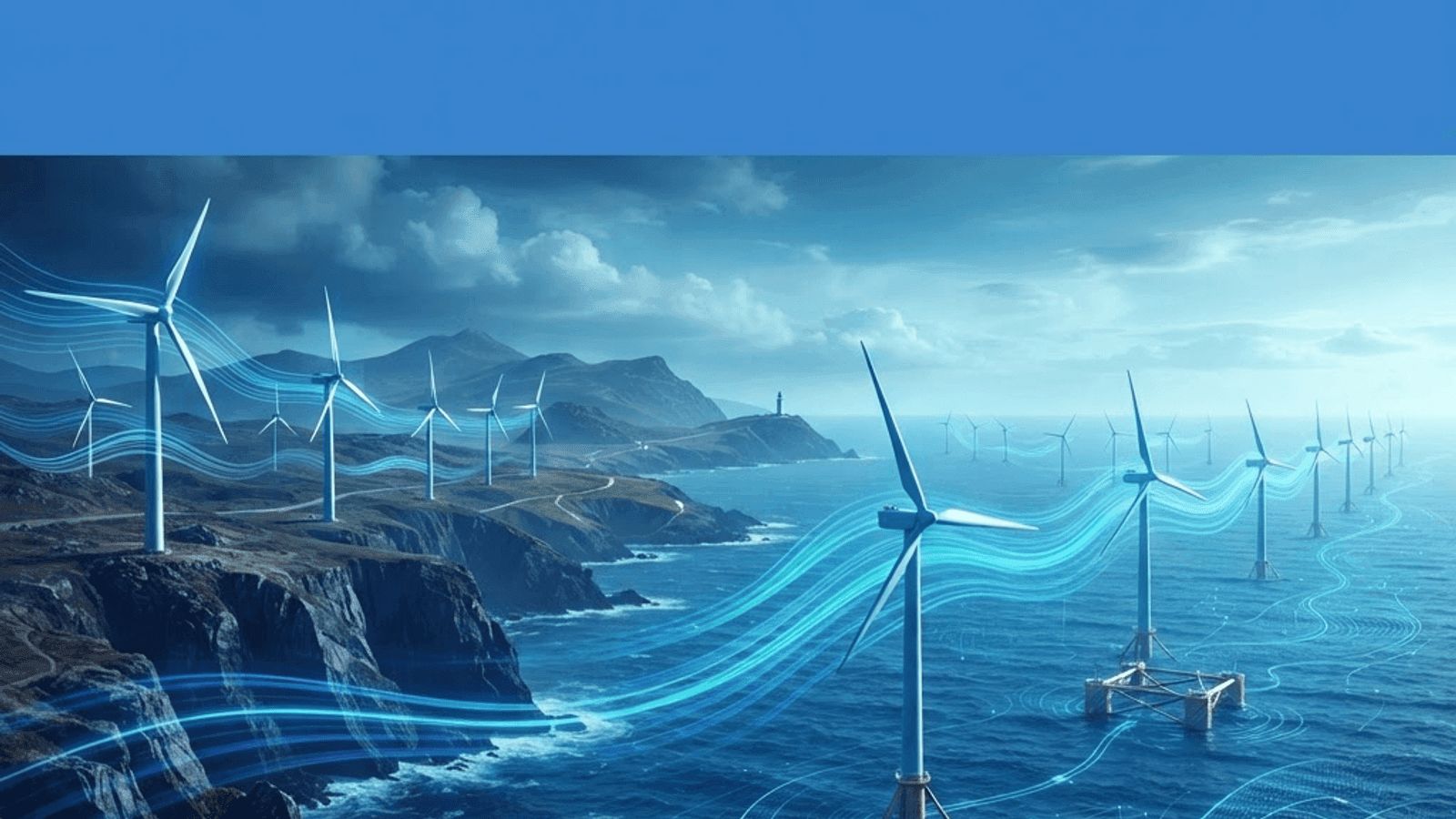
Why Pembrokeshire Matters to the Wind Industry
Wind energy in Wales has entered a new phase, and Pembrokeshire sits at the centre of it. The Celtic Sea off the south west Welsh coast has a strong, consistent wind resource, and seabed leasing for floating offshore wind has turned that resource into a concrete industrial programme rather than a long term aspiration. What makes Pembrokeshire particularly relevant is not just proximity but capability. The Milford Haven waterway offers exceptional water depth, existing heavy industrial quaysides, established marine operations and a workforce already trained to work safely in demanding energy environments.
Onshore, the picture is more modest but still significant. The county has a number of small and medium wind installations, single turbines serving farms and industrial sites, and community owned schemes. Planning in Wales for onshore wind operates within a policy framework that identifies priority areas for renewable development, while the Pembrokeshire Coast National Park imposes strong landscape protections across a substantial part of the county.
Floating Offshore Wind Explained
Conventional offshore turbines are fixed to the seabed, which limits them to relatively shallow water. Floating offshore wind mounts turbines on buoyant platforms held in position by mooring lines and anchors, allowing deployment in far deeper water. The Celtic Sea is well suited to this approach. The industrial consequence is important: floating platforms are large structures that must be assembled at a port with heavy lift capability and substantial laydown area, then towed to site. Ports that can perform this integration work capture a disproportionate share of the economic value, which is why Pembrokeshire's port infrastructure investment has attracted such attention.
Ten Wind Energy Companies and Specialists Linked to Pembrokeshire
1. Celtic Sea Floating Wind Developments
A project developer working on floating offshore wind in the Celtic Sea, covering site characterisation, environmental impact assessment, consenting, mooring design and long term operations and maintenance strategy.
2. Haven Marine Wind Services
A marine operations business providing crew transfer, survey support, towage assistance and offshore logistics from the waterway, drawing on decades of experience serving tanker and terminal operations.
3. Preseli Onshore Wind Partners
A developer and operator of small and medium onshore turbines for farms, industrial sites and community groups, managing feasibility, wind resource assessment, planning and grid connection.
4. Pembroke Turbine Engineering
A fabrication and mechanical engineering company producing structural components, platform sections, secondary steelwork and mooring hardware for the offshore wind supply chain.
5. West Wales Wind Operations and Maintenance
A technical services provider delivering blade inspection, gearbox and generator servicing, condition monitoring and unplanned repair response across onshore and offshore assets.
6. Cleddau Wind Consultancy
An advisory practice specialising in wind resource modelling, energy yield assessment, noise and shadow flicker analysis and planning support for developers and landowners.
7. Milford Offshore Logistics Group
A port services and logistics business handling component reception, storage, marshalling and heavy lift coordination for large offshore structures and their onward transport to sea.
8. Pembrokeshire Community Wind Cooperative
A locally owned organisation developing and operating community wind projects, returning surplus income to local causes and offering residents an ownership stake in nearby generation.
9. Coastway Wind Grid and Cabling
A specialist in export cable routing, substation interface design, grid connection applications and onshore reinforcement works required to bring offshore power into the network.
10. Haven Offshore Wind Training Centre
A training provider delivering globally recognised offshore safety certification, working at height and sea survival modules, and technician development pathways for people entering the sector locally.
The Supply Chain Opportunity
The most valuable outcome for Pembrokeshire is not simply hosting turbines but capturing supply chain activity. That includes steel fabrication, mooring and anchor manufacture, cable handling, vessel services, port operations, environmental survey work, and long term operations and maintenance which continues for the full operational life of a project. Operations and maintenance bases are especially significant because they create permanent, skilled, well paid jobs in the county rather than temporary construction employment. Securing that work requires local firms to hold relevant accreditations and to be capable of meeting the quality and safety standards offshore developers demand.
Planning, Environment and Community Considerations
Wind development in Wales involves careful balancing. Landscape and visual impact assessment carries particular weight near the national park and the coast path. Ornithological and marine mammal assessments are central to offshore consenting, as is fisheries liaison, since the Celtic Sea supports active fishing grounds. Grid infrastructure to bring power ashore raises its own planning questions about cable landfall points and onshore substations. Effective developers engage communities early, publish evidence transparently and demonstrate genuine local benefit rather than treating consultation as a procedural hurdle.
Careers and Skills in Wind
For residents, wind energy represents one of the clearest career growth areas in West Wales. Roles span wind turbine technicians, electrical and mechanical engineers, marine crew, survey specialists, project managers, environmental scientists and commercial staff. Many entry routes begin with apprenticeships or with conversion training for those already working in marine, engineering or process industries. The presence of local training provision means residents can often qualify without leaving the county, which is critical to retaining young people in rural Wales.
Final Thoughts
Wind energy gives Pembrokeshire a credible path to remaining a nationally important energy region for decades to come. The Celtic Sea resource, deep water port capability and an existing industrial workforce form a rare combination. The decisive question is whether the county converts that natural advantage into lasting local employment and supply chain value, and the companies investing in local fabrication, marine services and training are the ones most likely to make that happen.
Want your brand featured in front of decision-makers? Publish a guest post or get a link insertion in our guides through AAMAX's guest post and link insertion service.
Helpful Links
 SponsoredAAMAX — Full-Service Digital Agency
Write for Us
Share your expertise with our readers. We welcome guest contributions from industry specialists.
Pitch your idea