

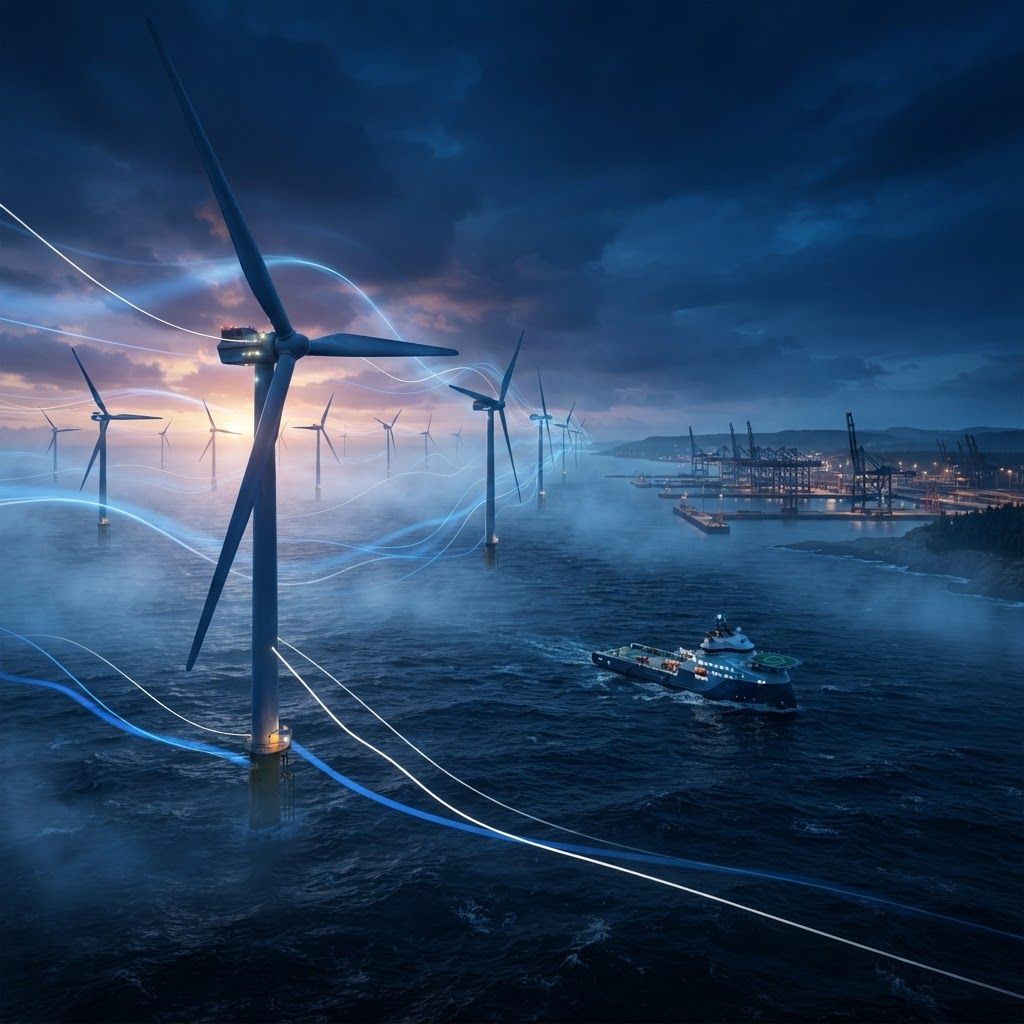
Why the Tyne Became an Offshore Wind Hub
Offshore wind requires three things onshore: deep water access, very large fabrication and assembly space, and a workforce capable of heavy engineering to tight tolerances. North Tyneside has all three, inherited from more than a century of shipbuilding and offshore oil structure fabrication along the north bank of the river at Wallsend, Willington Quay and Howdon.
The North Sea off the North East coast hosts substantial installed and consented offshore wind capacity, and the scale of individual projects has grown enormously. Turbines that once produced a few megawatts now exceed fifteen megawatts, with blades longer than football pitches and foundations weighing thousands of tonnes. Components of that size cannot travel far by road, which gives waterside industrial sites a permanent structural advantage.
The Anatomy of the Wind Supply Chain
Wind energy work in the borough spans several distinct layers. Primary fabrication produces monopiles, transition pieces, jackets and secondary steelwork. Assembly and marshalling activity uses quaysides for storage, pre assembly and load out onto installation vessels. Subsea services cover cable laying, trenching, burial, survey and inspection using remotely operated and autonomous vehicles.
Then come operations and maintenance, which is the longest phase of any wind farm life. This involves technician crews, crew transfer vessels, service operation vessels, spare parts logistics, blade repair, high voltage electrical work and condition monitoring. Finally there is engineering design and consultancy, covering foundation design, structural analysis, corrosion protection, geotechnical work, marine operations planning and independent verification.
The Top 10 Wind Energy Companies Connected to North Tyneside
1. Smulders Projects UK
Based at the Neptune Yard in Wallsend, Smulders is the flagship offshore wind fabricator on the Tyne, producing transition pieces and complex steel structures for major North Sea wind farms. Its investment has retained large scale fabrication employment in the borough and demonstrated that United Kingdom content in offshore wind can be delivered locally.
2. Soil Machine Dynamics
SMD designs and manufactures subsea trenching and cable burial systems along with remotely operated vehicles, technology that is essential to installing and protecting inter array and export cables. It is one of the strongest examples of Tyneside engineering exporting globally.
3. Osbit
Osbit engineers specialist offshore equipment including access and handling systems used in wind farm construction and maintenance. Its bespoke approach suits the offshore wind sector, where each project presents different vessel, weather and installation constraints.
4. Modus Subsea Services
Modus operates autonomous and remotely operated underwater vehicles for survey and inspection of offshore wind assets. Reducing reliance on large crewed vessels lowers both project cost and emissions, aligning commercial and environmental interests.
5. Royal IHC and Marine Equipment Suppliers
Marine equipment and vessel technology suppliers with North East operations provide handling systems, cable lay equipment and installation technology, forming a critical link between fabrication yards and offshore installation campaigns.
6. Port of Tyne and Tyneside Quayside Operators
Marshalling, heavy lift, storage and load out services along the river underpin every offshore campaign staged from the Tyne. Investment in quay strengthening and laydown area has been central to attracting larger projects.
7. Equinor Operations and Maintenance Activity
Offshore wind operators servicing North Sea assets sustain long term technical employment on the North East coast, including technicians, marine coordinators, planners and inspection engineers. Operations contracts typically run for decades, providing stability that construction work cannot.
8. Wood and Regional Engineering Consultancies
Large engineering consultancies with North East presence deliver foundation design, structural integrity assessment, corrosion protection strategy and marine operations planning for wind developers, alongside independent verification required by lenders and insurers.
9. Bridon Bekaert and Specialist Component Manufacturers
The wider Tyne and Wear supply chain includes rope, mooring, coating, hydraulic, electrical and fastening specialists whose products end up on offshore turbines and vessels. Floating wind in particular is increasing demand for mooring and dynamic cable expertise.
10. Regional Training Providers and Offshore Skills Centres
Offshore wind cannot grow without certified technicians. Training providers across North Tyneside and the wider region deliver global wind organisation safety training, working at height, sea survival, high voltage authorisation and blade repair skills, creating direct routes from local colleges into offshore careers.
Trends Shaping the Next Decade
Floating offshore wind is the most consequential shift. Floating platforms allow turbines in deeper water and require substantial quayside assembly, mooring systems and dynamic cables. Ports with heavy assembly capability stand to benefit significantly, and the Tyne is well placed to compete.
Turbine scale continues to increase, which pushes fabrication tolerance, lifting capacity and vessel requirements. Operations and maintenance is also being transformed by digital monitoring, drone and robotic inspection and predictive analytics, reducing costly unplanned offshore visits.
Supply chain localisation is a policy priority, with developers under pressure to demonstrate domestic content. That creates genuine opportunity for North Tyneside manufacturers, provided they can meet certification, capacity and delivery reliability requirements at scale.
How to Evaluate a Wind Sector Partner
For developers and tier one contractors, assess welding and coating certification, quality management systems, capacity and throughput evidence, health and safety performance, vessel availability, and demonstrated delivery on comparable project scale. For suppliers seeking entry, understand that offshore wind procurement values documented reliability above price alone.
For jobseekers, look at apprenticeship structure, certification funding, rotational patterns and progression from technician to supervisory and engineering roles. The sector shortage of qualified technicians makes it one of the more secure career choices in the region.
Final Thoughts
Wind energy has given North Tyneside industrial relevance in a genuinely global market. The companies above span fabrication, subsea technology, marine equipment, operations, engineering design and skills development, forming a rare concentration of capability. As turbine sizes grow and floating wind advances, the borough riverside industrial base looks set to remain central to the United Kingdom energy transition.
Want your brand featured in front of decision-makers? Publish a guest post or get a link insertion in our guides through AAMAX's guest post and link insertion service.
Helpful Links
 SponsoredAAMAX — Full-Service Digital Agency
Write for Us
Share your expertise with our readers. We welcome guest contributions from industry specialists.
Pitch your idea

