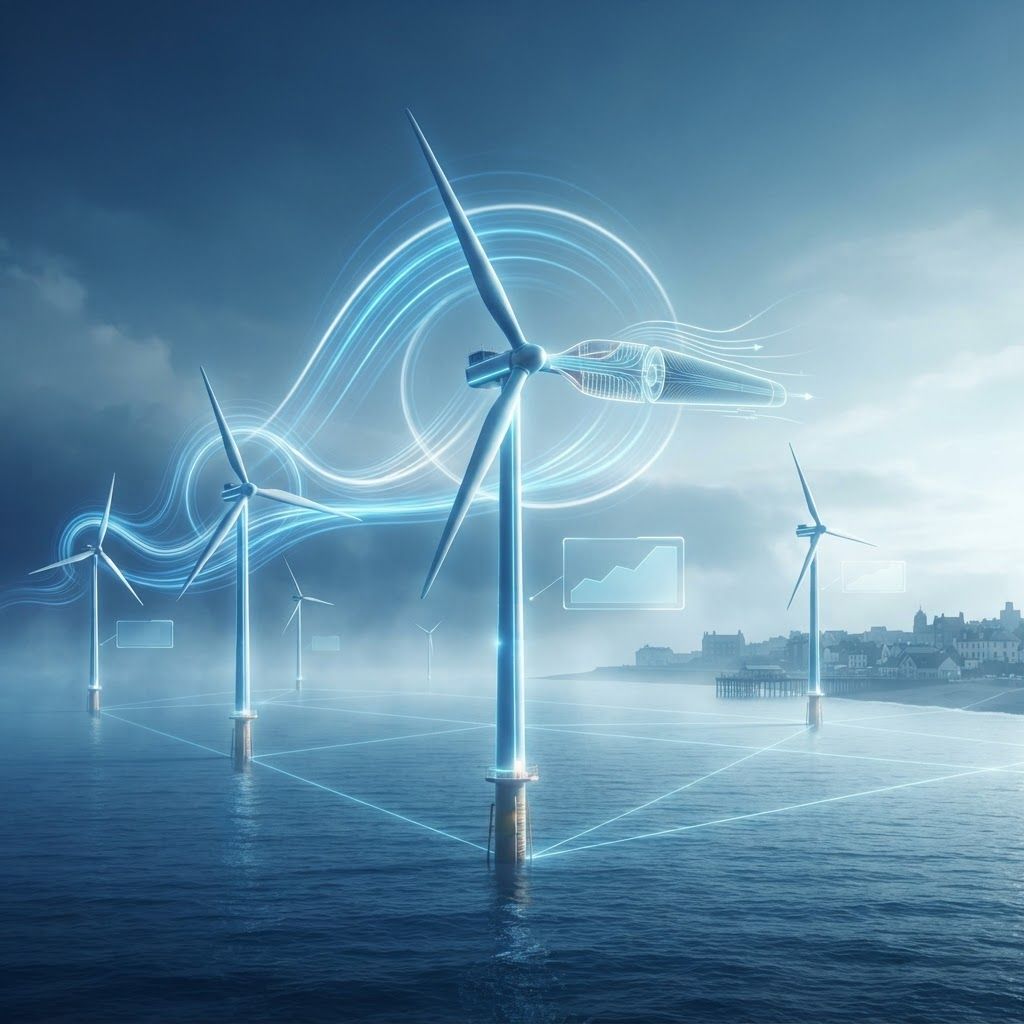
Wind Resource on the Bristol Channel
North Somerset occupies a stretch of coastline where the Bristol Channel funnels air between South Wales and the West Country. The result is consistently strong and reasonably predictable wind, particularly on the exposed shoreline between Portishead, Clevedon and Weston-super-Mare and across the low-lying Levels behind them. In energy terms this is a meaningful resource, and it explains why the wider Severn Estuary region has attracted onshore turbines, offshore project supply chains and port-based logistics activity.
The district is also well positioned commercially. Avonmouth and Royal Portbury Docks sit immediately to the north, providing heavy lift capability, laydown area and marine access. Bristol and the surrounding area supply engineering, geotechnical, environmental and legal expertise. That combination means companies based in or serving North Somerset are frequently involved in projects far beyond the district boundary, including large offshore developments in the Irish Sea and Celtic Sea.
Onshore, Offshore and Small Scale
Onshore wind in North Somerset is constrained. Planning policy, landscape designations around the Mendip Hills, radar and aviation considerations near Bristol Airport, and local sensitivity all limit large turbine deployment. Where onshore schemes do proceed they tend to be single or small clusters on agricultural or industrial land, often community owned or directly serving a large on-site electricity load.
Offshore is where the scale sits. The Celtic Sea floating wind programme has created a long-term pipeline for South West ports, fabrication yards, vessel operators and service businesses. Companies in the region are competing for cable installation, foundation work, blade logistics, survey, and operations and maintenance contracts.
Small scale wind serves a different market. Farms, remote industrial sites and off-grid locations sometimes install turbines in the five to fifty kilowatt range, frequently alongside solar and battery storage to smooth output.
What Wind Companies Actually Do
The sector splits into distinct roles. Developers identify sites, secure land agreements, run environmental impact assessment and obtain consent. Engineering, procurement and construction contractors build the asset. Turbine manufacturers supply and commission machines. Operations and maintenance providers keep them running, handling gearbox, blade, yaw and control system work. Consultancies provide wind resource assessment, noise and shadow flicker modelling, ecology surveys and grid connection studies. Asset managers handle commercial performance, power purchase agreements and compliance.
1. Vestas
Vestas is one of the world leading turbine manufacturers, supplying and servicing onshore and offshore machines. Its service organisation supports assets across the South West, and its scale gives access to spares, blade repair capability and long-term availability guarantees.
2. Siemens Gamesa Renewable Energy
Siemens Gamesa is a dominant force in offshore wind technology and has been central to United Kingdom offshore capacity growth. Its offshore platforms and service infrastructure underpin much of the pipeline relevant to Severn Estuary supply chains.
3. RWE Renewables
RWE is one of the largest wind operators in the United Kingdom, with an extensive onshore and offshore portfolio. It develops, owns and operates assets and is a significant procurer of regional engineering and marine services.
4. Ecotricity
Ecotricity built its identity around constructing its own wind generation from customer revenue rather than simply reselling power. It remains a recognised West Country name in wind development and green supply.
5. Natural Power
Natural Power is a specialist renewable consultancy and service provider covering wind resource assessment, environmental studies, due diligence, construction management and operational monitoring. It is frequently engaged on projects at the feasibility and financing stages.
6. Wood
Wood provides engineering and consultancy across energy infrastructure including offshore wind foundations, electrical systems and grid connection design. Its multidisciplinary capability suits complex marine and transmission scope.
7. Sea and Land Project Engineering
Known for offshore renewable installation support, cable protection systems and marine engineering, this specialist works on the interface between seabed infrastructure and turbine foundations.
8. Renewable Energy Systems
Renewable Energy Systems is one of the largest independent renewable developers globally, with substantial United Kingdom onshore wind and storage experience covering development, construction and asset management.
9. Gurit
Gurit supplies composite materials and blade engineering expertise to the wind industry. Its work sits upstream of installation but is central to blade performance, repair and lifetime extension.
10. Bristol Energy Cooperative
Operating as a community energy organisation across the Bristol and North Somerset area, Bristol Energy Cooperative develops locally owned renewable generation and reinvests surplus into community benefit, offering a route for residents to participate directly in local energy projects.
Planning and Community Considerations
Any wind proposal in the district will face rigorous scrutiny. Landscape and visual impact assessment, noise limits at nearby dwellings, shadow flicker, ornithological and bat surveys, aviation safeguarding and cumulative impact all need to be addressed. Early and genuine community engagement makes a measurable difference to outcomes, and shared ownership or community benefit funds are increasingly expected rather than optional.
Careers and Supply Chain Opportunity
For local businesses the opportunity often lies in the supply chain rather than in owning turbines. Fabrication, coatings, electrical contracting, lifting and rigging, geotechnical survey, crew transfer, catering and logistics all feed offshore programmes. Skills in high voltage electrical work, composite repair, rope access and marine operations are in demand and transferable from existing engineering and marine trades in the area.
Conclusion
Wind energy around North Somerset is a story of two scales. Onshore development remains modest and planning-constrained, while the offshore programme in the Bristol Channel and Celtic Sea offers a decades-long pipeline that regional engineering and marine businesses are well placed to serve. Whether you are assessing a small farm turbine or seeking a place in the offshore supply chain, the companies above represent the mix of developers, manufacturers, consultancies and specialists shaping wind activity in and around the district.
Want your brand featured in front of decision-makers? Publish a guest post or get a link insertion in our guides through AAMAX's guest post and link insertion service.
Helpful Links
- Top 10 Best Appliance Repair Services in Southend-on-Sea
- Top 10 Best Event Management Companies in Huntingdonshire
- Top 10 Best IT Services Companies in Bath and North East Somerset
- Top 10 Best Home Renovation Companies in Bath and North East Somerset
- Top 10 Best Employment Lawyers in South Cambridgeshire
 SponsoredAAMAX — Full-Service Digital Agency
Write for Us
Share your expertise with our readers. We welcome guest contributions from industry specialists.
Pitch your idea