

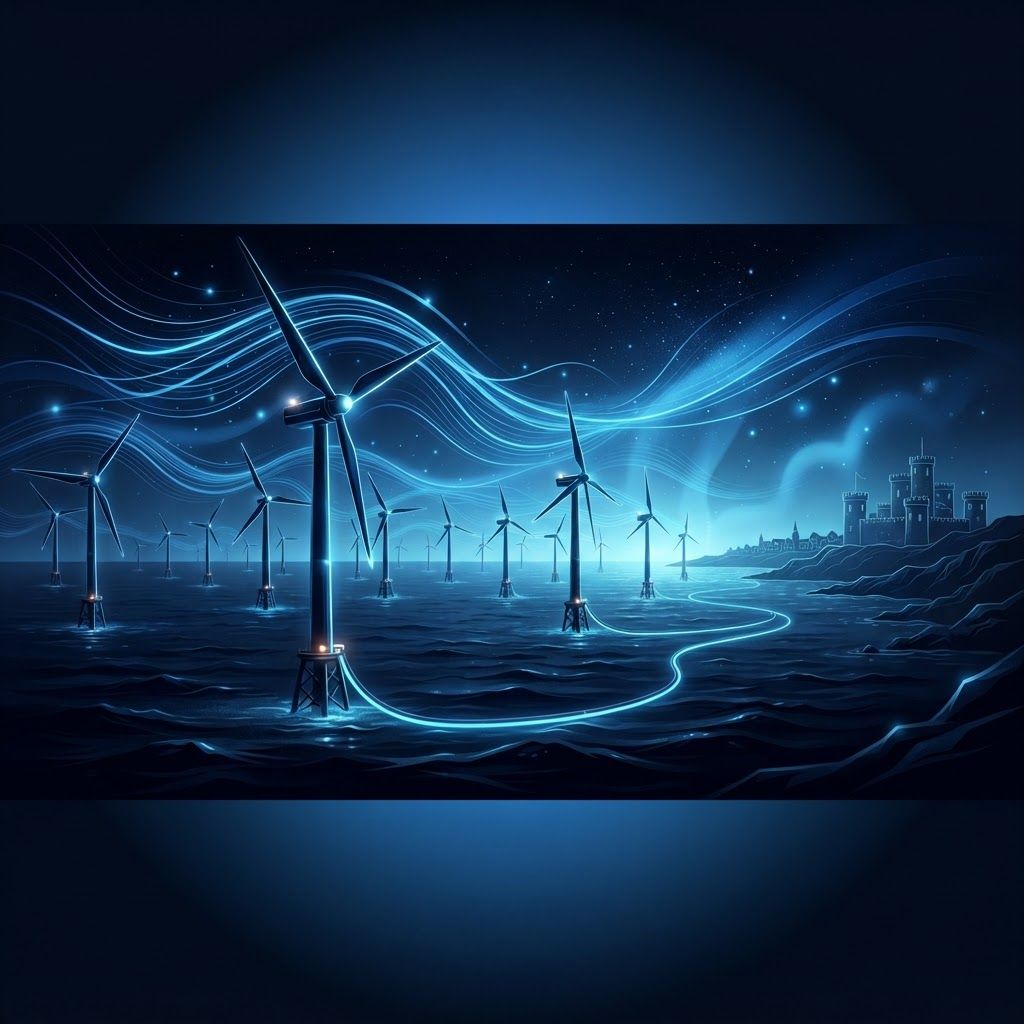
Why Wind Energy Matters So Much to This Coastline
The stretch of Irish Sea beyond Morecambe Bay has become one of the most important renewable energy zones in Europe. Consistent wind speeds, relatively shallow water, proximity to grid connection points and established port infrastructure at Barrow, Fleetwood and Heysham combined to make the region an early and enduring focus for offshore wind development.
For Lancaster, the significance is both economic and practical. Offshore wind farms require onshore substations, cable landfall points, operations and maintenance bases, crew transfer vessels, specialist engineering services and a skilled workforce. Much of that activity is drawn from the surrounding travel-to-work area, meaning residents of Lancaster, Morecambe and Heysham work directly in the sector even though the turbines themselves stand miles offshore.
Understanding Offshore and Onshore Wind
Offshore wind benefits from stronger and steadier wind resource, larger turbine sizes and fewer planning constraints on visual impact, but faces higher capital costs, complex marine installation and demanding maintenance conditions. Capacity factors offshore substantially exceed those achieved onshore.
Onshore wind is cheaper to build and quicker to deploy but faces greater planning sensitivity, particularly in a district bordered by the Forest of Bowland and Arnside and Silverdale landscapes. Single-turbine and small-cluster installations on farms and industrial sites remain viable where siting is appropriate.
Both depend on the same fundamental engineering disciplines: foundations, towers, nacelles, blades, power electronics, cabling, grid connection and condition monitoring.
Leading Wind Energy Organisations Connected to the Region
1. Ørsted
Operating major offshore wind assets in the Irish Sea, Ørsted is among the most significant developers globally and maintains operational activity supporting the North West coastline.
2. ScottishPower Renewables
With substantial offshore capacity in the region alongside onshore portfolios, ScottishPower Renewables is a leading generator and an active investor in expanding capacity.
3. RWE Renewables
RWE operates extensive offshore wind interests around the United Kingdom coast and is involved in projects and supply chain activity relevant to the Irish Sea zone.
4. Vattenfall
Vattenfall develops and operates wind assets across Europe and participates in United Kingdom offshore development, contributing to the pipeline of projects serving the northern grid.
5. Siemens Gamesa Renewable Energy
As one of the principal turbine manufacturers and service providers, Siemens Gamesa supports installed capacity in the Irish Sea through long-term operations and maintenance contracts.
6. Vestas
Vestas supplies and services turbines across onshore and offshore projects and maintains a substantial United Kingdom service organisation employing technicians regionally.
7. Operations and Maintenance Contractors
Specialist contractors provide blade inspection and repair, high voltage cable services, subsea survey, rope access technicians and crew transfer vessel operations. These businesses form the day-to-day employment backbone of the offshore sector locally.
8. Marine and Port Service Providers
Heysham Port and neighbouring facilities support offshore logistics, vessel operations and equipment handling, with associated engineering, fabrication and inspection businesses in the surrounding industrial estates.
9. Onshore and Farm-Scale Wind Installers
Smaller developers and installers deliver single turbines and small clusters for agricultural and industrial sites where wind resource and planning conditions permit, often alongside solar and storage.
10. Engineering Consultancies and Research Partners
Consultancies providing environmental impact assessment, geotechnical survey, grid studies and structural engineering support project development, while Lancaster University research contributes to areas including materials, energy systems and environmental monitoring.
Trends Shaping the Sector
Turbine scale continues to increase, with modern offshore machines exceeding capacities that would have seemed implausible a decade ago. Larger turbines reduce the number of foundations and installation operations required per megawatt, improving project economics.
Floating offshore wind is emerging as the next frontier, unlocking deeper water sites beyond the reach of fixed foundations. While the Irish Sea contains substantial fixed-bottom potential, floating technology expands the long-term resource considerably.
Grid capacity and connection queues remain the principal bottleneck across the industry, prompting greater interest in co-located storage, hydrogen production and flexible demand located near generation.
Supply chain localisation has also become a policy priority, with contracts increasingly weighted towards developers who commit to United Kingdom content and regional employment, which benefits port and engineering communities along this coast.
Careers and Skills in Wind Energy
The sector offers genuinely attractive career pathways, including wind turbine technician apprenticeships, marine operations roles, electrical and mechanical engineering, project management, environmental science and data analysis for condition monitoring.
Entry routes commonly involve engineering apprenticeships, further education qualifications and Global Wind Organisation safety training covering working at height, sea survival and first aid. Regional colleges and training providers have expanded provision in response to sustained demand, and transferable skills from marine, nuclear and oil and gas backgrounds are highly valued.
What This Means for Local Businesses
Wind development creates opportunity well beyond energy companies themselves. Accommodation providers, catering, transport, fabrication, testing, security, waste management, training and professional services all supply the sector. Businesses seeking to enter the supply chain generally need appropriate certification, health and safety systems and, increasingly, demonstrable environmental and social governance credentials.
Final Thoughts
Wind energy has transformed the economic profile of the coastline beyond Lancaster, creating skilled employment and a durable industrial base around what was once primarily a tourism and fishing coast. With further capacity planned and floating technology on the horizon, the sector looks set to remain a defining feature of the region's economy for decades.
Want your brand featured in front of decision-makers? Publish a guest post or get a link insertion in our guides through AAMAX's guest post and link insertion service.
Helpful Links
 SponsoredAAMAX — Full-Service Digital Agency
Write for Us
Share your expertise with our readers. We welcome guest contributions from industry specialists.
Pitch your idea

