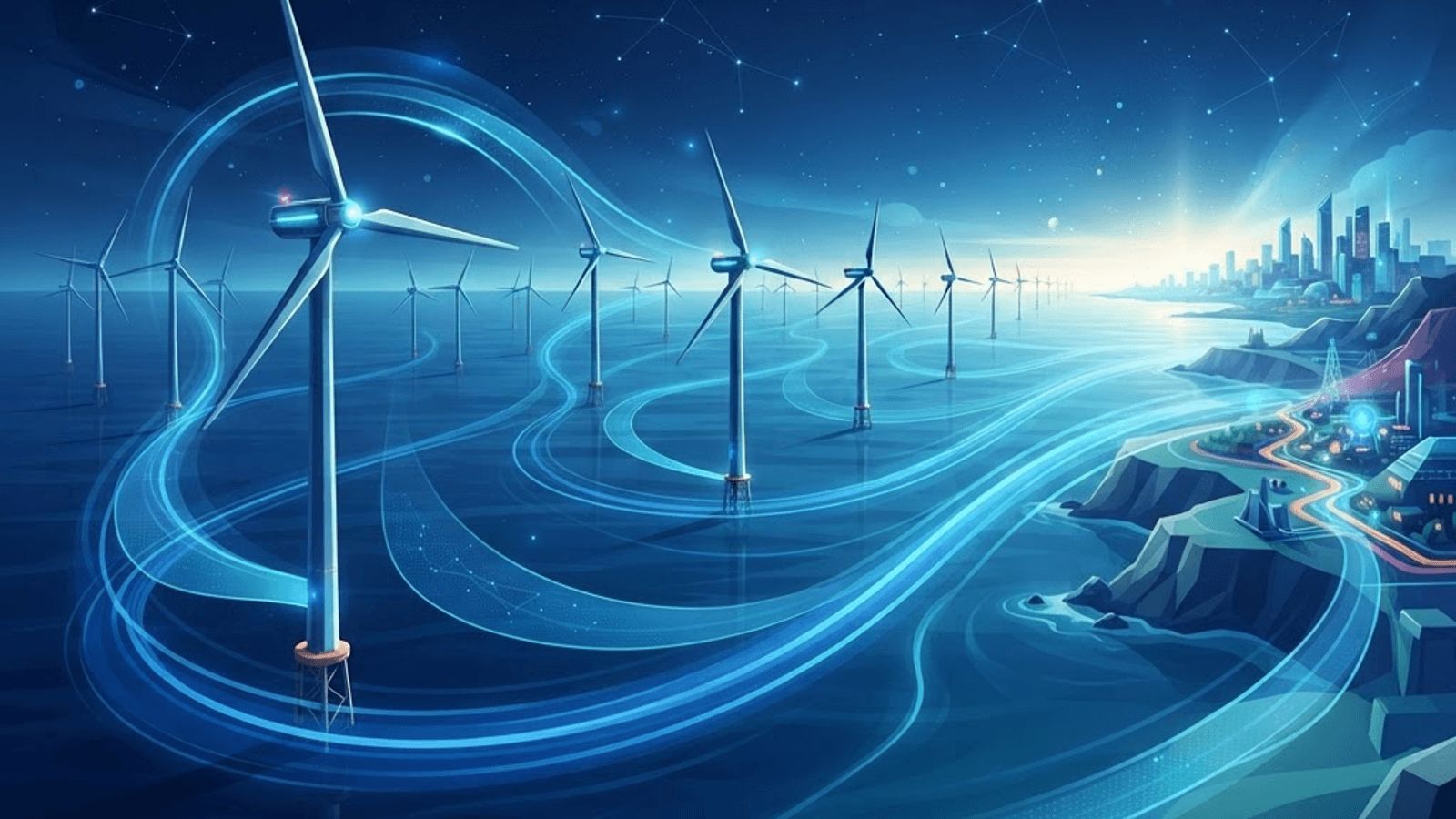
Why Wind Energy Matters to East Lothian
Scotland's wind resource is among the best in Europe, and East Lothian sits at a particularly significant point in the network. The Firth of Forth hosts substantial offshore wind development, the county's coastline provides the landfall and grid connection infrastructure that carries that power into the national transmission system, and its inland farmland supports smaller onshore turbines serving agricultural businesses and communities.
The redevelopment of the former Cockenzie power station site as a grid connection hub marked a symbolic turning point. Where coal-fired generation once dominated the skyline, the same transmission capacity now serves offshore renewables. That continuity of infrastructure, combined with skilled local engineering labour and established supply chain relationships, gives the area a structural advantage in the energy transition.
Offshore, Onshore and Small-Scale Wind
Offshore wind operates at the largest scale, with fixed-bottom turbines installed in the outer Forth and wider North Sea, each capable of generating power for thousands of homes. These projects involve long development timelines, substantial capital investment, seabed leasing, environmental assessment and complex grid connection arrangements.
Onshore wind ranges from multi-turbine farms to single turbines on agricultural holdings. In East Lothian, landscape sensitivity and proximity to designated areas mean onshore development tends towards smaller, carefully sited schemes rather than large arrays.
Small and medium-scale wind serves individual farms and businesses, offsetting on-site electricity demand for grain drying, refrigeration, workshops and irrigation. These installations rarely attract attention but collectively contribute meaningfully to rural decarbonisation.
Leading Wind Energy Companies Connected to East Lothian
SSE Renewables is a dominant force in Scottish wind, operating extensive onshore portfolios and developing major offshore projects, with substantial engineering and operational presence in the east of Scotland.
Red Rock Power holds significant interests in Forth estuary offshore wind and has been an important investor in bringing large-scale generation capacity to the region.
ScottishPower Renewables combines wind generation with the network investment needed to deliver that power, making it one of the most influential organisations in the Scottish energy landscape.
Vattenfall contributes international offshore engineering experience and is recognised for structured community benefit and local supply chain commitments.
EDF Renewables develops and operates onshore wind and storage projects across Scotland, with experience integrating generation and battery assets at single sites.
Banks Renewables focuses on onshore wind with a distinctive emphasis on community shared ownership, allowing local people to invest directly in nearby generation.
Statkraft brings expertise in renewable generation and grid stability services, including technologies that help maintain network resilience as conventional plant retires.
Natural Power provides consultancy, environmental assessment, resource measurement and asset management services that underpin wind development across the region.
Global Energy Group supports fabrication, assembly and marine logistics for offshore wind, contributing to the Scottish supply chain that serves Forth projects.
Community Energy Scotland assists locally owned turbine projects, helping community organisations develop, finance and operate generation assets that fund local initiatives.
Economic and Community Impact
Wind development brings more than electricity. Offshore projects generate construction employment, port activity, vessel operations and long-term operations and maintenance roles, many of which are skilled and well paid. Onshore schemes typically provide community benefit funds that support local halls, sports facilities, energy efficiency projects and youth activities. Landowners hosting turbines receive lease income that can stabilise farm finances against volatile commodity prices.
There is also a skills dimension. Wind turbine technicians, electrical engineers, marine coordinators and environmental specialists are in sustained demand, and colleges across the Lothians have expanded technical training provision in response.
Challenges and Considerations
Wind development is not without friction. Visual and landscape impact remains the most common objection to onshore proposals, particularly near the county's scenic coastline and historic settings. Ornithological assessment is significant given the internationally important bird populations using the Forth estuary. Grid capacity constrains how quickly new generation can connect, and transmission charging arrangements affect project economics in Scotland specifically. Offshore construction is weather dependent and logistically demanding, and supply chain pressures for turbines, cables and installation vessels have affected timelines across the industry.
Noise and shadow flicker are addressed through separation distances and planning conditions, and modern turbine design has substantially reduced both compared with earlier generations of machines.
How Landowners and Businesses Should Approach Wind
For an agricultural business considering a turbine, the starting point is an honest wind resource assessment rather than optimistic assumptions. Site access for delivery and craneage, proximity to a grid connection point, planning constraints and noise separation distances all shape feasibility. Lease terms with a developer should be reviewed by a solicitor experienced in rural energy agreements, with careful attention to decommissioning obligations, rent review mechanisms and restrictions on future land use.
Businesses seeking to buy wind-generated power rather than host it should examine power purchase agreements, which can provide long-term price certainty and verifiable renewable credentials.
Final Thoughts
Wind energy is reshaping East Lothian's economy as well as its coastline. The combination of exceptional offshore resource, inherited grid infrastructure and a skilled regional workforce places the county at the centre of Scotland's generation future. For communities, landowners and businesses, engaging early with experienced developers and advisers is the most effective way to translate that national opportunity into local benefit.
Want your brand featured in front of decision-makers? Publish a guest post or get a link insertion in our guides through AAMAX's guest post and link insertion service.
Helpful Links
 SponsoredAAMAX — Full-Service Digital Agency
Write for Us
Share your expertise with our readers. We welcome guest contributions from industry specialists.
Pitch your idea