

Wind Energy and the Lincolnshire Coast
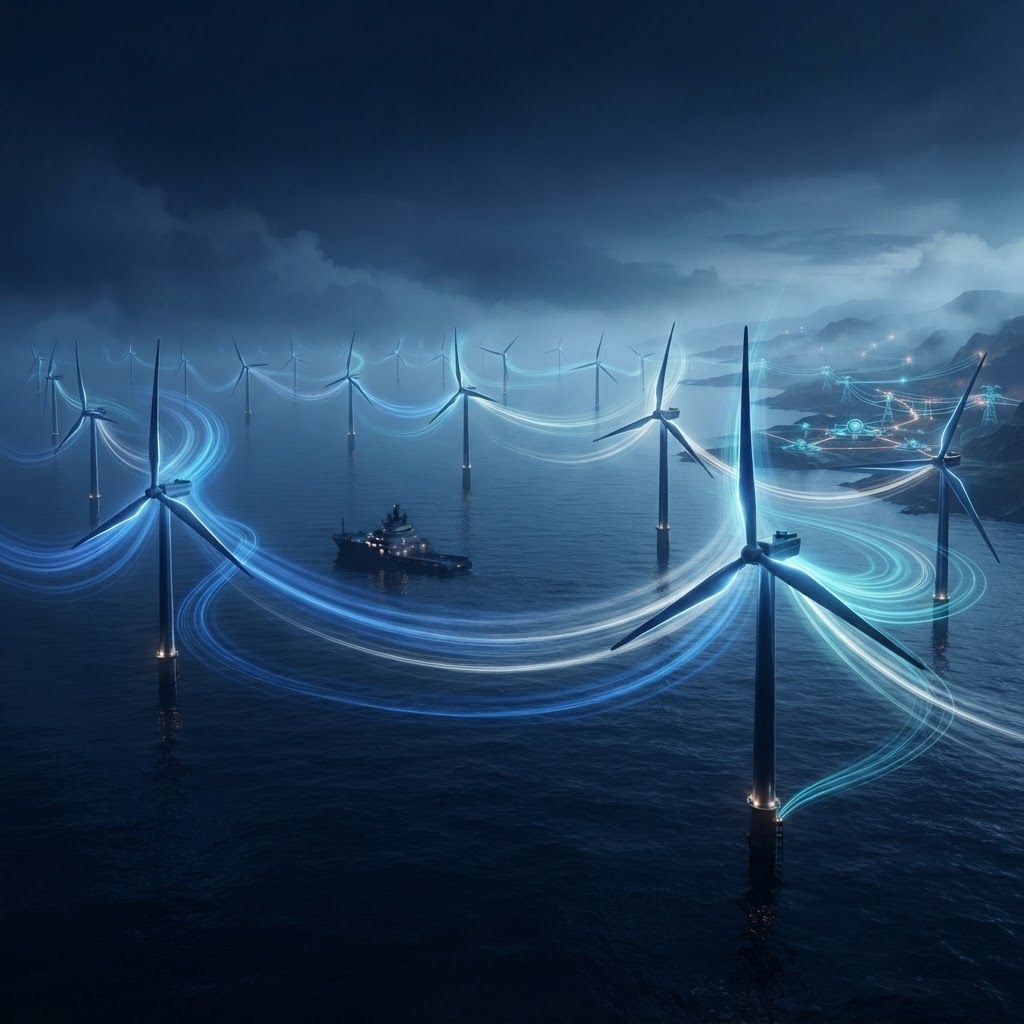
The southern North Sea off the Lincolnshire coast has become one of the most significant offshore wind regions globally. Large arrays situated within reach of the East Lindsey coastline generate substantial capacity, and the cables bringing that power ashore cross the district to reach inland substations and the national transmission network.
This has produced tangible local economic effects. Construction phases require civil engineering, cable installation, substation building and logistics support. Operational phases create long-term technician, vessel crew, warehousing and administrative employment. Around these primary activities sits a wider ecosystem of training providers, engineering suppliers, environmental consultants and accommodation providers.
Onshore wind also features in the district, though at smaller scale and subject to greater planning constraint. Single turbines on farms and small clusters contribute to local generation and provide diversification income for landowners.
How Modern Wind Generation Works
A wind turbine converts kinetic energy in moving air into rotational energy, which drives a generator either directly or through a gearbox. Output rises sharply with wind speed, which is why turbine height and siting matter so much: wind speeds increase with elevation and are less disturbed by ground obstacles.
Modern offshore turbines are substantially larger than those installed a decade ago, with longer blades and higher capacity ratings, meaning fewer units generate more power. Foundations vary by seabed conditions, with monopiles common in the relatively shallow southern North Sea, and floating platforms emerging for deeper waters elsewhere.
Power is collected through inter-array cables to an offshore substation, transmitted to shore via export cables, then converted and connected to the onshore network. Each stage requires specialist engineering and ongoing maintenance.
Ten Wind Energy Companies Serving East Lindsey
1. Coastal Wind Services delivers operations and maintenance for offshore and onshore assets, including blade repair, mechanical servicing and condition monitoring.
2. Lindsey Offshore Logistics supports project construction and operations with crew transfer coordination, warehousing, component handling and port-side services.
3. Wolds Turbine Engineering focuses on onshore turbines, providing installation, servicing, gearbox and generator overhaul, and end-of-life repowering assessments.
4. Marshside Cable and Civils undertakes cable route civil works, trenching, ducting, jointing bays and reinstatement across agricultural land along export corridors.
5. Trinity Wind Development handles project origination for onshore schemes, covering wind resource assessment, landowner agreements, planning strategy and grid feasibility.
6. Sandhill Environmental Consultancy provides the ornithological, ecological, noise, shadow flicker and landscape assessments required for wind planning applications.
7. Louth Electrical Infrastructure constructs and maintains substations, switchgear and high voltage connections associated with wind generation.
8. Fenland Renewable Training delivers safety and technical training including working at height, sea survival, first aid and electrical competence for the offshore workforce.
9. Horncastle Wind Asset Management offers commercial and technical asset management for operating turbines, covering performance optimisation, contract administration and reporting.
10. Alford Community Wind supports community-scale schemes and shared ownership arrangements, ensuring local benefit funds are established and distributed effectively.
Opportunities for Landowners
Landowners in East Lindsey encounter wind energy in several ways. Some host turbines directly, receiving rent based on capacity or a share of generation revenue. Many more are affected by cable corridors, where developers seek easements or wayleaves to lay export cables across agricultural land.
Cable agreements deserve close attention. Key issues include the width of the working corridor during construction, the timing of works relative to cropping cycles, soil handling and reinstatement standards, compensation for crop loss and land disturbance, drainage reinstatement, and permanent restrictions on future building or deep cultivation over the cable route.
Professional representation by an agricultural land agent alongside legal advice is strongly advisable, as compensation frameworks and reinstatement standards are negotiable and the long-term impact on the holding is significant.
Careers in the Wind Sector
Wind energy offers genuinely attractive career paths for people in East Lindsey. Technician roles combine mechanical, electrical and hydraulic skills with working at height and, offshore, marine operations. Entry typically requires a relevant apprenticeship or engineering qualification plus industry safety certification.
Beyond technicians, the sector employs project managers, health and safety professionals, marine coordinators, environmental specialists, data analysts monitoring turbine performance, and commercial staff managing power sales and contracts.
Regional colleges and dedicated training centres have developed provision aligned to industry standards, and several operators run structured apprenticeship programmes recruiting locally.
Challenges and Considerations
Planning remains the principal constraint for onshore wind, with visual impact in and around the Lincolnshire Wolds National Landscape, noise, shadow flicker and ornithological considerations all requiring careful assessment.
Grid capacity constrains new connections, and reinforcement timescales can delay projects considerably. Supply chain pressures for turbines, vessels and specialist labour have also affected project economics in recent years.
For coastal communities, the balance between economic opportunity and landscape and seascape change continues to generate legitimate debate, and effective community engagement remains an important part of successful project delivery.
Looking Ahead
Offshore capacity in the southern North Sea is expected to continue expanding, with associated onshore infrastructure and repowering of earlier arrays adding further work. For East Lindsey, the practical question is how much of that value is captured locally through skills development, supply chain participation and community benefit arrangements rather than flowing entirely to external contractors.
Want your brand featured in front of decision-makers? Publish a guest post or get a link insertion in our guides through AAMAX's guest post and link insertion service.
Helpful Links
 SponsoredAAMAX — Full-Service Digital Agency
Write for Us
Share your expertise with our readers. We welcome guest contributions from industry specialists.
Pitch your idea

