

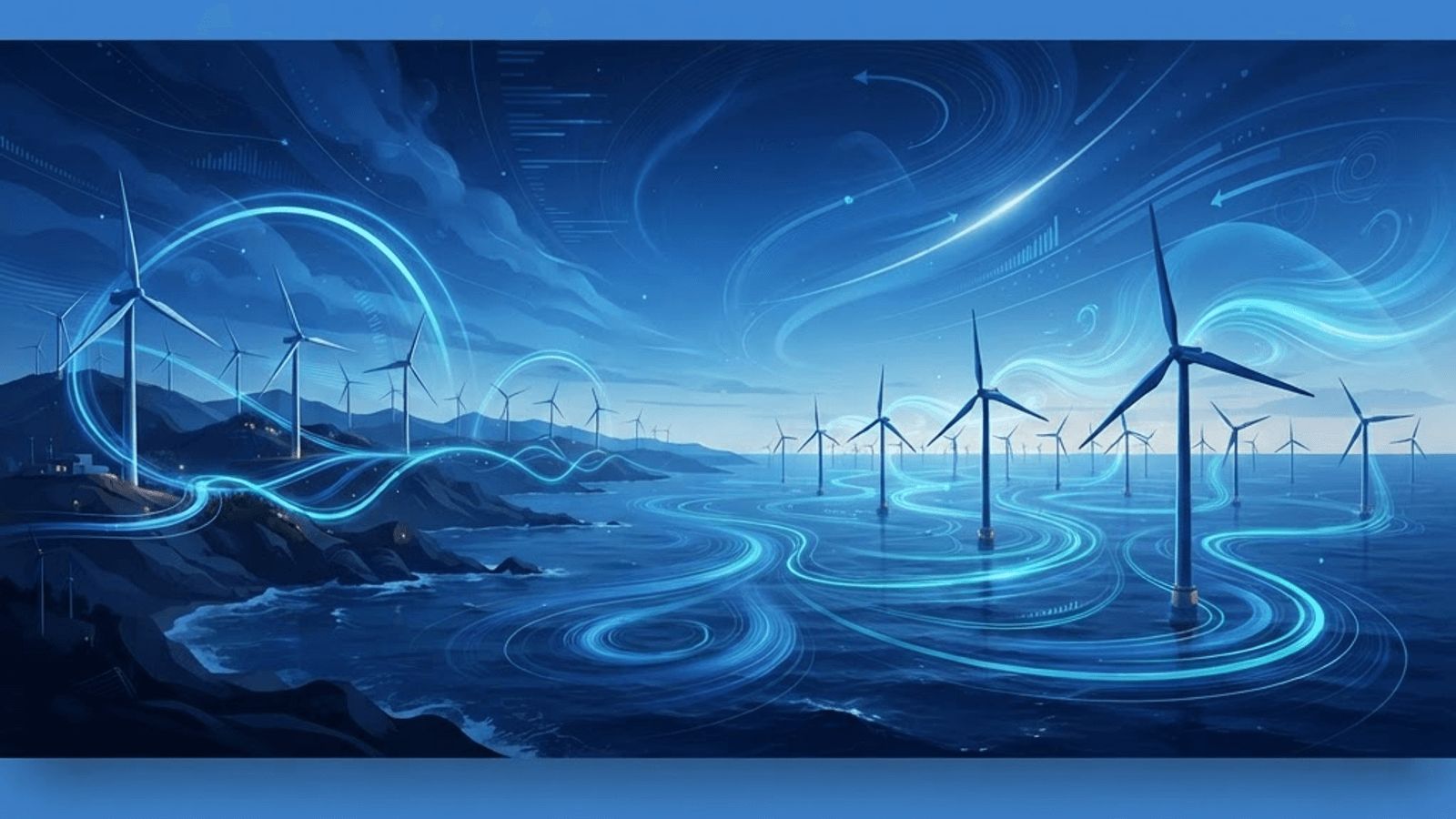
Wind Energy and the Chichester Context
Wind is the United Kingdom's largest source of renewable electricity, and while Chichester is not a location of large onshore wind farms, the district sits within a region deeply connected to the wind industry. The Solent corridor has developed substantial offshore wind supply chain capability, with marine engineering, vessel operations, cable expertise, blade composites and port infrastructure all present within reach. The exposed coastline and harbour area offer genuine wind resource, and small to medium scale turbines appear on agricultural and industrial sites across West Sussex.
Landscape designation is the defining constraint. The South Downs National Park covers much of the northern part of the district and Chichester Harbour is an Area of Outstanding Natural Beauty. Both apply stringent tests to visually prominent development, which has effectively ruled out large onshore turbine arrays. Development attention has therefore focused on offshore projects further out in the Channel, on smaller behind-the-meter installations, and on the manufacturing and services side of the industry.
How Wind Technology Has Evolved
Modern turbines bear little resemblance to those installed twenty years ago. Rotor diameters have increased dramatically, allowing generation at lower wind speeds and delivering far higher capacity factors. Offshore machines now reach scales that were considered theoretical a decade ago, and floating foundation technology is opening water depths previously inaccessible to fixed structures.
For smaller installations, the picture is different. Small wind turbines suit exposed rural sites with genuinely strong average wind speeds, and are generally unsuitable in built-up or sheltered locations where turbulence undermines performance. Honest assessment matters enormously here, and a reputable supplier will advise against installation where the resource does not support it. For many Chichester properties, solar delivers better returns than small wind, and good advisers say so.
Hybrid approaches are increasingly common at commercial scale, combining wind with solar and battery storage to smooth output across daily and seasonal cycles and make better use of a constrained grid connection.
Wind Energy Companies and Services Relevant to the Area
RWE Renewables operates significant offshore wind capacity serving the South Coast region and is among the most established developers in UK waters.
Ørsted is a major offshore wind developer and operator whose projects and supply chain relationships extend into the southern English marine services sector.
EDF Renewables develops and operates wind and hybrid renewable projects across the United Kingdom, including onshore and storage assets in southern England.
Vattenfall has an established UK onshore and offshore wind portfolio and engages extensively with regional supply chains.
Solent-based marine and offshore engineering firms provide vessel support, survey, subsea cable and installation services to offshore wind projects, forming an important part of the regional industry.
Composite and precision engineering businesses in West Sussex supply components, tooling and testing services relevant to turbine manufacture, drawing on the region's aerospace heritage.
Small wind turbine specialists serving Sussex design and install machines for farms, estates and off-grid applications where site conditions justify them.
Renewable energy consultancies operating in the Chichester district provide wind resource assessment, feasibility studies, planning support and environmental impact work.
Grid connection and electrical contracting firms across the South Coast handle the network infrastructure that any wind project ultimately depends upon.
Operations and maintenance providers for renewable assets in the South deliver inspection, blade repair, gearbox servicing and condition monitoring across regional installations.
Assessing a Wind Project
Wind resource assessment is the foundation. Output varies with the cube of wind speed, meaning a modest difference in average speed produces a large difference in energy yield. Desk-based estimates should always be validated with site-specific measurement for anything beyond the smallest installation, ideally over a full annual cycle to capture seasonal variation.
Planning is the next hurdle. Onshore proposals require assessment of landscape and visual impact, noise, shadow flicker, ecology with particular attention to bats and birds, aviation and radar consultation, and heritage setting. Within or near the National Park and AONB, the bar is high. Early pre-application engagement is essential.
Grid connection follows. Distribution network capacity in parts of the South East is constrained, and connection offers can involve significant cost and long timescales. Flexible connection arrangements, where output is curtailed at times of network stress in exchange for faster or cheaper connection, are increasingly common.
Landowner Opportunities
For agricultural landowners in West Sussex, wind development can provide diversified income through land rent or shared ownership, though the planning constraints mean solar and battery storage are more frequently viable locally. Any landowner approached by a developer should take independent professional advice before signing exclusivity or option agreements, as these can tie up land for extended periods on terms that are difficult to revisit.
Community benefit arrangements are now standard practice for larger schemes, providing funds for local projects. Shared ownership models allow residents to invest directly, and community energy organisations in Sussex have experience structuring these.
The Outlook for Wind in the Region
Offshore development in the Channel and wider southern waters will continue to expand, with floating technology extending the viable area considerably. That growth will draw further on Solent and Sussex engineering, marine services and skills. Onshore, the emphasis locally will remain on small-scale, well-sited installations and on hybrid projects combining generation with storage.
For Chichester businesses and landowners, the practical takeaway is to assess honestly, engage early with planners and network operators, and consider wind as one element of a broader energy strategy rather than in isolation. Where the resource genuinely supports it, wind remains among the most cost-effective forms of generation available.
Want your brand featured in front of decision-makers? Publish a guest post or get a link insertion in our guides through AAMAX's guest post and link insertion service.
Helpful Links
 SponsoredAAMAX — Full-Service Digital Agency
Write for Us
Share your expertise with our readers. We welcome guest contributions from industry specialists.
Pitch your idea

