

Wind Energy and the Ashfield Supply Chain
Wind power occupies a distinctive position in Ashfield's energy landscape. Unlike solar, which is installed directly on thousands of local rooftops, wind generation operates predominantly at medium and large scale in the surrounding Nottinghamshire countryside and, more significantly, at offshore sites along the east coast. Ashfield's contribution is therefore less about hosting turbines and more about supplying the engineering, fabrication, maintenance and consultancy capability that the wind sector requires.
This is a natural fit. The district retains a strong base of precision engineering, heavy fabrication, gearbox and bearing expertise, electrical contracting and industrial maintenance capability, much of it originally developed to serve mining and manufacturing. Those same competencies transfer effectively to turbine components, tower sections, drivetrain servicing and grid connection infrastructure.
The Services Wind Energy Companies Provide
Project development and feasibility covers wind resource assessment, site selection, environmental impact assessment, noise and shadow flicker modelling, planning applications and community consultation. Onshore wind in England faces a demanding planning environment, making expert development support particularly valuable.
Engineering and fabrication encompasses tower sections, nacelle components, hub castings, bolting systems, access platforms and specialist lifting equipment. Several firms in and around the district supply into this chain, often as subcontractors to major turbine manufacturers.
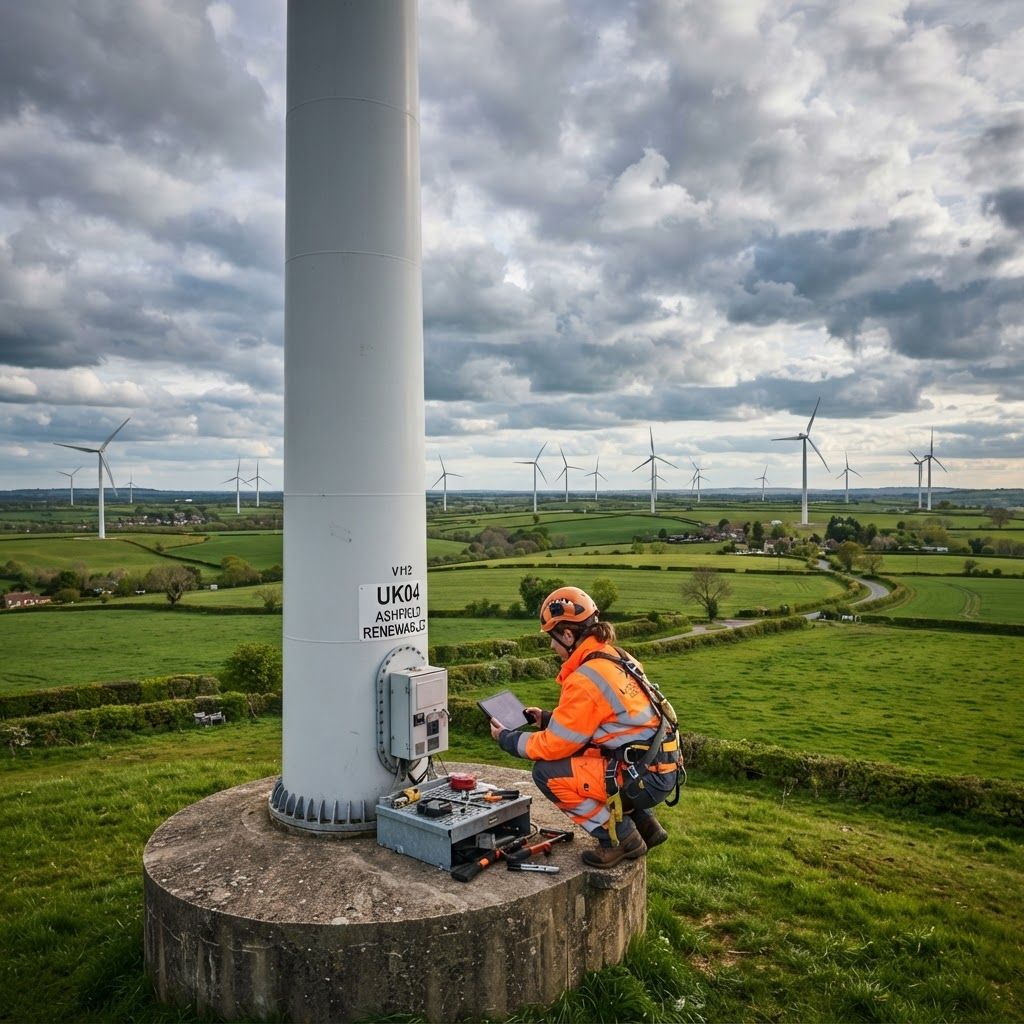
Operations and maintenance represents the largest ongoing service market. Turbines require scheduled servicing, blade inspection and repair, gearbox and generator maintenance, hydraulic and braking system work, and condition monitoring. Technicians working in this field need specialist rope access and working-at-height qualifications alongside mechanical and electrical skills.
Electrical and grid infrastructure covers substations, transformers, cabling, switchgear, protection systems and connection agreements. This is a critical constraint area, as grid capacity frequently determines whether a project proceeds.
Small and medium wind installation serves farms, industrial sites and rural businesses where a single turbine can offset substantial on-site consumption. Careful assessment is essential here, as wind resource varies dramatically with local topography and obstructions.
Consultancy and energy strategy helps organisations evaluate wind as part of a broader procurement approach, including corporate power purchase agreements that allow businesses to buy wind-generated electricity directly from a specific project.
What Distinguishes the Leading Wind Energy Companies
Safety culture is the defining characteristic in this sector. Wind work involves confined spaces, working at considerable height, heavy lifting and high-voltage systems. The best companies hold recognised safety certification, maintain documented training records and demonstrate strong incident performance. This is not a peripheral consideration but the primary qualifier for working with major operators.
Certified technical competence follows closely. Industry-recognised training standards for turbine technicians, alongside electrical and mechanical qualifications and rope access certification, are prerequisites for site access.
Realistic resource assessment is essential for smaller projects. Wind speed varies as roughly the cube of its value in terms of energy output, meaning modest differences in average wind speed produce very large differences in generation. Companies that insist on proper measurement rather than relying on generalised wind maps protect clients from disappointing outcomes.
Planning expertise genuinely differentiates developers. Onshore wind consent requires careful handling of landscape and visual impact, noise assessment, ecology surveys including bat and bird activity, heritage considerations and community engagement. Experience with comparable applications materially improves prospects.
Long-term service capability matters because turbines operate for decades. Companies offering comprehensive service agreements, spare parts availability and remote monitoring provide the operational certainty that asset owners require.
Trends in Wind Energy
Several developments are influencing the sector. Turbine scaling continues, with larger rotors and higher hub heights capturing more energy from the same site. This improves project economics but increases planning sensitivity onshore.
Repowering of older sites is becoming significant, replacing early-generation turbines with fewer, larger and far more productive machines. This generates substantial engineering and decommissioning work.
Blade repair and recycling has emerged as a priority. Composite blades are difficult to recycle, and companies developing repair techniques that extend blade life or recovery processes for end-of-life material are attracting considerable interest.
Hybrid projects combining wind, solar and battery storage at a single grid connection point make far more efficient use of scarce network capacity and are increasingly the preferred development model.
Digital condition monitoring using vibration analysis, oil monitoring and performance analytics allows predictive maintenance, reducing unplanned downtime and extending component life.
Considerations for Businesses and Landowners
If you own land or a site with potential, begin with a realistic wind resource assessment rather than assuming viability. Terrain, surrounding buildings and tree cover have substantial effects.
Investigate grid connection early. Connection capacity and cost frequently determine project feasibility more decisively than wind resource or planning.
Understand the planning pathway and engage with the community from the outset. Projects that consult genuinely and early face considerably less opposition.
Consider alternative routes to wind energy. Corporate power purchase agreements allow businesses to secure wind-generated electricity at predictable prices without developing anything themselves, which suits most commercial users better than direct ownership.
Evaluate maintenance commitments honestly. Turbines are complex rotating machinery requiring ongoing professional servicing, and this cost must be included in any financial model.
The Outlook
Wind energy will remain central to national decarbonisation, and the supply chain opportunity for Ashfield's engineering businesses is substantial. Companies that invest in certified technician training, safety systems and specialist fabrication capability are well placed to capture work from both onshore projects across the Midlands and offshore developments accessible from the east coast.
Want your brand featured in front of decision-makers? Publish a guest post or get a link insertion in our guides through AAMAX's guest post and link insertion service.
Helpful Links
 SponsoredAAMAX — Full-Service Digital Agency
Write for Us
Share your expertise with our readers. We welcome guest contributions from industry specialists.
Pitch your idea

