

Why Warehousing Concentrates in South Derbyshire
Warehousing follows a simple logic: minimise the total cost of serving customers. For businesses distributing nationally within Britain, the mathematically optimal location sits in the Midlands, and South Derbyshire falls squarely within that zone. From here, a standard driving shift reaches the overwhelming majority of the UK population, which means fewer vehicles, lower mileage and faster delivery promises.
The district adds further advantages. The A38 and A50 provide fast links to the M1, M6 and M42. East Midlands Airport is minutes away for air freight integration. Industrial land and rents remain lower than in the South East. And the local labour market has deep experience in distribution, manufacturing and logistics operations.
The result is a substantial concentration of warehousing across the district and its immediate surroundings, ranging from vast purpose-built distribution centres to small multi-occupancy industrial units.
Types of Warehousing Service
Dedicated warehousing gives a client exclusive use of a building or defined area, with staff, systems and equipment configured entirely around their requirements. It offers maximum control and is appropriate for large, stable volumes.
Shared-user warehousing houses multiple clients within one facility, sharing space, labour and equipment. Costs are variable rather than fixed, which suits seasonal businesses and those whose volumes fluctuate or are still growing.
Bonded warehousing stores goods before customs duty is paid, allowing importers to defer duty until goods leave the warehouse, or avoid it entirely if goods are re-exported. This delivers genuine cash flow benefits for importers.
Temperature-controlled warehousing serves food, drink and pharmaceutical clients with chilled, frozen or climate-controlled environments and the monitoring and validation those sectors require.
Ecommerce fulfilment centres specialise in high-volume single-item picking, packing and dispatch, with integration to online sales platforms and returns processing built in.
Self-storage and small business storage provides flexible space from a few square metres upward, serving tradespeople, ecommerce startups and businesses needing overflow capacity.
Ten Warehousing Providers Serving the District
DHL Supply Chain operates major warehousing facilities across the East Midlands, delivering contract logistics with sophisticated warehouse management systems, automation and industry-specific expertise across retail, automotive and healthcare.
GXO Logistics focuses on contract warehousing with a strong emphasis on automation, deploying robotics, goods-to-person systems and advanced software to achieve high throughput and accuracy for demanding ecommerce and retail clients.
Wincanton combines warehousing with transport across construction, grocery and general merchandise sectors, offering both dedicated and shared-user solutions and long experience of UK retail supply chains.
XPO Logistics provides warehousing closely integrated with its transport network, with particular depth in automotive and industrial supply chains that match the district's manufacturing base.
Culina Group specialises in chilled and ambient food and drink storage, which aligns naturally with the brewing and food production heritage around Burton upon Trent, and offers the temperature integrity and retail compliance those sectors demand.
Great Bear Distribution delivers shared-user and dedicated warehousing for fast-moving consumer goods clients, giving mid-sized brands access to national distribution infrastructure they could not build alone.
Independent third-party logistics warehouses around Swadlincote, Burton and Derby form a valuable regional tier. These operators offer pallet storage, pick and pack, and local distribution with flexible contracts and responsive account management that suits growing businesses.
Bonded and customs warehouse operators in the East Midlands serve importers wanting duty deferral, offering approved storage, inventory control to customs standards and clearance support.
Self-storage operators across the district provide accessible, flexible space for small businesses, with individual units, drive-up access, extended opening hours and short contract terms that larger providers cannot match.
Ecommerce fulfilment specialists in the Midlands handle direct-to-consumer order processing, integrating with online store platforms and marketplaces, managing late dispatch cut-offs and returns, and scaling through seasonal peaks.
Choosing the Right Warehouse Partner
Begin with a precise specification. Pallet volumes, stock keeping unit count, order profile, picking type, seasonality, storage conditions and required service levels all determine which providers are genuinely suitable. Providers cannot price accurately without this information, and vague briefs produce unreliable quotes.
Examine the building itself. Eaves height determines racking capacity and therefore cost per pallet. Loading dock numbers and configuration affect vehicle turnaround. Floor loading, sprinkler provision and fire compartmentation determine what can be stored and how high. Yard space governs trailer parking and manoeuvring.
Assess the warehouse management system carefully. Real-time stock visibility, accurate location control, batch and expiry tracking where relevant, and reliable integration with your own systems are not optional extras in modern operations.
Review accreditations relevant to your sector, including quality management, food safety, pharmaceutical standards and security certifications. These matter both for compliance and for your own customers' audits.
Finally, understand the commercial structure. Storage charges per pallet per week, handling charges per pallet in and out, pick charges per line and minimum volume commitments all combine into the real cost. Model the total against realistic volumes rather than comparing headline rates.
Trends Reshaping Warehousing
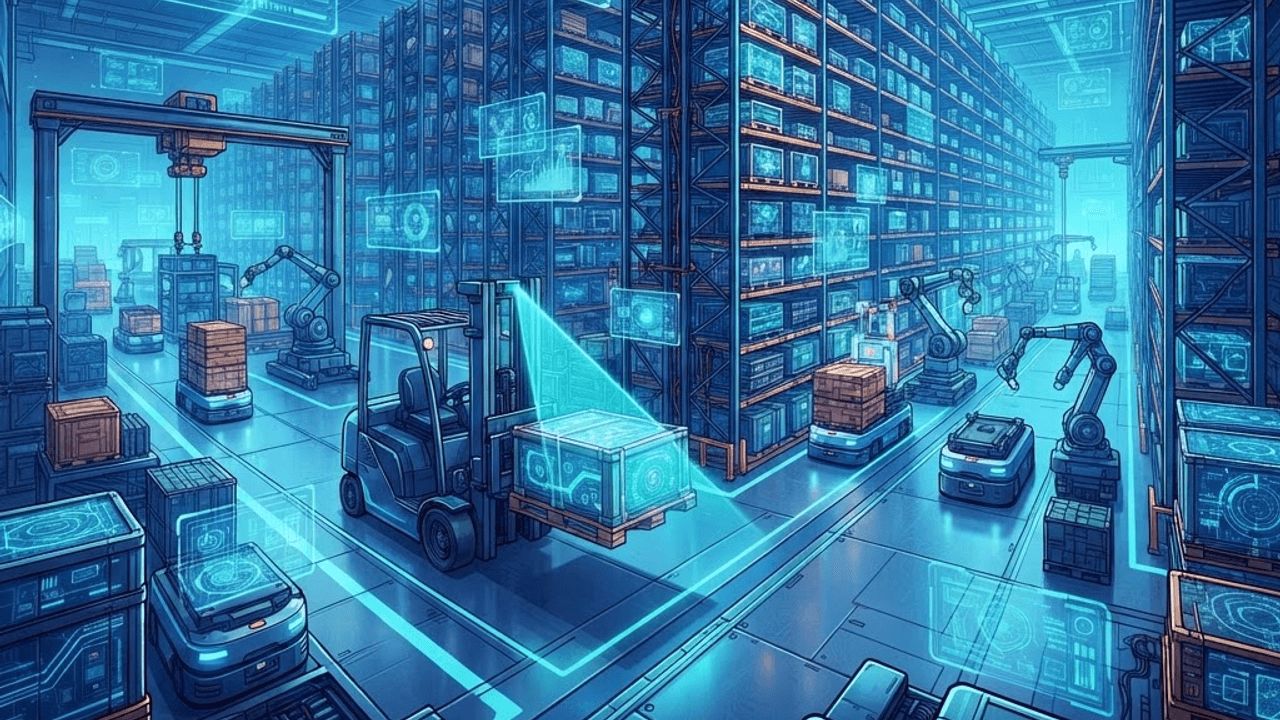
Automation has moved decisively into the mainstream. Labour cost and availability have pushed operators towards robotic picking, automated storage and retrieval, and sortation systems. The productivity gains are substantial, though the capital intensity favours providers with scale and long contracts.
Sustainability is now central to facility design. New warehouses in the region commonly feature solar generation, rainwater harvesting, high-efficiency lighting, electric vehicle charging and high environmental certification ratings. Occupiers increasingly require this to meet their own reporting obligations.
Space availability has tightened considerably as ecommerce growth absorbed capacity across the Midlands, pushing rents upward and lengthening lead times for finding suitable space. Planning ahead has become essential rather than prudent.
Inventory strategy has shifted from pure lean towards resilience, with businesses holding more buffer stock after recent supply disruptions, which further increases demand for storage.
Final Thoughts
South Derbyshire offers some of the best warehousing infrastructure in the country, from highly automated contract logistics operations to flexible independent providers and self-storage for the smallest businesses. Specify requirements precisely, evaluate the physical building as carefully as the commercial terms, and choose a partner whose scale and systems genuinely match your operation rather than simply the largest available name.
Want your brand featured in front of decision-makers? Publish a guest post or get a link insertion in our guides through AAMAX's guest post and link insertion service.
Helpful Links
 SponsoredAAMAX — Full-Service Digital Agency
Write for Us
Share your expertise with our readers. We welcome guest contributions from industry specialists.
Pitch your idea

