

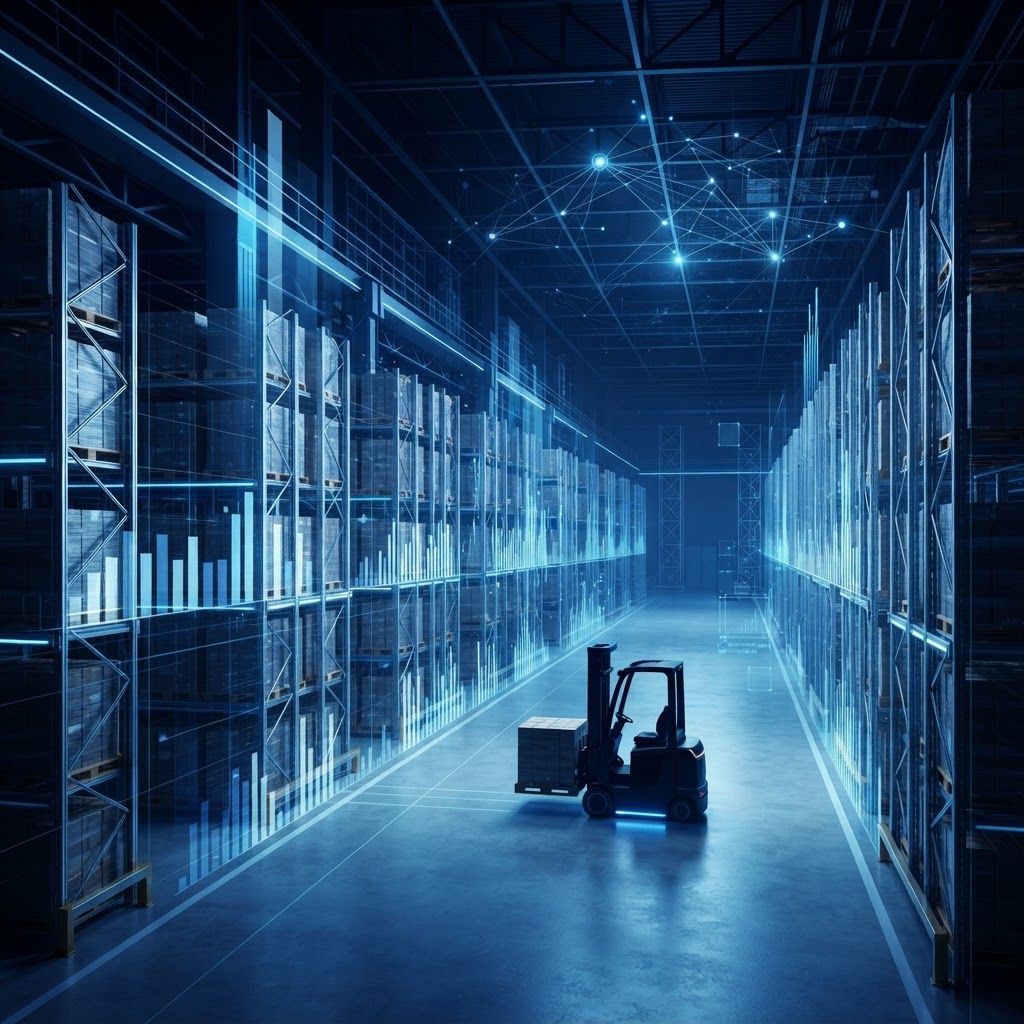
Eastleigh as a Warehousing Location
Warehousing is fundamentally a question of geography, and Eastleigh's geography is excellent. The town sits within a short drive of Southampton's container terminals, which means import containers can be unloaded and stored inland without the cost and congestion of port-side facilities. The M27 provides rapid east-west movement across the south coast, while the M3 gives direct access towards London and the national network. Southampton Airport supports urgent air freight movements, and rail freight capacity through the region adds a lower-carbon option for suitable flows.
The practical consequence is a strong cluster of warehousing and distribution operations across Eastleigh, Hedge End, Nursling and the wider Solent industrial belt, serving importers, manufacturers, retailers and fast-growing e-commerce brands.
Types of Warehousing Service
Warehousing is no longer simply about renting space. Public warehousing offers shared facilities charged by pallet and by handling movement, which suits variable volumes. Contract logistics involves a dedicated facility or ring-fenced area operated to a client's specific processes, appropriate for stable, substantial volumes. Third-party fulfilment focuses on pick-and-pack for online retail, integrating directly with e-commerce platforms and carrier networks.
Specialist categories add further complexity. Bonded warehousing allows imported goods to be stored without immediate payment of duty and VAT, a significant cash-flow advantage for importers. Temperature-controlled storage serves food, pharmaceutical and cosmetic products. Hazardous goods storage requires specific licensing, segregation and fire suppression arrangements.
The Top 10 Warehousing Companies Serving Eastleigh
1. Meachers Global Logistics. A cornerstone of Solent logistics, Meachers operates substantial warehousing capacity near Southampton alongside freight forwarding and customs services. Its combination of local ownership and full-service capability makes it a frequent first call for regional importers.
2. DHL Supply Chain. Bringing global contract logistics expertise, DHL offers highly systemised operations with strong warehouse management technology, suited to larger clients requiring rigorous KPI reporting and continuous improvement programmes.
3. Kuehne+Nagel Contract Logistics. Well matched to businesses that already use the group for freight, Kuehne+Nagel provides integrated storage and distribution with particular strength in aerospace, industrial and consumer goods sectors.
4. GXO Logistics. A pure-play contract logistics specialist, GXO invests heavily in warehouse automation including robotics and goods-to-person systems. It appeals to high-throughput retail and e-commerce operations where labour productivity is the dominant cost driver.
5. Wincanton. With deep UK retail and construction experience, Wincanton offers flexible shared-user and dedicated warehousing, plus transport integration that removes the friction of coordinating separate storage and haulage suppliers.
6. Yusen Logistics. Strong in ocean freight and automotive supply chains, Yusen combines bonded warehousing with value-added services such as kitting, labelling and quality inspection.
7. Solent Stevedores and port-centric operators. Facilities operating close to the port provide quayside and near-dock storage, ideal for high-volume importers who want to minimise drayage costs and turn containers quickly.
8. James Kemball and container logistics providers. These operators combine container haulage with storage and devanning services, useful for businesses handling regular full-container imports that need unpacking and palletising.
9. Regional self-storage and business storage providers. For small businesses, market traders and start-ups, flexible business storage units around Eastleigh offer month-to-month terms without the commitments of formal warehousing contracts.
10. Independent Hampshire third-party fulfilment specialists. A number of smaller 3PL providers in the area focus specifically on e-commerce fulfilment, offering platform integrations, same-day despatch cut-offs and returns processing at volumes larger operators consider too small.
Trends Reshaping Warehousing
Automation is advancing steadily, though not uniformly. Full robotic systems remain the preserve of very high-volume operations, but semi-automated solutions such as pick-to-light, autonomous mobile robots and automated packaging machines are now common at mid-scale sites. These deliver accuracy gains and reduce dependence on a tight regional labour market.
Data visibility has become a core requirement. Clients expect live stock levels, order status and despatch confirmation through APIs into their own systems rather than emailed spreadsheets. A warehouse management system's integration capability is now as important as the building itself.
Sustainability is influencing site selection and design. Solar installations on large roof spans, LED lighting, electric yard equipment and rainwater harvesting are increasingly standard in newer facilities. Some occupiers now specify minimum environmental accreditation when tendering.
Space economics have also shifted. Industrial vacancy across the south remains relatively tight, pushing rents upward and encouraging occupiers to increase racking height and improve cube utilisation rather than simply taking more floor area.
Choosing the Right Warehousing Partner
Begin by defining your profile honestly: pallet volumes, order lines per day, seasonality, product characteristics and growth expectations. A provider optimised for slow-moving bulk storage will struggle with high-frequency small-order picking, and vice versa.
Visit the site before committing. Look at housekeeping standards, racking condition, aisle discipline and how staff behave when unobserved. Ask about stock accuracy percentages and how discrepancies are investigated. Review the contract carefully for minimum volume commitments, handling charge definitions and notice periods, as these determine your flexibility far more than the headline rate.
Final Thoughts
Eastleigh's warehousing market benefits from a rare combination of port proximity, motorway access and a mature logistics labour pool. Whether you need a hundred pallet spaces or a dedicated fulfilment operation, the local options are genuinely competitive. Focus on operational fit, data integration and cultural alignment, and warehousing becomes an enabler of growth rather than a recurring source of frustration.
Want your brand featured in front of decision-makers? Publish a guest post or get a link insertion in our guides through AAMAX's guest post and link insertion service.
Helpful Links
 SponsoredAAMAX — Full-Service Digital Agency
Write for Us
Share your expertise with our readers. We welcome guest contributions from industry specialists.
Pitch your idea

