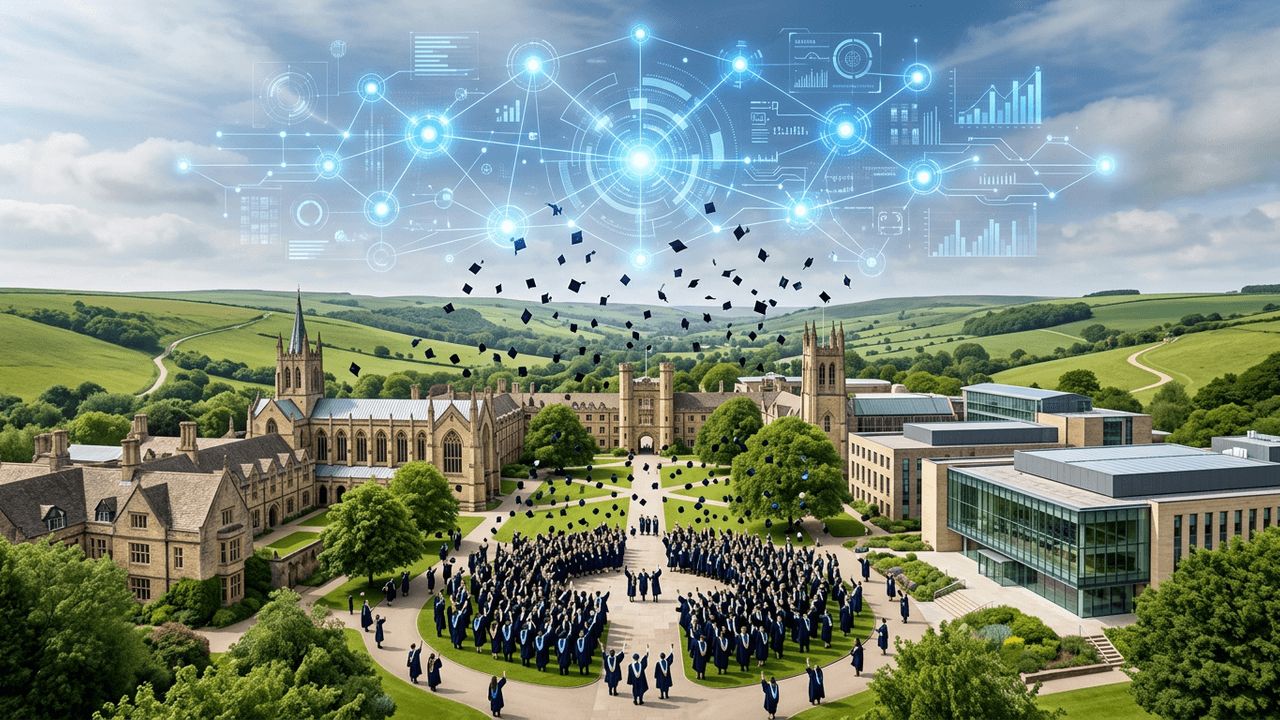
Higher Education in Highland: The Current Picture
Highland's university sector has matured into something genuinely competitive. What was once a small cluster of teaching-focused institutions now includes research universities publishing internationally, specialist medical and technology schools, and a private sector that has raised standards through competition rather than undercutting them.
Prospective students face a more complex decision than their parents did. Rankings tell part of the story but conceal enormous variation between departments within a single institution. A university ranked modestly overall may house the best engineering faculty in the region. This guide therefore focuses on institutional character and departmental strength rather than composite scores.
1. University of Highland
The University of Highland is the region's flagship and its most research-intensive institution. Founded as a comprehensive university, it maintains faculties across humanities, sciences, engineering, medicine, law and business, with genuine depth in most.
Its research profile is the strongest in the region, with particular international standing in environmental science, biomedical research and materials engineering. Doctoral supervision is well-structured, and the university attracts substantial external research funding. For undergraduates, the trade-off is scale: large first-year lectures and considerable independence expected early. Students who thrive here are self-directed. Those who need close guidance sometimes struggle in the first year before finding their footing.
2. Highland Institute of Technology
HIT is the region's premier technical university and, in engineering and computer science, arguably outperforms the flagship. Programmes in mechanical, electrical, civil, chemical and software engineering are rigorous and industrially connected. Laboratory provision is excellent, and the mandatory industrial placement year gives graduates a substantial advantage.
The institute's culture is intense and quantitative. Mathematics requirements are demanding, and attrition in the first two years is real. Students who complete the programmes are highly sought after by employers across Highland and well beyond it. The computer science faculty has grown rapidly, with strong groups in machine learning, distributed systems and security.
3. Highland Medical University
Specialist medical universities are judged on clinical training quality and licensure outcomes, and Highland Medical University performs strongly on both. Programmes span medicine, dentistry, pharmacy, physiotherapy, nursing and biomedical sciences.
Its teaching hospital affiliation is the critical asset, giving students exposure to a genuinely broad case mix across Highland's population. The curriculum introduced early clinical contact some years ago, and students now see patients from the first year rather than after two years of pure theory. Research output in public health and clinical medicine is respectable and growing. Admission is the most competitive in the region.
4. Highland Business School
Highland Business School operates as an independent institution focused entirely on management education. Undergraduate business degrees, a well-regarded MBA and specialist master's programmes in finance, marketing analytics and supply chain management form the core.
The MBA is its reputational centrepiece, drawing mid-career professionals from across the region. Teaching relies heavily on the case method, and the faculty mixes academic researchers with senior practitioners. Corporate connections are the school's real currency: consulting projects, executive mentoring and a well-organised alumni network materially improve career outcomes.
5. Highland State University
Highland State University serves a broad student population with a strong public mission. Its faculties of education, social sciences, public administration and applied sciences produce a large share of Highland's teachers, social workers and public sector professionals.
The teacher education programmes are the most respected in the region, with extensive school placements and a research group focused on regional educational outcomes. HSU is also notably accessible, with substantial support for first-generation students, part-time study routes and generous need-based funding. Class sizes are moderate and teaching quality is consistent rather than spectacular.
6. Highland University of Arts and Humanities
This university has resisted the pressure to become vocational and remains committed to serious humanities scholarship. Departments in literature, history, philosophy, linguistics, fine art, music and film studies are small but academically strong.
Teaching is seminar-based, with tutorial contact hours well above regional norms. Graduates enter publishing, media, cultural institutions, law and increasingly technology firms that value analytical writing. The university's research centres in regional history and cultural studies have become important repositories of Highland's documentary heritage.
7. Highland University of Science and Research
A research-first institution with a deliberately small undergraduate intake, HUSR concentrates on physics, chemistry, mathematics, biology and interdisciplinary science. Undergraduates work in active research groups from the second year, which is unusual and valuable.
The university's facilities include advanced spectroscopy, computational clusters and a genomics centre used by researchers across the region. Progression to doctoral study is high. Students seeking a broad social experience may find it narrow; those intending research careers find it ideal.
8. Highland Law University
Legal education in Highland is dominated by this specialist institution. Its LLB programme is rigorous, with strong groups in commercial law, constitutional law, environmental regulation and dispute resolution. A legal clinic gives students supervised experience with real clients, which is both educationally valuable and a genuine public service.
Moot court performance is a point of institutional pride, and the university's teams compete successfully at national level. Graduates dominate Highland's legal profession and judiciary.
9. Highland Design and Architecture University
Architecture and design education requires studio infrastructure and practising faculty, and this university provides both. Programmes cover architecture, urban planning, landscape architecture, industrial design and interior architecture.
Studio culture is demanding, with reviews and crits that students describe as bruising but formative. The architecture programme holds full professional accreditation, and its emphasis on climate-responsive design has become genuinely distinctive as Highland grapples with changing environmental conditions. Fabrication workshops include digital tools that let students build at meaningful scale.
10. Highland International University
The most globally oriented institution in the region, Highland International University teaches entirely in English with a diverse international student body and faculty. Programmes span business, international relations, communications, computer science and hospitality management.
Exchange partnerships with universities across several continents allow most students to spend a semester abroad. The university's strength is preparing graduates for internationally mobile careers; its comparative weakness is research depth, which remains modest against the region's research-intensive institutions.
Choosing Well: Practical Guidance
Research the department rather than the university. Read faculty publications, check who teaches undergraduate courses, and ask about staff-student ratios in your specific subject. Institutional reputation matters far less than the quality of the twelve or so academics who will actually teach you.
Interrogate graduate outcomes at programme level. Ask what proportion of graduates found relevant work within six months, and what they earn. Universities that decline to share this are telling you something.
Consider fit honestly. Highland's institutions range from intensely competitive to deliberately supportive, and both models produce excellent graduates. Mismatch between temperament and environment is a more common cause of poor outcomes than any deficiency in teaching.
Where the Sector Is Heading
Highland's universities are moving in several clear directions. Interdisciplinary programmes combining technical and humanities training are expanding, driven by employer demand for graduates who can both build and explain. Micro-credentials are being integrated into degrees, letting students accumulate recognised specialisms alongside their qualification. Research funding is consolidating around environmental and health priorities that reflect regional needs.
The overall trajectory is positive. Highland now offers genuine choice at genuine quality, and students who research carefully can find an excellent match without leaving the region.
Want your brand featured in front of decision-makers? Publish a guest post or get a link insertion in our guides through AAMAX's guest post and link insertion service.
Helpful Links
 SponsoredAAMAX — Full-Service Digital Agency
Write for Us
Share your expertise with our readers. We welcome guest contributions from industry specialists.
Pitch your idea