Why Towing Provider Choice Matters
Most drivers select a towing company under pressure, on the roadside, with limited information. That circumstance produces poor decisions, and the consequences can be expensive. Improper towing can damage transmissions on all-wheel-drive vehicles, scrape low bodywork and aerodynamic components, and harm suspension or drivetrain on vehicles that require flatbed transport.
Westminster's geography adds complexity. The area combines dense urban streets with tight parking structures, high-speed highway corridors, and access to steep mountain roads where recovery may involve slopes, snow, or off-road extraction. Different situations require genuinely different equipment and expertise. Knowing what to request, and having a provider identified in advance, converts a crisis into a manageable inconvenience.
Understanding Towing Equipment Types
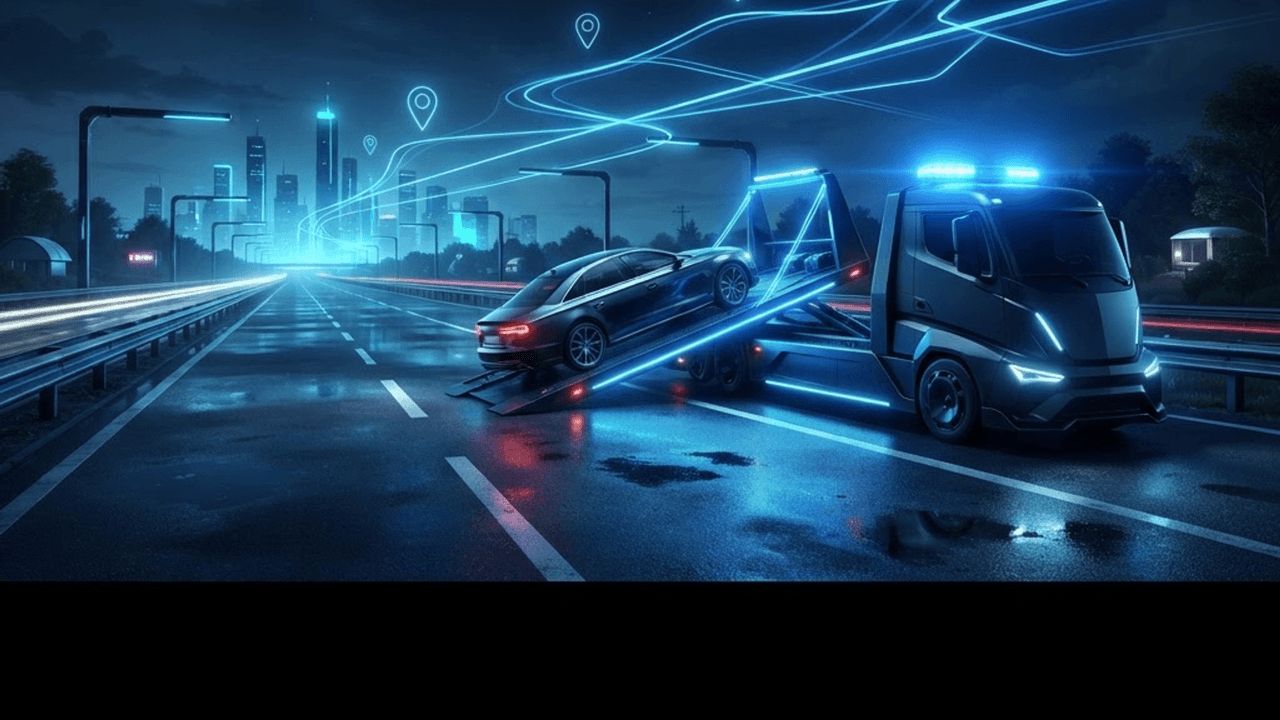
Flatbed or rollback trucks carry the entire vehicle on a hydraulic deck, lifting all four wheels off the ground. This is the safest method for all-wheel-drive vehicles, electric vehicles, lowered cars, exotics, and any vehicle with drivetrain damage. When in doubt, flatbed is the correct request.
Wheel-lift trucks use a metal yoke to lift one axle while the other rolls on the road. This equipment is faster to deploy, more maneuverable in tight spaces like parking garages, and less expensive. It is appropriate for many two-wheel-drive vehicles over short distances but inappropriate for all-wheel-drive without dollies.
Heavy-duty wreckers handle commercial trucks, buses, and equipment, with rotator units capable of complex recovery involving overturned vehicles. Integrated tow trucks combine boom and wheel-lift capability for medium-duty applications. Knowing these categories lets you verify a dispatcher is sending correct equipment.
1. Twenty-Four Hour Emergency Towing Operators
Round-the-clock emergency towing providers form the foundation of Westminster's towing market. These operators maintain staffed dispatch and multiple trucks positioned for reasonable response times regardless of hour. For breakdowns at night or in poor weather, availability is the primary consideration.
Quality emergency operators distinguish themselves through dispatch transparency, providing realistic arrival estimates and quoting pricing before dispatch rather than after arrival. The best maintain mixed fleets so they can send flatbed or wheel-lift equipment based on vehicle requirements rather than whatever is available.
2. Flatbed and Specialty Vehicle Transport
Flatbed specialists focus on vehicles requiring damage-free transport. Their customers include owners of all-wheel-drive vehicles, electric vehicles where wheel rotation can generate current through regenerative systems, classic and collector cars, lowered vehicles, and motorcycles.
These operators invest in equipment details that matter, including low-angle approach decks for minimal ground clearance, soft strap tie-down systems that avoid suspension stress, and wheel nets rather than chains. For any vehicle where cosmetic condition or drivetrain integrity is a genuine concern, a flatbed specialist is worth seeking out specifically.
3. Roadside Assistance and Mobile Service Providers
Roadside assistance providers resolve many situations without towing at all. Services include jump starts, battery replacement on-site, tire changes, fuel delivery, and lockout assistance. Because roughly a large share of roadside calls involve batteries, tires, or lockouts, mobile resolution frequently saves both time and towing cost.
Advanced mobile providers now carry diagnostic equipment and can perform limited repairs on scene. For issues like a failed battery terminal connection, a blown fuse, or a loose sensor connector, on-site resolution gets a driver moving in minutes. Always ask whether mobile repair is an option before authorizing a tow.
4. Heavy-Duty and Commercial Towing Services
Heavy-duty operators serve commercial trucks, buses, RVs, and construction equipment. This work requires substantial equipment investment including heavy wreckers, rotators, and landoll trailers, along with specially trained operators who understand air brake systems, load securement, and commercial vehicle recovery techniques.
Fleet operators depend on these services because commercial breakdown downtime is costly. The best heavy-duty providers offer coordinated response including on-scene assessment, appropriate equipment dispatch, and direct delivery to qualified repair facilities. Many maintain contracts with fleets that guarantee priority response.
5. Accident Recovery and Collision Response
Accident recovery involves considerations beyond ordinary towing. Operators must work safely in active traffic environments, coordinate with law enforcement and emergency services, manage fluid spills, and often extract vehicles from difficult positions including embankments and barriers.
Quality accident recovery operators maintain absorbent materials for fluid containment, scene lighting for night work, and equipment for handling severely damaged vehicles that cannot roll or steer. They also understand documentation requirements for insurance claims. Following a collision, the recovery operator's professionalism directly affects both safety and claim processing.
6. Motorcycle and Powersports Towing
Motorcycle transport requires specific equipment and technique. Improper securement can damage forks, bend handlebars, or scratch bodywork, and motorcycles cannot simply be strapped down like cars. Specialists use motorcycle-specific trailers or flatbeds with wheel chocks and soft tie-down systems anchored at appropriate frame points.
These providers also serve ATVs, side-by-sides, and scooters. Given Westminster's active riding community, motorcycle-capable towing is a meaningful service category. Riders should identify a qualified provider before they need one, since general towing operators often lack proper securement equipment.
7. Long-Distance and Interstate Vehicle Transport
Long-distance transport differs fundamentally from local towing. Providers use enclosed or open multi-car carriers, operate on scheduled routes, and price by distance and vehicle count rather than hourly recovery rates. Customers include people relocating, buyers of remotely purchased vehicles, and collectors moving valuable cars.
Enclosed transport protects against weather and road debris and is standard for high-value vehicles. Open transport costs less and suits ordinary vehicles. Quality providers offer verifiable insurance coverage, condition documentation with photographs at pickup and delivery, and realistic scheduling. Verify insurance limits against your vehicle's actual value before booking.
8. Winch-Out and Off-Road Recovery Specialists
Winch-out recovery addresses vehicles stuck rather than broken, including snow, mud, ditches, and soft ground. Westminster's proximity to mountain and forest roads makes this a genuinely useful service, particularly during winter and spring conditions.
Off-road recovery specialists carry extended winch lines, snatch blocks, recovery straps, traction boards, and often operate four-wheel-drive recovery vehicles that can reach positions conventional tow trucks cannot. Skilled operators understand recovery physics and anchor point selection, which prevents the equipment failures and vehicle damage that improvised recovery attempts often cause.
9. Private Property and Parking Enforcement Towing
Private property towing serves property managers, apartment complexes, and commercial lots managing unauthorized parking. This category operates under specific regulatory requirements covering signage, notification, storage, and release procedures.
Reputable operators in this space maintain meticulous documentation, follow required notification timelines, and provide accessible release processes with transparent fee schedules. For property owners, choosing a compliant operator matters because improper towing creates legal exposure. For vehicle owners, understanding that legitimate operators must follow specific procedures is useful if you believe a tow was improper.
10. Motor Club and Membership Program Networks
Motor club programs provide towing through contracted networks rather than owning trucks. Coverage typically includes a set number of annual service calls with mileage allowances, plus jump starts, tire changes, fuel delivery, and lockout service.
The value proposition is predictable cost and simplified dispatch, with membership converting variable emergency expenses into a fixed annual fee. Many vehicle manufacturers include similar coverage during warranty periods, and some credit cards and insurance policies offer roadside benefits. Before paying separately, check what coverage you already have. The trade-off is less control over which operator responds and mileage limits that may not cover mountain recoveries.
How to Avoid Predatory Towing Practices
Towing has a well-documented problem with bad actors, particularly around accident scenes and unsolicited response. Protect yourself by never accepting service from an operator who arrives uninvited at a breakdown or accident scene. Legitimate towing follows a dispatch request, either from you, your motor club, or law enforcement.
Always obtain a total price quote before the vehicle is loaded, including hook-up fee, per-mile rate, and any storage charges. Get the operator's company name and confirm it matches the truck and paperwork. Photograph your vehicle's condition before loading. Insist on a written invoice, and never surrender your keys without confirming the destination facility. If pricing changes after loading, that is a significant warning sign worth documenting.
Preparing Before You Need a Tow
The most valuable preparation is identifying and saving a reputable local provider's contact information before an emergency. Research when you are calm, checking reviews for consistency in pricing transparency and response reliability rather than isolated complaints.
Verify what roadside coverage you already have through insurance, credit cards, or vehicle warranty. Keep your vehicle's identification information and any coverage membership numbers accessible. Know whether your vehicle requires flatbed transport, since all-wheel-drive and electric vehicles generally do. Finally, maintain a basic emergency kit including reflective triangles, a flashlight, and warm layers, since waiting safely is part of the process.
Want your brand featured in front of decision-makers? Publish a guest post or get a link insertion in our guides through AAMAX's guest post and link insertion service.
Helpful Links
 SponsoredAAMAX — Full-Service Digital Agency
Write for Us
Share your expertise with our readers. We welcome guest contributions from industry specialists.
Pitch your idea